

Why Chicago Real Estate is Drawing Major Interest
Finding the right real estate opportunities in Chicago can feel overwhelming, but the market's current layout offers clear paths for both passive investors and active developers.
Here is what you need to know right now:
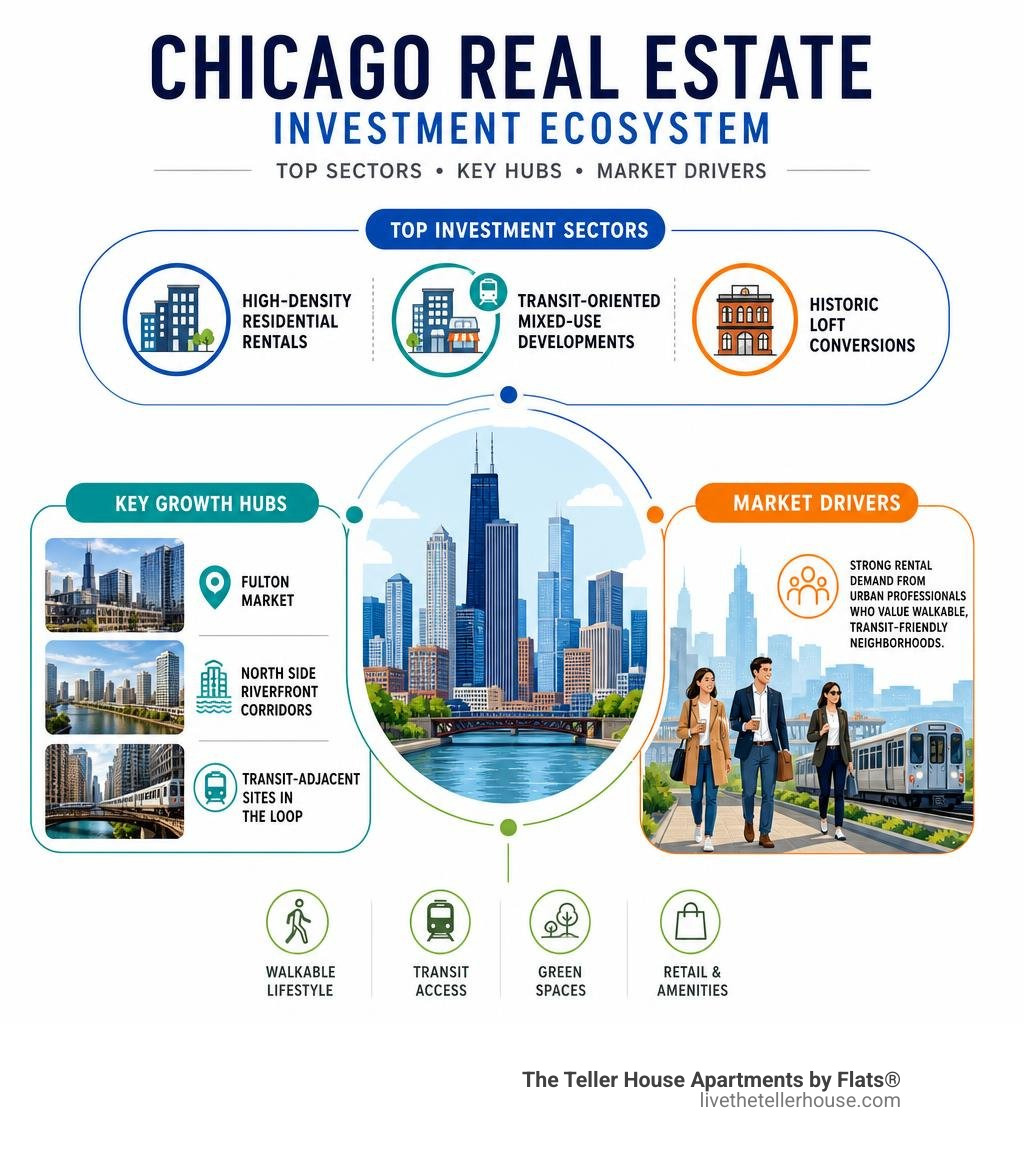
- Top Investment Sectors: High-density residential rentals, transit-oriented mixed-use developments, and historic loft conversions.
- Key Growth Hubs: Fulton Market, the North Side riverfront corridors, and transit-adjacent sites in the Loop.
- Market Drivers: Strong rental demand from urban professionals who value walkable, transit-friendly neighborhoods.
Chicago is a city built on neighborhoods, each offering a distinct personality and economic engine. For investors and developers, this means you do not have to rely on a single strategy.
From pre-entitled mid-rise towers in bustling West Loop pockets to massive riverfront re-zonings on the North Side, the scale of development here is shifting. Modern projects are focusing heavily on creating self-contained, live-work-play environments. These communities combine upscale residential living with immediate access to transit, green space, and retail.
Whether you are looking to acquire multifamily assets or dive into ground-up development, Chicago's diverse economy and steady rental demand make it a premier destination for long-term growth.
Current Performance of the Chicago Real Estate Market
The Chicago real estate market is demonstrating remarkable resilience and adaptability as we navigate the landscape of July 2026. A healthy balance of inventory and high demand from a diverse demographic of renters and buyers keeps the market highly active.
Currently, there are approximately 4,555 homes listed for sale within the city limits. This inventory spans everything from historic brick two-flats to soaring downtown condominiums. This volume of available inventory indicates a healthy, active market where buyers and sellers are consistently finding transaction opportunities.
To explore current active listings and get a sense of local market dynamics, you can browse Chicago IL Real Estate & Homes For Sale .
Rental demand is particularly robust. Chicago's steady job growth in sectors like technology, healthcare, logistics, and finance continues to attract young professionals, students, and families. This steady influx of residents drives a consistent need for well-maintained multifamily housing.
Property values across the broader metropolitan area remain stable, with consistent appreciation in highly desirable, walkable neighborhoods. Investors looking to expand their portfolios are also casting a wider net into the surrounding suburbs and municipalities.
To gain a broader perspective on the regional market beyond the city limits, you can check the latest inventory data at Cook County IL Real Estate & Homes For Sale - Zillow .
High-Growth Neighborhoods and Real Estate Opportunities in Chicago
When seeking out the best real estate opportunities in Chicago, geography is everything. While the entire city offers potential, certain submarkets stand out due to massive capital injections, rezoning initiatives, and cultural appeal.
Fulton Market continues its evolution from a historic meatpacking district into a premier tech and luxury residential hub. Meanwhile, the North Side riverfront corridors are undergoing historic transformations from industrial zoning to vibrant mixed-use communities.
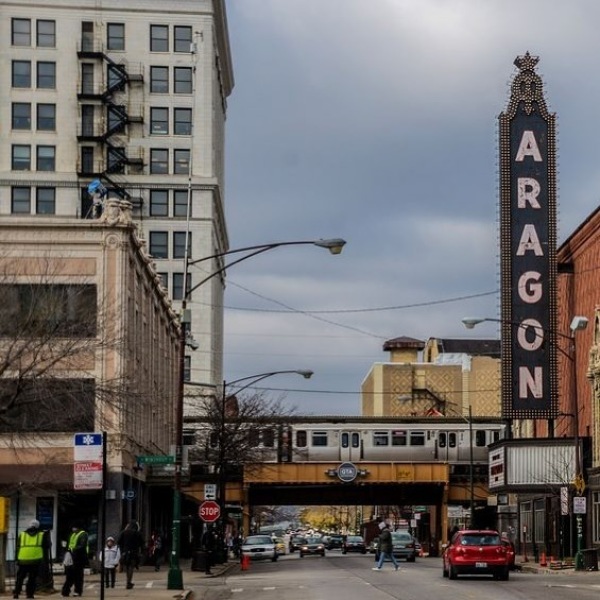
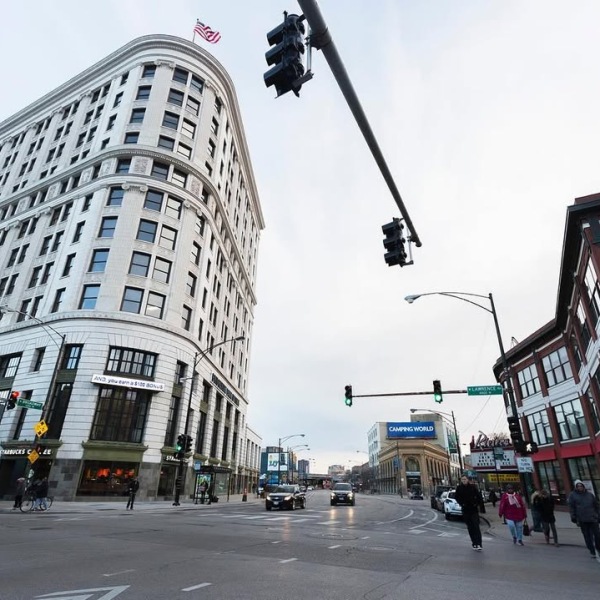
Further north, historic neighborhoods like Uptown are drawing significant attention. Uptown combines cultural heritage, iconic entertainment venues, and lakefront access, making it a prime target for multifamily investments.
If you are looking to see how these neighborhood dynamics translate into premium rental housing, explore the Apartments for Rent Chicago IL currently capturing tenant attention.
Fulton Market and West Loop Real Estate Opportunities in Chicago
Fulton Market remains one of the most durable and supply-constrained submarkets in the country. What was once an industrial hub of warehouses is now a bustling neighborhood anchored by major corporate headquarters, Michelin-starred restaurants, and luxury hotels. This rapid commercial growth has created an insatiable demand for residential development.
For developers, securing a foothold here is highly competitive, making pre-entitled development sites incredibly valuable. For instance, a rare 0.53-acre site at 415–417 N. Sangamon Street—located at the northeast corner of Sangamon and Kinzie Streets—highlights the type of premium opportunities available.
This site is fully entitled for a 17-story, 260-foot mixed-use tower, with city council approvals already secured and millions in entitlement-related development outlays pre-paid. Such sites offer incredible flexibility, allowing buyers to align their programming with current market demand, whether that means luxury apartments, creative office space, or mixed-use retail.
To understand the scope of these rare West Loop opportunities, you can read more about this Rare Fulton Market site with pre-entitled flexibility for office or residential use .
Additionally, the surrounding commercial density continues to expand south toward the main thoroughfares, as detailed in the commercial profiles for Randolph Ave .
Transit-Oriented Real Estate Opportunities in Chicago
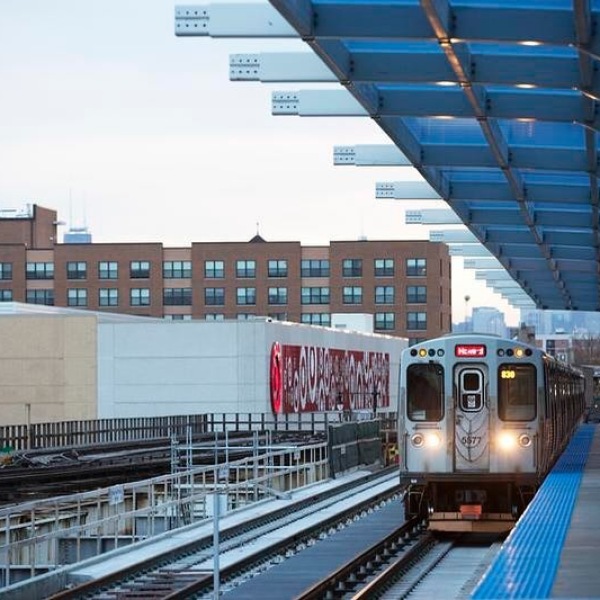
Transit-Oriented Development (TOD) is a major driver of modern Chicago real estate. The city's extensive CTA "L" train and Metra systems allow residents to live car-free lifestyles, a feature highly prioritized by modern renters.
The city actively encourages high-density, mixed-use developments near major transit hubs through zoning bonuses and streamlined approval processes. This policy is revitalizing areas surrounding transit hubs across the city.
A prime example is the city-led Request for Proposals (RFP) for a transit-oriented development near the 95th/Dan Ryan intermodal station in the Roseland neighborhood. The 95th/Dan Ryan station serves more than 20,000 daily rail and bus passengers, while 95th Street carries over 33,000 vehicles each day.
The city offered a 2.5-acre site at 12 E. 95th St. for high-density, mixed-use redevelopment, planning for up to 135 housing units and at least 38,000 square feet of retail space. To stimulate high-quality development, the city made financial incentives available for developers proposing owner-occupied housing in smaller multi-unit configurations.
To see how public transit infrastructure is actively shaping development pipelines, read the full report on how the City opens RFP for mixed-use, transit-oriented development near 95th/Dan Ryan station | Chicago Construction News .
Major Development Projects Transforming the Cityscape
The physical landscape of Chicago is undergoing a dramatic shift, led by large-scale megaprojects that turn vacant industrial land into entirely new urban neighborhoods. These projects are redefining the city's riverfront and downtown core.
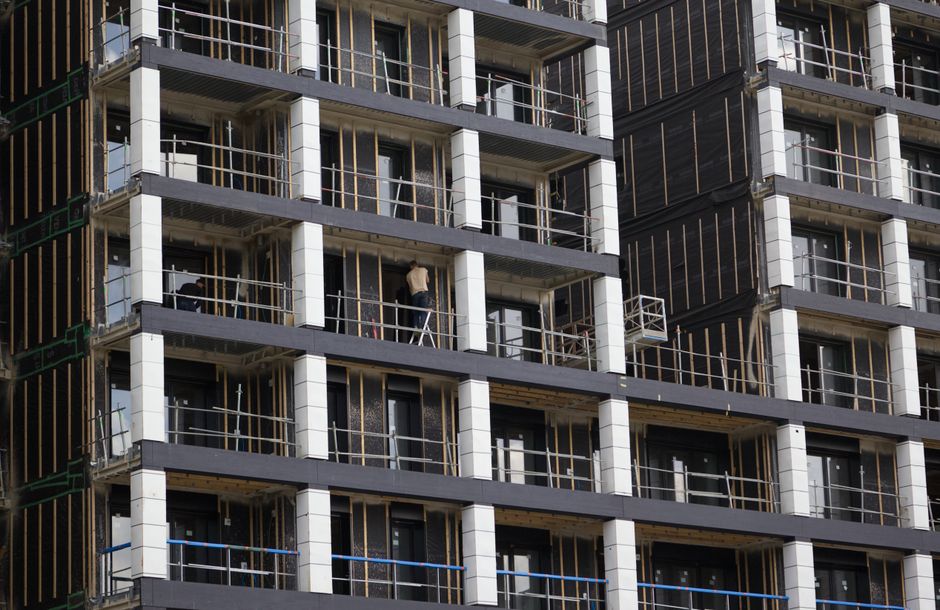
One of the most notable transformations is occurring on the North Branch of the Chicago River. A joint venture between Kayne Anderson Real Estate and JDL Development acquired a 31-acre site, formerly known as Lincoln Yards North, to create Foundry Park.
This massive project will convert a long-vacant industrial site into a vibrant, walkable residential and mixed-use community. Foundry Park is designed to feature tree-lined streets, new public green spaces, and year-round riverfront recreational areas, seamlessly connecting with established nearby neighborhoods like Bucktown, Wicker Park, and Lincoln Park.
Closer to the downtown core, the Loop is seeing its first ground-up residential towers in decades. DL3 Realty's ACōDA at Pritzker Park is a planned 25-story mixed-use development at 331–335 S. Plymouth Court.
This project represents a major step forward in transforming the Loop from a strictly office-focused business district into a dynamic, live-work neighborhood. The development will feature mixed-income residences, coworking spaces, and retail storefronts, helping to activate the streetscape and support local businesses.
For those interested in how these massive investments influence the high-end residential rental market, you can explore the current standards of downtown living by viewing Chicago Luxury Apartments.
Career and Job Opportunities in Chicago Real Estate
The sheer volume of development and transaction activity in Chicago makes it an incredibly fertile ground for real estate career opportunities. Whether your interest lies in residential sales, commercial leasing, property management, or construction development, the local industry is robust and highly active.
Currently, there are 154 entry-level real estate jobs listed in the Chicago area, offering an excellent entry point for those looking to build a career. Furthermore, Chicago’s market features 218 top real estate companies operating within the city, ranging from global commercial brokerages to boutique property management firms and tech-enabled proptech startups.
To view current job openings, requirements, and hiring companies, you can check the active listings on Real Estate Jobs, Employment in Chicago, IL .
Additionally, public sector roles and regulatory careers can be explored through the Real Estate Management - Cook County portal.
To help you navigate the various paths available, we have outlined the primary real estate career tracks in Chicago below:
| Career Path | Primary Focus | Key Skills Required | Typical Entry-Level Role |
|---|---|---|---|
| Sales & Brokerage | Facilitating property transactions for buyers, sellers, and landlords. | Negotiation, networking, local market knowledge, marketing. | Real Estate Agent / Leasing Consultant |
| Property Management | Overseeing daily operations, maintenance, and tenant relations. | Customer service, vendor management, operations, budgeting. | Leasing Agent / Assistant Property Manager |
| Development & Project Management | Planning, zoning, and executing ground-up construction projects. | Financial modeling, zoning knowledge, construction oversight. | Assistant Project Manager / Analyst |
Licensing and Qualifications for Real Estate Professionals
To build a successful career in Chicago real estate, obtaining the proper licensing and building a solid foundation of local market knowledge is essential.
To work as a real estate broker in Illinois, you must complete the required pre-license coursework and pass the Illinois Real Estate Broker License Exam. For those entering property management, obtaining a leasing agent license or pursuing professional certifications (such as those offered by the Institute of Real Estate Management) can significantly accelerate your career path.
Beyond formal licensing, success in this market requires a deep understanding of Chicago’s unique housing stock, landlord-tenant ordinances, and neighborhood dynamics. Familiarizing yourself with the local rental market is a great place to start.
For a comprehensive look at how the local rental market operates, check out our Apartment Hunting Chicago Complete Guide.
Investment Strategies for Chicago Real Estate
Investing in Chicago real estate requires a clear strategy tailored to the city's unique economic layout. Because Chicago is a mature market, successful investors typically focus on a balanced approach that combines steady rental income with long-term property appreciation.

Here are the key strategies we recommend for maximizing your real estate investments in Chicago:
- Portfolio Diversification: Spread your investments across different property types and neighborhoods. Combining multi-unit residential buildings with commercial or mixed-use spaces helps protect your portfolio from sector-specific downturns.
- Focus on Infrastructure and Redevelopment: Target areas undergoing significant public transit improvements, park developments, or commercial revitalization. Properties near these projects typically experience faster appreciation.
- Leverage Professional Property Management: Managing rental properties in Chicago requires strict compliance with local ordinances, tenant screening, and consistent maintenance. Partnering with a professional management team ensures your assets are well-protected and operate efficiently.
To dive deeper into tactical advice for maximizing your returns, you can read these Chicago Real Estate Investing Tips for Better Returns .
Additionally, analyzing successful, high-demand rental properties can provide valuable insights into what modern tenants look for. You can view top-tier examples by browsing the Best Chicago Apartments for Rent.
Frequently Asked Questions About Chicago Real Estate
What are the most promising areas for real estate investment in Chicago?
The most promising investment areas are those that blend strong neighborhood character with convenient transit access. Uptown remains a standout for residential investments due to its historic architecture, vibrant entertainment district, and proximity to the lakefront.
For a detailed look at why this neighborhood continues to attract residents and investors alike, see our Uptown Chicago Rentals Complete Guide.
On a broader scale, Cook County features several high-growth suburbs and municipal pockets that offer excellent opportunities for portfolio expansion. To identify these high-potential areas, read the guide on the Top Neighborhoods to Invest in Cook County IL This Year .
What qualifications are needed for real estate jobs in Chicago?
To work in sales or leasing, you must hold an active Illinois Real Estate Broker or Leasing Agent license, which requires completing state-approved education and passing a licensing exam.
For development and property management roles, employers typically look for degrees in finance, business, or real estate, alongside strong analytical skills, local zoning knowledge, and experience with property management software.
How do major megaprojects impact the local real estate market?
Megaprojects like the planned redevelopment of the North Branch corridor and the expansion of transit networks act as major economic catalysts. By converting vacant industrial land into walkable, mixed-use neighborhoods, these developments attract new businesses, create parks, and improve infrastructure.
This activity significantly boosts demand for surrounding residential and commercial properties, driving long-term appreciation. To learn more about how these master-planned communities are designed, visit the official page for Lincoln Yards | Sterling Bay Properties .
Conclusion
The wealth of real estate opportunities in Chicago reflects a dynamic city that is constantly reinventing itself. From the cutting-edge commercial spaces of Fulton Market to the historic streets of Uptown, Chicago offers a diverse range of opportunities for investors, developers, and real estate professionals to thrive.
At The Teller House Apartments by Flats®, we are proud to be a part of this vibrant real estate landscape. Located in the heart of Uptown Chicago, we have transformed a historic bank building into sophisticated, modern luxury apartments. By combining upscale, thoughtful design with a prime location near iconic theatres and cultural landmarks, we offer residents an unparalleled Chicago living experience.
If you are ready to explore the neighborhood and see what makes this area so special, visit us at https://livethetellerhouse.com/neighborhood/.