

Where History Meets Luxury: A Guide to Historic Chicago Living
Luxury living in historic Chicago is one of the most compelling lifestyle choices in the American Midwest — and it's easier to understand than you might think.
Here's a quick snapshot of what it actually means:
- Historic neighborhoods like the Gold Coast, Lincoln Park, and Uptown offer architecturally significant buildings with modern residential conversions
- Preserved craftsmanship — think original mosaic floors, stained glass, and Gilded Age millwork — defines these spaces
- Modern amenities are woven in discreetly, including smart home systems, updated HVAC, and contemporary finishes
- Cultural access is built into the location itself: world-class dining, the Art Institute, the Chicago Symphony Orchestra, and over 26 miles of Lake Michigan shoreline parks
- Architectural heritage shapes the character of each building, from Art Deco Loop landmarks to Romanesque Revival mansions designed by firms like Cobb & Frost
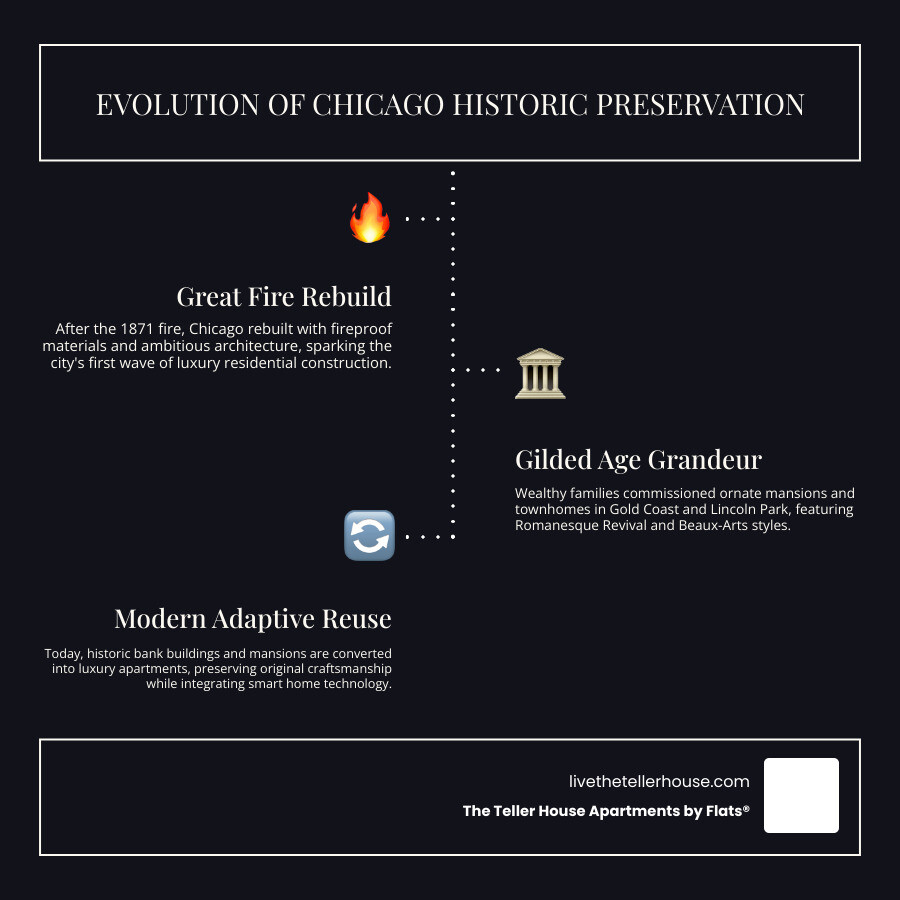
Chicago is a rare city. It rebuilt itself after the Great Chicago Fire of 1871 and, in doing so, became a global showcase for architectural ambition. That legacy shows up today in its residential buildings — many of which have been carefully adapted into luxury living spaces without losing their original soul.
Whether you're drawn to the grandeur of a converted bank building or the charm of a tree-lined Gold Coast street, historic Chicago offers something that brand-new construction simply can't replicate: a sense of permanence, craftsmanship, and story.
The Heritage of Luxury Living in Historic Chicago
When we walk through the historic corridors of Chicago, we are walking through a living gallery of design. The concept of luxury living in historic Chicago is deeply tied to how the city grew. Following the Great Chicago Fire, the city's elite sought to establish neighborhoods that would showcase resilience, prosperity, and sophisticated European influences. This movement gave rise to architectural marvels that continue to define our skyline and neighborhoods in July 2026.
This architectural grandeur is not just about aesthetics; it is about a lifestyle that seamlessly weaves history with modern vitality. The city’s unique chicago heritage is preserved not just in museums, but within the very walls of the places we call home. Living in these spaces means enjoying the soaring ceilings, hand-carved stonework, and expansive layouts of a bygone era, all while steps away from the vibrant energy of a modern metropolis.
Beyond the brick and mortar, the setting itself elevates the experience. Chicago's unique geography offers over 26 miles of scenic shoreline parks along Lake Michigan, allowing residents to transition effortlessly from the quiet elegance of historic, tree-lined streets to active, waterfront recreation. It is this balance of urban sophistication, architectural history, and natural beauty that makes the city's historic districts highly coveted.
Architectural Icons Shaping Luxury Living in Historic Chicago
To understand the soul of Chicago’s historic estates, we must look at the visionary designers who built them. Renowned architectural firms like Cobb & Frost played a monumental role in shaping the aesthetic of the city’s elite residential districts. Known for designing iconic institutions like the Newberry Library and buildings for the University of Chicago, Cobb & Frost brought a sense of academic classicism and Romanesque grandeur to private residences.
A prime example of this Gilded Age craftsmanship is the Thompson House, located at 915 N Dearborn Street, Chicago, IL 60610 - MLS# 12273547 - Coldwell Banker . Built in 1888, this nationally registered Historic Landmark stands as a testament to Cobb & Frost’s enduring genius. Spanning an impressive 13,400 square feet, the home features a level of detail that is virtually impossible to replicate today:
- Meticulously preserved exterior sgraffito walls and granite mosaic.
- Hand-crafted Honduras Mahogany woodwork, designed to perfectly match the home's original 1888 balusters.
- Original custom stained glass windows that filter natural light into grand parlor rooms.
- A hand-carved, book-matched onyx fireplace imported from Pakistan.
For those exploring the history of these majestic properties, our chicago historic homes guide offers a deeper look into how these structures were built to stand the test of time, transitioning beautifully from private family estates to modern landmarks.
Neighborhoods Defining the Chicago Heritage
While individual buildings capture our imagination, the neighborhoods themselves tell the broader story of Chicago’s evolution.
The Gold Coast stands as one of the earliest enclaves of luxury, characterized by its quiet streets, historic stone mansions, and immediate proximity to the lakefront. Here, the architectural styles range from Richardsonian Romanesque to classic Georgian, creating a sense of timeless elegance.
Further north, Lincoln Park offers a blend of stately historic homes and vibrant green spaces. Its tree-lined streets are famous for their quiet charm, offering a peaceful retreat from the bustling downtown Loop while keeping world-class dining and cultural institutions within easy reach.
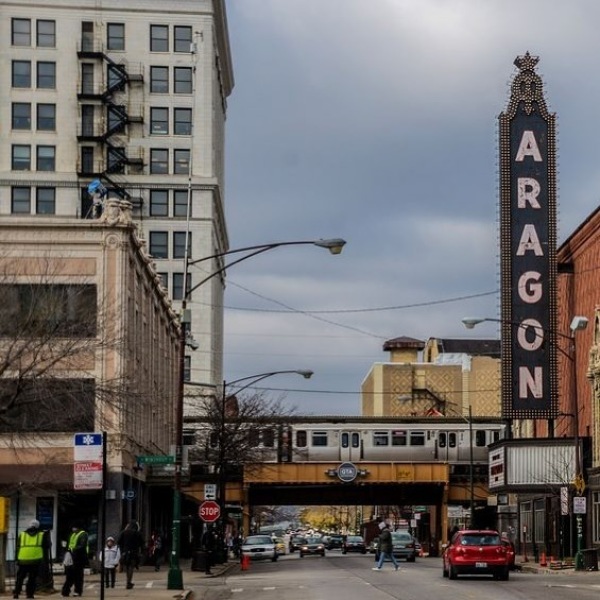
Then we have Uptown, a neighborhood rich with entertainment history, jazz-age architecture, and a distinct artistic spirit. Uptown’s architectural landscape is defined by grand theaters, ornate commercial buildings, and historic residential structures that are finding new life today. For a closer look at how these neighborhoods preserve their character, explore our vintage chicago apartments guide 2026, which highlights the enduring appeal of vintage elements in a modern world.
Case Study: The Teller House in Uptown Chicago
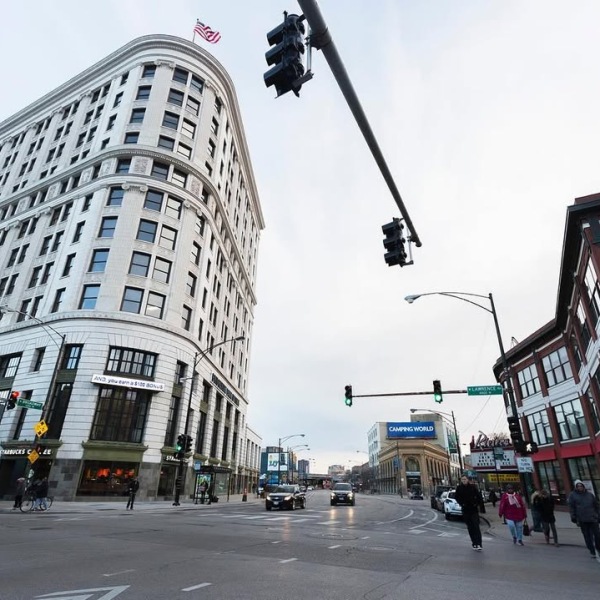
To truly appreciate how historic architecture can be reimagined for contemporary living, we look to Uptown Chicago. Here, we find a remarkable example of adaptive reuse: the transformation of a historic bank building into sophisticated modern residences.
This landmark property, now known as The Teller House, is a stunning testament to how we can honor the past while embracing the future. By taking a structure built for security and commerce and turning it into a warm, inviting residential space, we preserve the neighborhood's physical history. Listed on the national historic register, the building stands as a monument to architectural grandeur, proving that historic preservation and luxury living are not mutually exclusive, but rather complementary concepts.
Architectural Masterpieces Inside Historic Bank Conversions
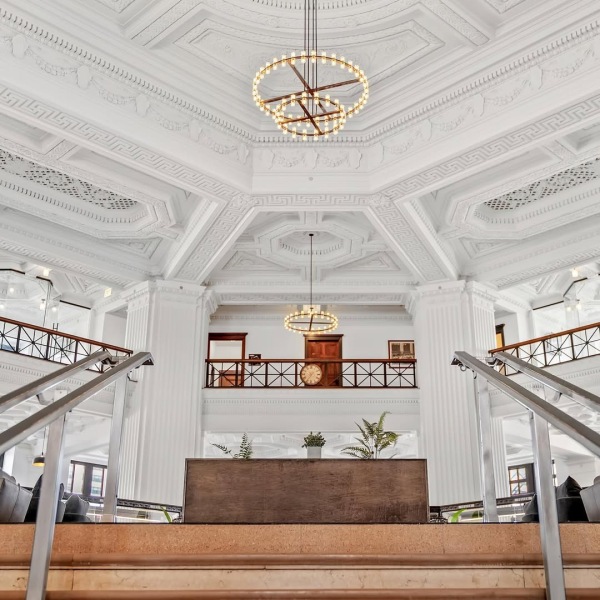
Stepping inside a historic bank conversion reveals a world where structural scale meets artistic detail. Unlike standard residential layouts, bank buildings were constructed to project strength, stability, and artistic excellence. At The Teller House, this legacy is felt the moment you enter.
The sophisticated apartment designs pay homage to the building’s original purpose. High ceilings, grand window arches, and preserved historic plasterwork create an immediate sense of drama and space. The lobby and common areas retain their original monumental feel, featuring restored ornamental details that reflect the craftsmanship of the early 20th century. By maintaining these original architectural elements, we ensure that every apartment feels less like a conventional residence and more like a curated piece of living history.
Modern Amenities and Luxury Apartment Integration
While the historic envelope of the building provides character, the interior spaces are fully optimized for the modern urban lifestyle. We believe that luxury living requires a seamless integration of historic charm and contemporary convenience.
Inside these modern living spaces, residents enjoy:
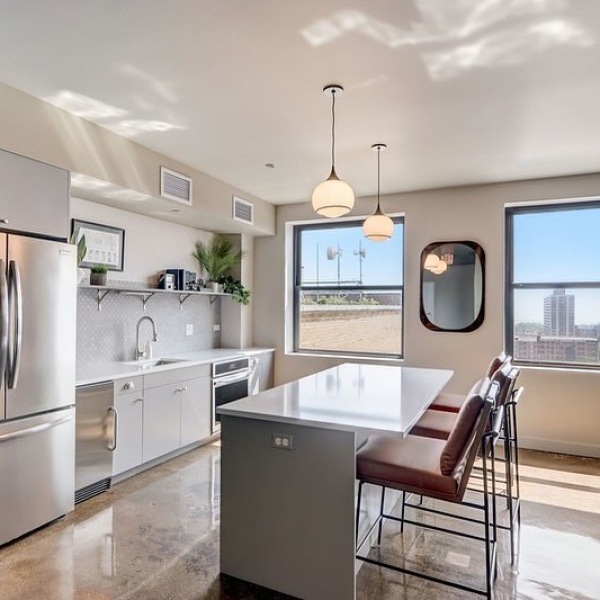
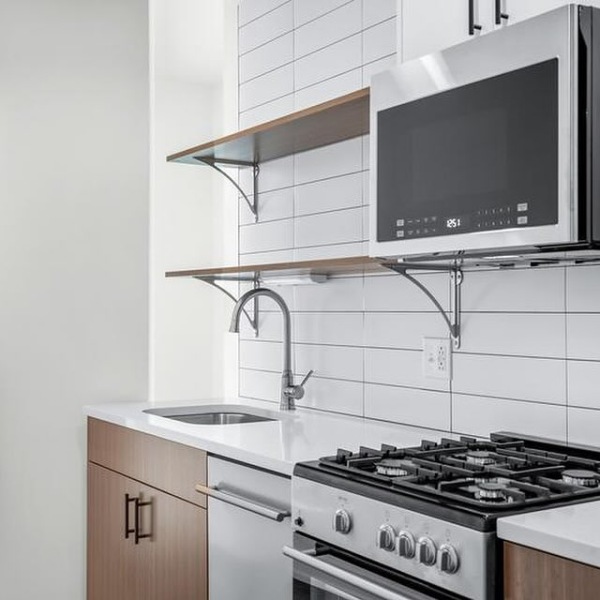
- Custom-designed kitchens with premium finishes and integrated appliances.
- Thoughtfully planned layouts that maximize natural light from the building's historic, oversized windows.
- In-unit smart home features that allow for effortless control of lighting and climate.
- A beautifully designed resident lounge and a rooftop deck offering panoramic views of the Chicago skyline and the surrounding neighborhood.
This careful balancing act ensures that residents do not have to choose between the historic soul of a vintage building and the sleek, high-functioning amenities of a new construction high-rise.
Balancing Preservation with Modern Sophistication
Restoring a historic landmark requires a deep respect for the original design, combined with creative engineering to insert modern infrastructure. The goal of any successful restoration is to update the building's utility without altering its historic character.
When we look at leasing historic properties in chicago, we see a growing appreciation for buildings that have undergone this meticulous process. It requires working closely with preservation specialists to ensure that everything from masonry repair to window replacement complies with local and national landmark guidelines, maintaining the architectural integrity that makes these properties so extraordinary in the first place.
Integrating Smart Technology into Historic Apartments
One of the greatest challenges—and triumphs—of modern historic preservation is the integration of smart home technology. In grand estates like the Thompson House on Dearborn Street, this was achieved during its comprehensive restoration. Builders managed to hide state-of-the-art systems behind hand-carved millwork and plaster.
Today, historic luxury properties utilize these advanced systems to enhance daily comfort:
This approach allows residents to enjoy the convenience of modern living—such as instant climate adjustments, advanced security, and integrated entertainment—without a single wire disrupting the historic aesthetic.
The Evolution of Luxury Living in Historic Chicago Apartments
The desire for historic charm has driven a fascinating evolution in the local real estate market. While grand single-family mansions like those in the Gold Coast remain iconic, there is a massive demand for boutique, multi-family living options that offer a similar sense of history.
This has made historic apartments in chicago incredibly popular. People want to live in spaces with a story. By choosing a home in a converted historic building, residents position themselves in the heart of the city’s cultural landscape.
For example, choosing luxury living cultural district chicago means being surrounded by historic theaters, world-class dining, and architectural landmarks. Residents can spend their afternoons exploring famous chicago cultural attractions and their evenings enjoying a performance in the historic theater district, experiencing the very best of the Chicago lifestyle right outside their front door.
Frequently Asked Questions About Historic Chicago Living
To help you navigate the unique world of historic Chicago real estate, we have compiled a quick comparison of what to expect when choosing between a traditional vintage apartment and a modern historic conversion.
What architectural styles define Chicago's luxury appeal?
Chicago's luxury appeal is defined by a rich tapestry of styles:
- Richardsonian Romanesque: Characterized by heavy stone masonry, dramatic arches, and tower-like elements (often seen in Gilded Age mansions designed by Cobb & Frost).
- Art Deco: Defined by geometric patterns, bold metallic accents, and sleek vertical lines, prominent in the Loop and early 20th-century high-rises.
- Classical Revival: Popular in early bank buildings, featuring grand columns, limestone facades, and ornamental plasterwork.
What outdoor recreation options are available to Chicago residents?
Chicago residents enjoy unparalleled access to outdoor recreation, primarily centered around Lake Michigan. The city boasts over 26 miles of continuous, scenic shoreline parks. Residents can enjoy:
- Biking, running, or walking along the Lakefront Trail.
- Relaxing at historic parks like Lincoln Park, Grant Park, and Jackson Park.
- Boating, paddleboarding, and enjoying sandy beaches just minutes from historic residential neighborhoods.
How do historic properties integrate modern smart home features?
Modern smart home features are integrated through highly specialized, non-invasive installation techniques:
- Channeled wiring: Running wires behind baseboards or utilizing existing historic service shafts (like old dumbwaiter shafts or utility risers).
- Wireless smart systems: Utilizing robust mesh networks to connect smart thermostats, lighting controls, and security systems without tearing into historic plaster.
- Custom cabinetry: Hiding modern appliances, entertainment hubs, and smart control panels behind custom-built, period-accurate woodwork.
Conclusion
Living in historic Chicago is about more than just finding a place to sleep—it is about connecting with the city's rich architectural narrative. At The Teller House Apartments by Flats®, we are proud to offer a unique living experience in Uptown Chicago, where we have lovingly transformed a historic bank building into sophisticated, luxury apartments.
By preserving the grand scale and craftsmanship of the past while incorporating the modern amenities, smart home technology, and design finishes of today, we offer our residents a truly unique place to call home. If you are curious about the unique architectural layouts found in these historic conversions, you can learn more about the history and loft meaning to see how these open, artistic spaces continue to shape the way we live today.