

What Makes an Apartment Truly Big Dog Friendly?
Finding apartments big dog friendly enough for a large breed is harder than it sounds — and most renters don't realize that until they're already deep into the search.
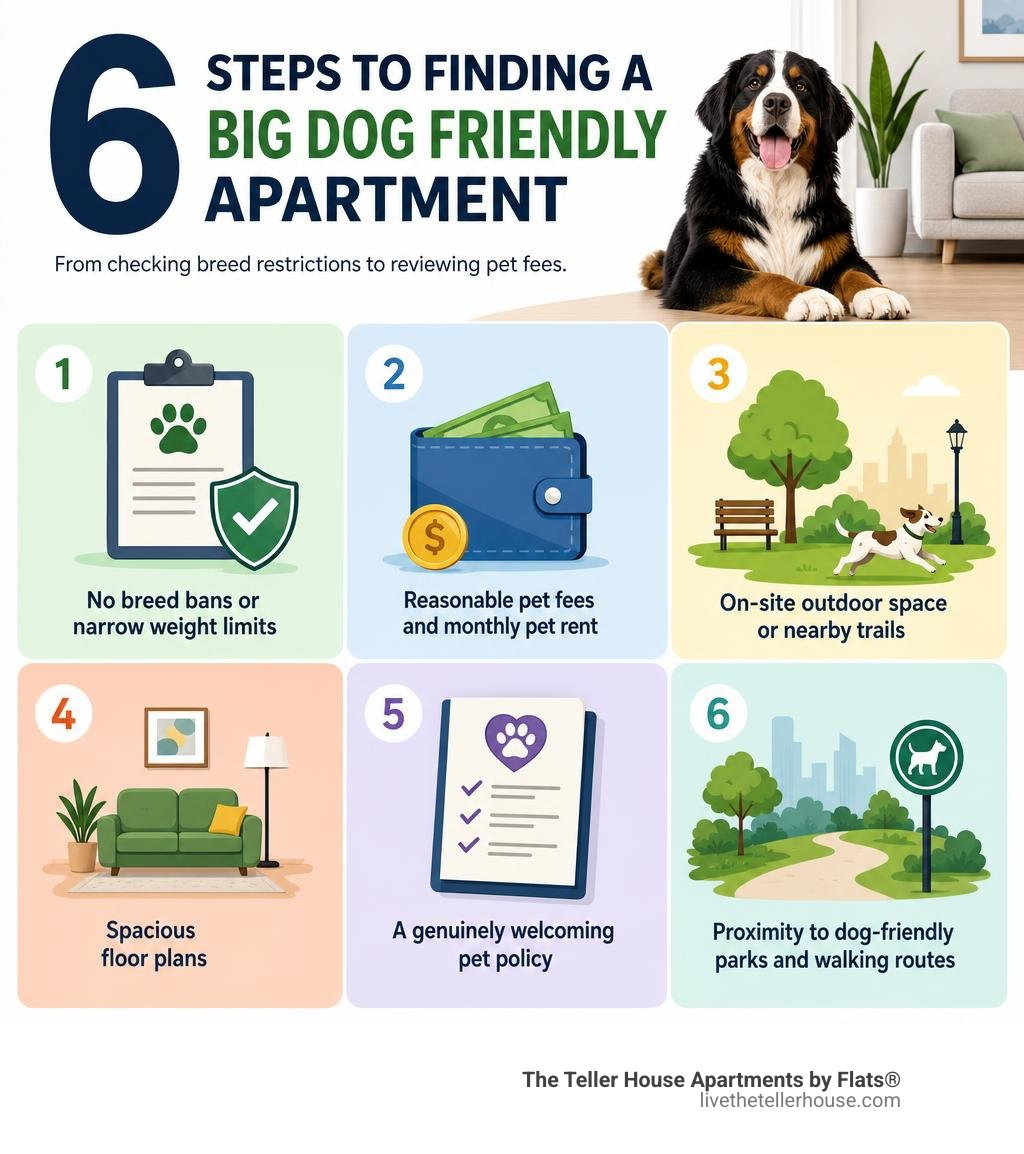
Here's a quick breakdown of what to look for:
6 keys to finding a big dog friendly apartment:
- No breed bans or narrow weight limits — many properties cap dogs at 20–35 lbs, which rules out most large breeds
- Reasonable pet fees and monthly pet rent — expect a one-time fee and added monthly charge on top of rent
- On-site outdoor space — dog parks, green areas, or nearby trails make daily life much easier
- Spacious floor plans — big dogs need room to move, especially indoors
- A genuinely welcoming pet policy — not just "pets allowed" in the headline with restrictions buried in the lease
- Proximity to dog-friendly parks and walking routes — the neighborhood matters as much as the building
Many pet owners don't discover the fine print — breed bans, floor restrictions, or surprise fees — until after they've fallen in love with a unit. In fact, many animals end up surrendered to shelters each year simply because their owners couldn't find a rental that would accept them. That's a real problem worth solving before you sign anything.
This guide walks you through exactly what to look for, what to ask, and how to land a home that works for both you and your dog.
Understanding Weight Limits and Breed Restrictions in Apartments Big Dog Friendly
When you begin searching for a new home, you will quickly notice that the phrase "pet-friendly" is highly subjective. In many cases, properties use this label while simultaneously enforcing strict weight limits and breed restrictions.
For those of us with larger canine companions, a standard weight cap of 25 or 35 pounds can immediately disqualify our furry family members. Some communities are more accommodating, raising their limits to 75 pounds or even eliminating weight restrictions entirely. Understanding these limits upfront is crucial to saving time during your search. If you want to dive deeper into how these policies work across different properties, you can explore our guide on Apartments That Allow Large Dogs.
Beyond simple weight limits, breed restrictions represent one of the most common hurdles for renters. Property management companies often maintain a list of restricted breeds. These lists typically include:
- Pit Bull Terriers and American Staffordshire Terriers
- Rottweilers
- German Shepherds
- Doberman Pinschers
- Chows
- Huskies and Alaskan Malamutes
These restrictions are often dictated by master commercial insurance policies rather than the landlords themselves. Because insurance companies associate certain breeds with higher liability risks, properties face steep financial penalties or loss of coverage if they allow them. However, some forward-thinking communities have moved away from breed-specific policies, focusing instead on individual pet behavior and history. For renters who own breeds that frequently face these hurdles, finding specialized communities is essential. You can find more targeted resources in our breakdown of Apartments That Allow Pit Bulls.
Key Amenities for Large Breeds
A home that welcomes large dogs should offer more than just a clause in a lease agreement. The physical environment of the building plays a massive role in your dog's daily well-being. When we look at premium properties, the inclusion of dedicated, thoughtful pet amenities is what separates a basic rental from a truly welcoming community.

To make daily routines seamless, look for properties that offer dedicated spaces for exercise and care. Having these features on-site means you won't have to brave the elements for every single bathroom break or play session. If you are specifically looking for properties designed with these conveniences, check out our guide on finding a Condo for Rent with Dog Park.
On-Site Dog Parks and Outdoor Spaces in Apartments Big Dog Friendly
For large breeds, physical exercise is not optional—it is a necessity for their mental and physical health. High-energy dogs like Golden Retrievers, Boxers, and Standard Poodles require space to run and play. On-site dog parks and dedicated green spaces provide a safe, controlled environment for your dog to burn off energy.
When evaluating these spaces, look for:
- Fenced, off-leash areas: A secure perimeter is essential for peace of mind.
- Double-gated entry systems: This prevents accidental escapes when other residents enter or leave.
- High-quality surfacing: Well-maintained turf or specialized drainage systems keep the area clean and sanitary.
- Waste stations: Readily available bags and disposal bins encourage a clean environment for everyone.
Pet Spas and Washing Stations
If you have ever tried to wash an 80-pound dog in a standard apartment bathtub, you know it is a recipe for a soaked bathroom and a sore back. On-site pet spas and professional-grade washing stations are game-changers for large dog owners.
These stations typically feature elevated tubs, ramp access so your dog doesn't have to jump, commercial-grade blow dryers, and specialized grooming hoses. This amenity keeps the mess out of your personal living space and makes post-walk cleanup incredibly simple, especially after a rainy day stroll through the city.
Navigating Pet Fees, Deposits, and Pet Rent
Living with a pet in a rental property almost always comes with additional financial responsibilities. Landlords charge these fees to offset the wear and tear that animals can cause to carpets, flooring, and common areas. However, the terminology can be confusing. It is important to understand the difference between one-time fees, security deposits, and recurring monthly charges.
To help you plan your moving expenses, we have outlined how these charges typically break down:
| Fee Type | Refundable? | Payment Frequency | Purpose |
|---|---|---|---|
| Pet Deposit | Yes (subject to damage inspection) | One-time, paid at move-in | Covers physical damage to the unit beyond normal wear and tear. |
| Pet Fee | No | One-time, paid at move-in | A non-refundable administrative charge for processing the pet's residency. |
| Pet Rent | No | Monthly | A recurring charge added to your base rent to cover ongoing building wear and tear. |
These charges can vary significantly depending on the building's policies. Some properties might charge a higher one-time fee but skip monthly pet rent entirely, while others do the opposite. It is always wise to review these terms carefully before signing a lease. For a complete look at how these fees affect your monthly housing expenses, read our detailed guide on Pets Allowed Rent.
How to Identify Genuinely Welcoming Communities
It is easy for a leasing office to say they welcome large dogs, but the real test is how the community operates on a daily basis. Genuinely welcoming properties design their spaces with pets in mind, ensuring that both you and your dog feel comfortable from the lobby to your front door.
When touring potential homes, look for physical clues. Are the elevators spacious enough to comfortably accommodate a large dog and other residents at the same time? Are the hallway floors made of durable, easy-to-clean materials rather than high-pile carpet that traps odors? If you want to search for verified pet-friendly options in your preferred neighborhood, you can use our Pet Friendly Apartments Near Me Guide to find the perfect match.
Spotting Red Flags in Pet Policies
As you search, keep an eye out for hidden restrictions that might make living in the building difficult. Some common red flags include:
- Floor limits: Some properties allow large dogs but restrict them to the first or second floor, limiting your floor plan options.
- Weight caps in HOA rules: Even if a landlord says yes, a condo association or HOA might have overriding rules that ban dogs over a certain weight.
- Strict common area rules: Be wary of properties that require dogs to be carried through the lobby or common areas—a rule that is physically impossible to follow with a large breed.
- Lack of green space: If there is no grass on the property or within a short walking distance, simple bathroom breaks will become a chore.
Preparing a Pet Resume for Apartments Big Dog Friendly
One of the best ways to bypass strict policies or reassure a hesitant landlord is by preparing a professional pet resume. This simple document demonstrates that you are a responsible owner and that your dog is well-behaved.
A great pet resume should include:
- A high-quality photo: Show off your dog's friendly personality.
- Up-to-date vaccination records: Prove that your dog is healthy and current on all required shots.
- Training certificates: Include proof of completed obedience classes or Canine Good Citizen (CGC) certifications.
- Landlord references: Letters from previous landlords confirming that your dog did not cause damage or disturb neighbors are incredibly powerful.
While these resumes are highly effective for dog owners, they can also be useful if you share your home with other animals. If you have feline companions as well, you can find helpful tips on presenting your pets to landlords in our guide to Cat Friendly Rentals.
Frequently Asked Questions About Pet-Friendly Rentals
What is the most common weight limit for dogs in apartments?
While many standard properties set weight limits between 25 and 35 pounds, many upscale and modern communities have raised these limits to 75 pounds or removed them entirely. Always confirm the exact weight policy with the leasing office before applying, as policies can change.
Do pet-friendly apartments allow all breeds?
Not necessarily. Many properties that advertise themselves as pet-friendly still enforce breed restrictions due to commercial insurance policies. Common restricted breeds include Pit Bulls, Rottweilers, German Shepherds, and Dobermans. However, some communities evaluate pets on an individual basis rather than by breed.
How can I negotiate a pet policy with a landlord?
If a landlord is on the fence about your large dog, offer to meet them in person with your pet so they can see your dog's temperament firsthand. Presenting a comprehensive pet resume—complete with training certificates, up-to-date vet records, and glowing references from previous landlords—can also help sway their decision.
Conclusion
Finding the perfect home for you and your large dog doesn't have to be a stressful experience. By knowing what to look for, understanding the nuances of pet policies, and focusing on properties that offer dedicated amenities, you can find a space where you both can thrive.
If you are looking for a sophisticated home in Chicago, we invite you to experience The Teller House. Located in the heart of Uptown Chicago, our luxury apartments beautifully transform a historic bank building into modern, elegant living spaces. We are proud to offer a prime location near prominent theatres and cultural attractions, combined with sophisticated apartment designs that make city living a joy. Best of all, we understand that your dog is an important part of your family.
Ready to find a home that truly welcomes your canine companion? Explore our comprehensive Pet Friendly Apartments Chicago Guide and take the first step toward your new home today.