

What You Need to Know About Cat Friendly Rentals
Cat friendly rentals are apartments or homes that explicitly allow cats — and the good news is they're more common than you might think.
Here's a quick overview of what to know before you start your search:
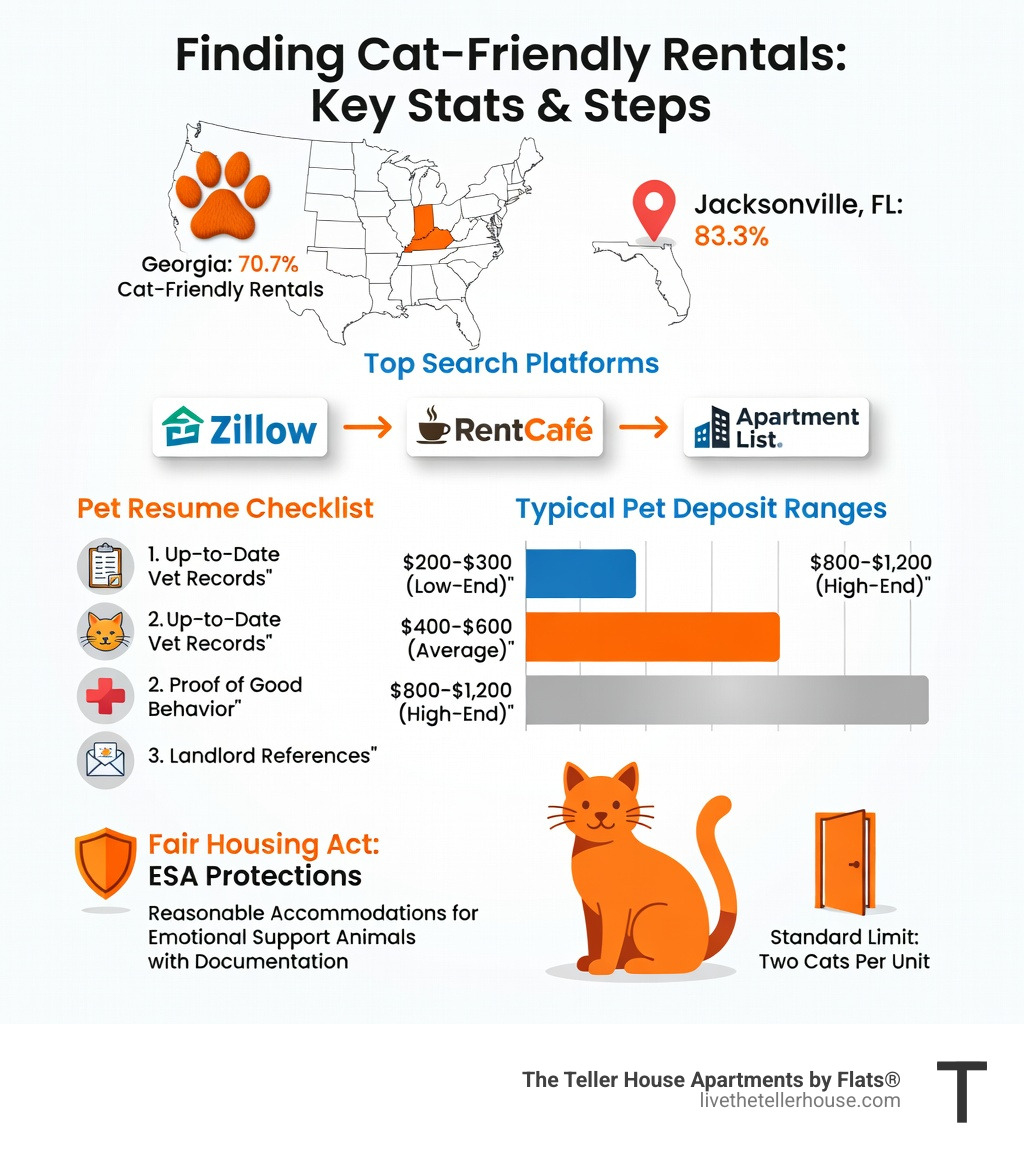
- Where to find them: Use "cats allowed" filters on platforms like Zillow, RentCafé, or Apartment List
- What to expect to pay: Most properties charge a one-time pet deposit or a monthly pet fee
- What to bring: A pet resume with vet records and a landlord reference goes a long way
- Know your rights: Under the Fair Housing Act, emotional support cats require reasonable accommodation with proper documentation
- How many cats: Most rentals cap at two cats per unit
Finding a place that genuinely welcomes your cat — not just tolerates one — takes more than spotting a "pets allowed" sign. Policies vary a lot from building to building, and the details matter.
Some regions are friendlier than others. Georgia leads the country with over 70% of rentals allowing cats. Jacksonville, FL tops the city rankings at 83.3%. The Northeast also tends to lean more cat-friendly than other parts of the country, partly due to urban density and smaller living spaces where cats simply fit better than dogs.
But even in competitive markets, cat owners have real options — and real leverage. Cats are often viewed more favorably by landlords than dogs. They're quieter, don't need outdoor walks, and typically cause less structural wear. That works in your favor.
This guide walks you through everything: how to search smart, what features to look for, how to strengthen your application, and how to be the kind of tenant landlords love to approve.
Understanding the Landscape of Cat Friendly Rentals
When we look at the national data, it's clear that the availability of cat friendly rentals isn't uniform across the United States. If you're looking for a home in Georgia, you’re in luck—the state boasts a 70.7% acceptance rate for felines. Meanwhile, Jacksonville, Florida, sets the gold standard for cities, with a whopping 83.3% of rentals allowing cats.
In the Northeast, we see a distinct cultural preference for cats. Because cities like New York or Boston feature high-density living and smaller square footage, cats are often seen as the more logical companion compared to large dogs. Interestingly, only 15 states in the entire country have more cat-friendly than dog-friendly listings, making those regions particularly valuable for feline enthusiasts.
One hurdle some renters face is the landlord's concern regarding allergies. Scientific research on allergy impact indicates that cat allergies are actually more prevalent than dog allergies. This often leads property owners to be cautious. however, with high-quality cleaning standards and modern ventilation, these concerns are easily managed. For those searching specifically in the Windy City, our Pet Friendly Apartments Chicago Guide offers deeper insights into local trends and what to expect in the Cook County market.
Regional Preferences for Felines
Regional data often reveals surprising gaps in pet management. For instance, in Madison, Wisconsin, statistics show that only about 3% of cats are officially licensed, compared to 30% of dogs. This suggests that cat owners are often "under the radar," which can sometimes complicate a landlord's perception of how many cats are actually living in a community.
Urban density remains the biggest driver for cat popularity. In bustling metropolitan areas, the "indoor-only" lifestyle of a cat is a massive advantage. You don't have to worry about finding a green space for a 2:00 AM bathroom break, which makes high-rise living significantly more convenient for both the owner and the property management team.
Why Landlords Often Prefer Cats
While dogs often get the spotlight, many landlords secretly (or openly) prefer cat-owning tenants. Here is why:
- Lower Noise Levels: Cats don't bark at the mail carrier or howl when you leave for work. In a multi-unit building, silence is golden.
- Structural Integrity: Cats are light on their feet. They don't have the same impact on floor joists or subflooring as a 70-pound dog might.
- Independence: Cats are perfectly happy lounging in a sunbeam all day. They don't suffer from the same destructive separation anxiety that can lead some dogs to chew through door frames or carpeting.
- Community Harmony: It is rare to have a neighbor complain about a "noisy cat" in the hallway, making them the ultimate "good neighbor" pet.
What Distinguishes Truly Cat-Friendly Spaces?
A "pet-tolerant" apartment might just mean they allow you to bring your cat if you pay a fee. A truly cat friendly rental, however, considers the needs of the feline.
Modern developers are increasingly looking at research on pet-friendly amenities to design spaces that cater to our furry friends. This includes things like scratch-resistant luxury vinyl plank (LVP) flooring, which handles "zoomies" much better than traditional hardwood. High-efficiency air filtration systems are also a hallmark of a great building, as they significantly reduce dander and keep the air fresh for everyone.
Key Features of Cat Friendly Rentals
If you want your cat to thrive, look for these specific apartment features:
- Vertical Space: Cats love to climb. Look for layouts that allow for tall cat trees or have built-in shelving where a cat can survey their kingdom from above.
- Balcony Safety: If the unit has a balcony, ensure the railing is secure. Many cat owners look for "Catio" potential—a way to let the cat enjoy the breeze without the risk of a fall.
- Non-Toxic Finishes: From the paint on the walls to the sealants on the floor, cat-friendly buildings prioritize materials that won't harm a curious pet who might lick a surface.
- Strategic Ventilation: Proper airflow helps keep litter box odors from lingering, ensuring your home stays inviting for guests.
Essential Building Amenities
In luxury urban rentals, amenities have moved beyond just a "dog park" on the roof. We're seeing a rise in features that benefit all pet owners.
| Feature | Pet-Tolerant Building | Pet-Welcoming Building |
|---|---|---|
| Flooring | Standard Carpet | Scratch-Resistant LVP or Tile |
| Windows | Standard height | Low-sills or floor-to-ceiling for views |
| On-site Services | None | Pet grooming stations & spas |
| Air Quality | Basic HVAC | HEPA-grade filtration systems |
| Outdoor Space | None | Secure pet relief areas or terraces |
Pet spas and grooming stations are fantastic for cat owners too. While you might not "walk" your cat to a park, having a professional-grade tub and drying station makes the occasional bath or nail trim much easier to manage than trying to do it in your bathroom sink.
Strategies for Securing Your New Home
In a competitive market like Chicago, you need to stand out. Landlords want to know that you are a responsible owner and that your cat won't cause damage.
The best way to do this is by creating a professional pet application. This isn't just a whim—it works. By presenting all the information upfront, you remove the "fear of the unknown" for the property manager.
Improving Approval Odds for Cat Friendly Rentals
To move your application to the top of the pile, consider these steps:
- Craft a Pet Resume: Include a clear photo (the cuter, the better!), your cat's age, breed, and temperament. Mention if they are indoor-only and spayed or neutered.
- Provide Vaccination Records: Show that your cat is up-to-date on all shots and has a clean bill of health from the vet.
- Secure Landlord References: A note from your previous landlord stating that your cat was a "perfect tenant" who caused zero damage is worth its weight in gold.
- Liability Coverage: Ensure your renters insurance policy includes pet liability. This gives the landlord peace of mind that any potential (though unlikely) issues are covered.
- Behavioral History: If your cat is particularly calm or has lived in apartments their whole life, mention it! Experience matters.
Effective Search Methods and Platforms
Don't just search "apartments for rent." Use specific filters to save time. Sites like RentCafé and Zillow allow you to toggle "Cats Allowed" specifically.
Beyond the big search engines, we recommend joining local community groups on social media. Often, current residents in pet-friendly buildings will post about upcoming vacancies or share their honest experiences with how the management handles pet concerns. This "boots on the ground" intel is invaluable for finding hidden gems in neighborhoods like Uptown.
Navigating Legal Rights and Responsible Ownership
It is important to understand the legal landscape of renting with a cat. The Fair Housing Act (FHA) provides significant protections for those who require an emotional support animal (ESA).
Under the FHA, an emotional support cat is not considered a "pet" in the traditional sense; rather, it is viewed as an accommodation for a person with a disability. If you have a legitimate need for an ESA, a landlord generally cannot refuse your cat or charge you pet-related fees, provided you have the correct documentation from a licensed healthcare provider.
Maintaining Your Space and Relations
Being a responsible cat owner is the best way to ensure you always get your security deposit back and maintain a good relationship with your neighbors.
- Litter Hygiene: Scoop daily and do a full litter change weekly. Use a high-quality, low-dust litter to prevent tracking and keep odors at bay.
- Scratching Posts: Provide your cat with plenty of legal scratching surfaces (sisal, cardboard, carpet) so they never feel the urge to look at the door frames or baseboards.
- Pheromone Diffusers: If your cat gets stressed by the sounds of a busy hallway, using a pheromone diffuser can help keep them calm and prevent stress-related behaviors.
- Neighbor Relations: If your neighbor is allergic, be mindful of common areas. Keeping your cat in a carrier while moving through the lobby or elevators is a small gesture that goes a long way.
Understanding Fees and Limits
Most cat friendly rentals will have specific clauses in the lease regarding pets. Common things you'll see include:
- Pet Deposits: A one-time payment (sometimes refundable) to cover potential damage.
- Monthly Pet Rent: A small recurring fee added to your monthly rent.
- Two-Pet Limit: Most urban buildings, including many in Chicago, cap the number of pets at two per household to ensure the living space remains comfortable and manageable.
- Lease Clauses: Always read the fine print. Look for details on damage liability, noise expectations, and rules about pets in common areas like the lobby or rooftop deck.
Frequently Asked Questions about Cat-Friendly Housing
How many cats can I keep in one rental?
In most professional managed buildings in Cook County, the limit is two pets per unit. This is standard practice to prevent overcrowding and ensure that each animal has enough space to remain healthy and happy. Local ordinances may also have specific requirements regarding the amount of square footage required per animal.
Will I always pay a pet deposit?
Not necessarily, but it is common. Some buildings prefer a non-refundable pet fee, while others charge monthly pet rent. However, some luxury buildings may waive these fees during certain promotional periods or for specific lease terms. It never hurts to ask the leasing agent if there are any current specials!
Can landlords refuse my emotional support cat?
Under the Fair Housing Act, landlords are required to provide "reasonable accommodation" for emotional support animals. They cannot refuse an ESA based on a "no pets" policy or breed restrictions, nor can they charge pet fees. However, you must provide a valid letter from a healthcare professional, and the animal must not pose a direct threat to the safety of others or cause significant physical damage to the property.
Conclusion
Finding the right home for you and your cat shouldn't be a "cat-astrophe." By focusing on buildings that truly value their feline residents and coming prepared with a professional pet resume, you can secure a beautiful space in no time.
At The Teller House, we understand that your cat is a member of the family. Our luxury apartments in Uptown Chicago are designed to offer the perfect blend of historic charm and modern, pet-friendly living. Located in a beautifully restored historic bank building, we provide sophisticated designs and a prime location near the city's best cultural attractions.
Ready to see how we can accommodate you and your furry companion? Explore our pet-welcoming amenities and discover your new home in the heart of Chicago.