

Find Vietnamese Restaurants Worth Seeking Out
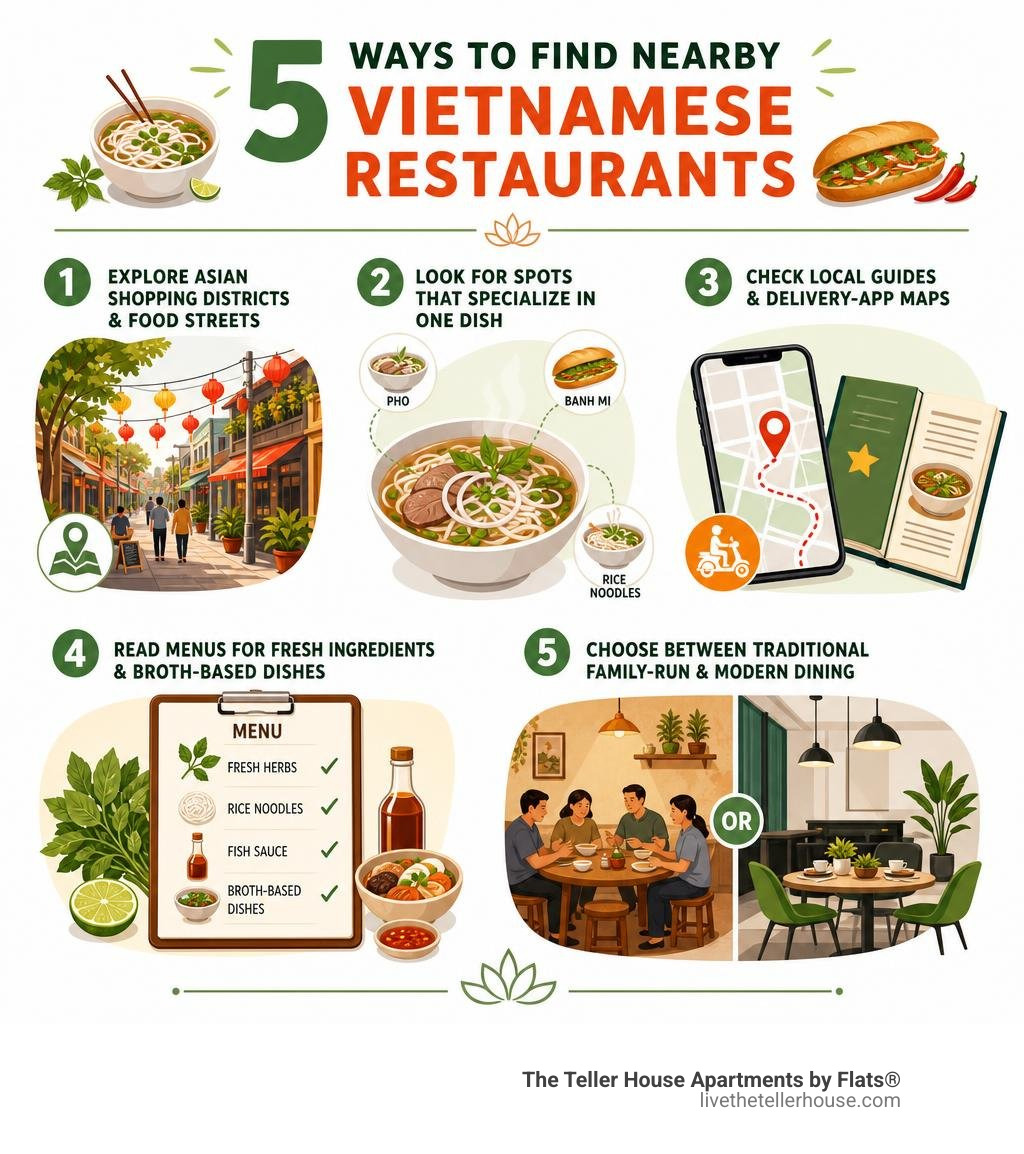
Vietnamese restaurants are easiest to find when you look beyond the nearest map pin. Start with nearby cultural dining corridors, then check menus for regional specialties, focused counter-service spots, and local food guides.
- Search Asian shopping districts and neighborhood food streets.
- Look for restaurants that specialize in one dish, such as pho, banh mi, or rice noodles.
- Check recent local guides and delivery-app maps for places just outside your usual route.
- Read menus for fresh herbs, rice noodles, fish sauce, and broth-based dishes.
- Compare traditional family-run kitchens with modern Vietnamese dining rooms based on the experience you want.
Vietnamese food offers far more than one famous noodle soup. A great local meal might mean a fragrant bowl of pho with basil and lime, a crisp banh mi on a light baguette, delicate rice rolls, or a regional noodle dish you have not tried before.
The best discoveries are often close by, but not always obvious. This guide shares five practical ways to spot Vietnamese restaurants that may be hidden in plain sight.
1. Search Beyond Google Maps: How to Find Authentic Vietnamese Restaurants in Cultural Enclaves
Standard map searches often display whichever establishment pays for local ads or has the highest volume of star ratings. However, searching for authentic vietnamese restaurants requires taking a closer look at established cultural enclaves. Across major metro areas, immigrant communities have naturally clustered around specific avenues and shopping districts, establishing incredible culinary hubs filled with rich food traditions.
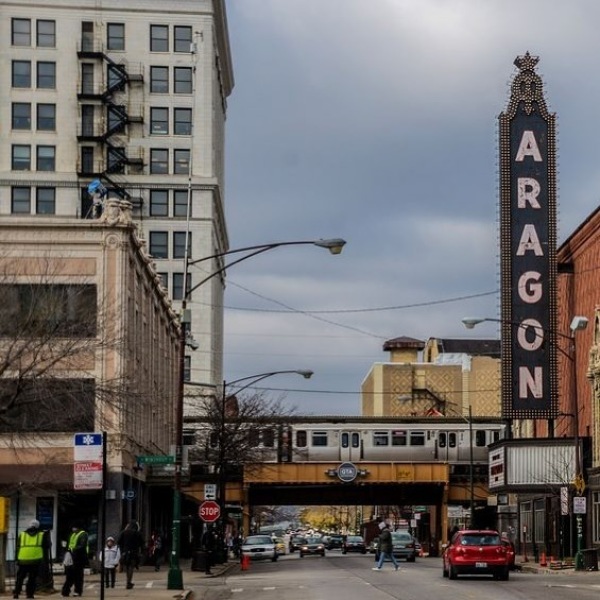
In the Chicago area, for instance, the Argyle Street corridor in Uptown stands as a historic centerpiece for Southeast Asian culture and cuisine. Known for its vibrant mix of grocers, bakeries, and family eateries, this multi-block area presents one of the highest concentrations of authentic kitchens you will find anywhere in Cook County IL. Exploring these streets on foot reveals hidden gems that might not show up at the top of digital search engine algorithms.
Whether you are exploring the Argyle corridor or visiting well-known cultural hubs in other parts of the country—such as Westminster's Little Saigon, Orlando's Mills 50 district, or Oklahoma City's Asian District—seeking out localized cultural enclaves is the single best strategy for discovering phenomenal food. To learn more about exploring our local dining corridor, check out our best vietnamese uptown chicago guide.
Exploring Cultural Enclaves to Spot Authentic Vietnamese Restaurants
When walking through a vibrant cultural district, you will quickly notice that the best vietnamese restaurants rarely rely on flashing neon signs or elaborate social media campaigns. Instead, they thrive on community roots and decades of local trust.
Look for signs written in Vietnamese that specify specialized regional dishes. An establishment advertising Phở, Bánh Cúng, or Bún Chả right on its front window tells you immediately that the kitchen specializes in traditional heritage recipes.
Cultural enclaves also house dedicated Asian markets that act as natural anchors for incredible nearby eateries. Small counter-service kitchens and soup shops are frequently tucked into small shopping plazas or adjacent market stalls. These spots often source fresh herbs, crisp vegetables, and specialty cuts of meat directly from local grocers daily, ensuring the ingredients in your bowl are exceptionally fresh.
2. Follow Signature Dish Specialties Instead of General Menus
A common mistake when searching for standout vietnamese restaurants is choosing places with overwhelming multi-page menus that attempt to cook everything under the sun. In traditional Vietnamese food culture, the most celebrated kitchens focus heavily on mastering just one or two signature items.
Rather than searching broadly for a restaurant, try searching directly for specific traditional dishes:
- Phở Tái Nạm: Traditional beef noodle soup topped with thin slices of rare eye round steak and flank, where the raw steak cooks directly in the piping-hot broth upon serving.
- Bò Kho: A deeply aromatic, rich beef stew noodle soup infused with heavy notes of star anise, cinnamon, and lemongrass, cooked down until tender.
- Hủ Tiếu Mĩ Tho: A clear pork and seafood noodle dish originating from the city of Mỹ Tho, often served as a dry noodle dish with a rich house sauce alongside a separate bowl of savory pork rib broth.
- Bánh Cuốn: Delicate, translucent steamed rice noodle crepes filled with seasoned ground pork and wood ear mushrooms, topped with crispy fried shallots and fresh herbs.
When a menu narrows its focal point to dishes like these, it signals that the kitchen spends its energy perfecting complex broth simmer times and authentic herb balances rather than balancing dozens of unrelated recipes.

Tracing Noodle Soups and Regional Classics
Evaluating the caliber of a Vietnamese noodle soup spot comes down to broth preparation and garnish presentation. Authentic beef pho broth requires simmering actual beef bones alongside charred ginger, yellow onions, and toasted whole spices for many hours overnight.
When your bowl arrives at the table, look at the garnish platter. A genuine establishment always provides a full, fresh garnish plate packed with sweet Thai basil, fresh bean sprouts, sliced jalapeños or chili peppers, and fresh lime wedges.
Some of the most memorable soup spots also allow you to order a side of rich bone marrow to add directly into your pho broth, proving that the kitchen builds its foundation on real, simmered beef bones rather than shortcuts or artificial bases.
Finding Fresh Baguettes and Specialized Street Food
Outside of noodle soups, specialized banh mi shops offer another incredible window into authentic cooking. The iconic banh mi sandwich directly reflects the historical French culinary influence in Vietnam, combining classic European bakery techniques with vibrant Southeast Asian flavors.
The secret to a world-class banh mi is the baguette itself. A proper Vietnamese baguette must feature a thin, ultra-crispy outer crust with a feather-light, airy interior that yields easily when bitten, preventing the sandwich from feeling heavy or tough.
Key cornerstone ingredients inside an authentic baguette include:
- Housemade Pâté: Rich, savory liver pâté spread across the warm bread.
- French-Style Mayo: A silky, buttery housemade egg mayonnaise base.
- Cold Cuts & Meats: Traditional Saigon-style pork belly, steamed pork ham, or lemongrass-marinated grilled meats.
- Crisp Pickles & Herbs: Julienned pickled daikon and carrots, fresh cucumber spears, cilantro sprigs, and fresh jalapeño slices.
Eateries across the nation take immense pride in hand-crafting these staples daily. For example, family-run spots like Vietnamese Restaurant in Honolulu | Pho & Banh Mi — Ms. Nguyen demonstrate how hand-rolled rolls and freshly baked baguettes form the backbone of daily service.
3. Track Award-Winning Chefs and Modern Gastro-Boutiques
While traditional neighborhood spots offer timeless comfort, a new wave of chef-driven gastro-boutiques is transforming how people experience Vietnamese culinary heritage. Across the United States and Vietnam, visionary culinary talent is bringing contemporary gastronomy into the spotlight, winning prestigious accolades like the James Beard Award and MICHELIN Star recognition.
These chef-driven establishments reinterpret traditional street food classics through modern techniques while maintaining deep respect for original flavor profiles. In Denver, modern concepts like Sắp Sửa have earned national acclaim from major food publications by reinterpreting family recipes with inventive flair. Similarly, historic award winners like Philadelphia's Vietnam Restaurant show how traditional dining institutions can maintain excellence over decades.

How Modern Dining Apps Help You Uncover Top Vietnamese Restaurants
Modern reservation platforms and dining apps make it effortless to discover these high-end and innovative culinary destinations. Looking up trending spots on digital platforms helps you locate modern dining rooms that emphasize Cuisine Mới (New Vietnamese Cuisine).
These elevated kitchens often feature:
- Inventive Flavor Pairings: Combining traditional fish sauce caramels with premium local proteins or seafood.
- Craft Beverage Programs: Highlighting craft cocktails infused with star anise, Thai basil, sweetened condensed milk, or Vietnamese coffee.
- Architectural Ambiance: Spaces styled with vibrant Hoi An-inspired lanterns, dark woods, and refined design elements.
Internationally renowned destinations like ANAN SAIGON in Ho Chi Minh City have set global standards by transforming local street food concepts into MICHELIN-starred tasting menus. Meanwhile, West Coast pioneers such as Thanh Long San Francisco | Experience Authentic Flavors Today have built legendary legacies around iconic garlic noodles and roasted seafood fusion. Modern dining apps allow you to easily find local establishments carrying forward this rich, creative tradition.
4. Look for Single-Specialty Family-Run Counter Shops
If you are looking for pure comfort food crafted with love, single-specialty family-run counter shops are your best destination. These intimate dining spots are usually operated by multi-generational families who bring personal heirloom recipes directly to the neighborhood.
Family-run counter shops often operate with streamlined, highly curated menus. Instead of maintaining 40 or 50 distinct items, they focus on doing a small handful of items exceptionally well. You might find a spot that solely focuses on hand-rolled fresh summer rolls (Gỏi Cuốn), crispy fried egg rolls (Chả Giò), or comforting rice plates topped with charred lemongrass pork chops (Cơm Tấm).
Distinguishing Authentic Traditions from Fusion Variations
Understanding what sets authentic Vietnamese cooking apart from heavy fusion or heavily Americanized versions comes down to ingredient balance and cooking philosophy.
Vietnamese cuisine relies heavily on the principle of Âm Dương (Yin and Yang)—the delicate balancing of hot and cooling elements, crisp textures and rich meats, and bright herbs with deep savory broths.
Key markers of authentic traditional preparations include:
- Fresh Herb Balances: Generous use of fresh mint, cilantro, Thai basil, rice paddy herb (Ngò Ôm), and saw-tooth coriander (Ngò Gai).
- Clear, Light Broths: Soups that achieve complex flavor through long simmering times rather than heavy oil or excessive salt.
- Umami-Rich Seasonings: Reliance on authentic fermented fish sauce (Nước Mắm) and house-blended dip sauces rather than thick, overly sweet heavy sauces.
- Non-Fried Freshness: Abundant offerings of soft rice paper rolls filled with fresh lettuce, vermicelli noodles, shrimp, and herbs served un-fried.
While fusion concepts can offer fun and creative twists, family-run counter kitchens remain the gold standard for sampling pure, unadulterated heritage recipes passed down through generations.
5. Leverage Neighborhood Food Guides and Local Delivery Radius Searches
When you want to find incredible vietnamese restaurants within your immediate neighborhood, general search filters do not always show the full picture. Using local neighborhood food guides and adjusting your delivery application search radius can instantly unlock fantastic culinary options sitting just around the corner.
Hyperlocal food guides written by neighborhood residents frequently highlight unassuming counter spots, hidden food hall vendors, and family kitchens located just outside major retail corridors. Exploring curated local lists gives you direct access to insider food knowledge.
When using food delivery apps, try these specific tactics to discover new spots:
- Search by Dish Name: Instead of searching for "Vietnamese food," type specific terms like "Pho Ga," "Bun Bo Hue," or "Banh Mi."
- Expand the Search Radius: Extend your map distance setting by just two or three miles to capture neighboring business districts and cultural pockets.
- Check Operating Hours: Authentic soup kitchens often open early in the morning to serve fresh breakfast broths and close once broth pots sell out for the day.
If you are living in or visiting the Chicago area, you can discover incredible neighborhood options through our curated guides on best food in uptown chicago, find warm soup spots via pho near my location, or arrange convenience using food delivery near uptown.
Frequently Asked Questions About Finding Great Vietnamese Dining
What is the difference between Northern and Southern Vietnamese cuisine on menus?
Regional variations play a massive role in menu offerings. Northern Vietnamese cuisine (centered around Hanoi) tends to favor subtle, delicate seasoning, lighter broths, and simpler herb garnishes. Northern pho often features wider rice noodles and a clean, clear broth focused heavily on pure savory meat notes.
Southern Vietnamese cuisine (centered around Saigon) tends to be bolder, sweeter, and more heavily seasoned, often incorporating coconut water and palm sugar. Southern-style dining emphasizes abundant fresh herb platters, bean sprouts, hoisin sauce, and chili pastes served directly at the table.
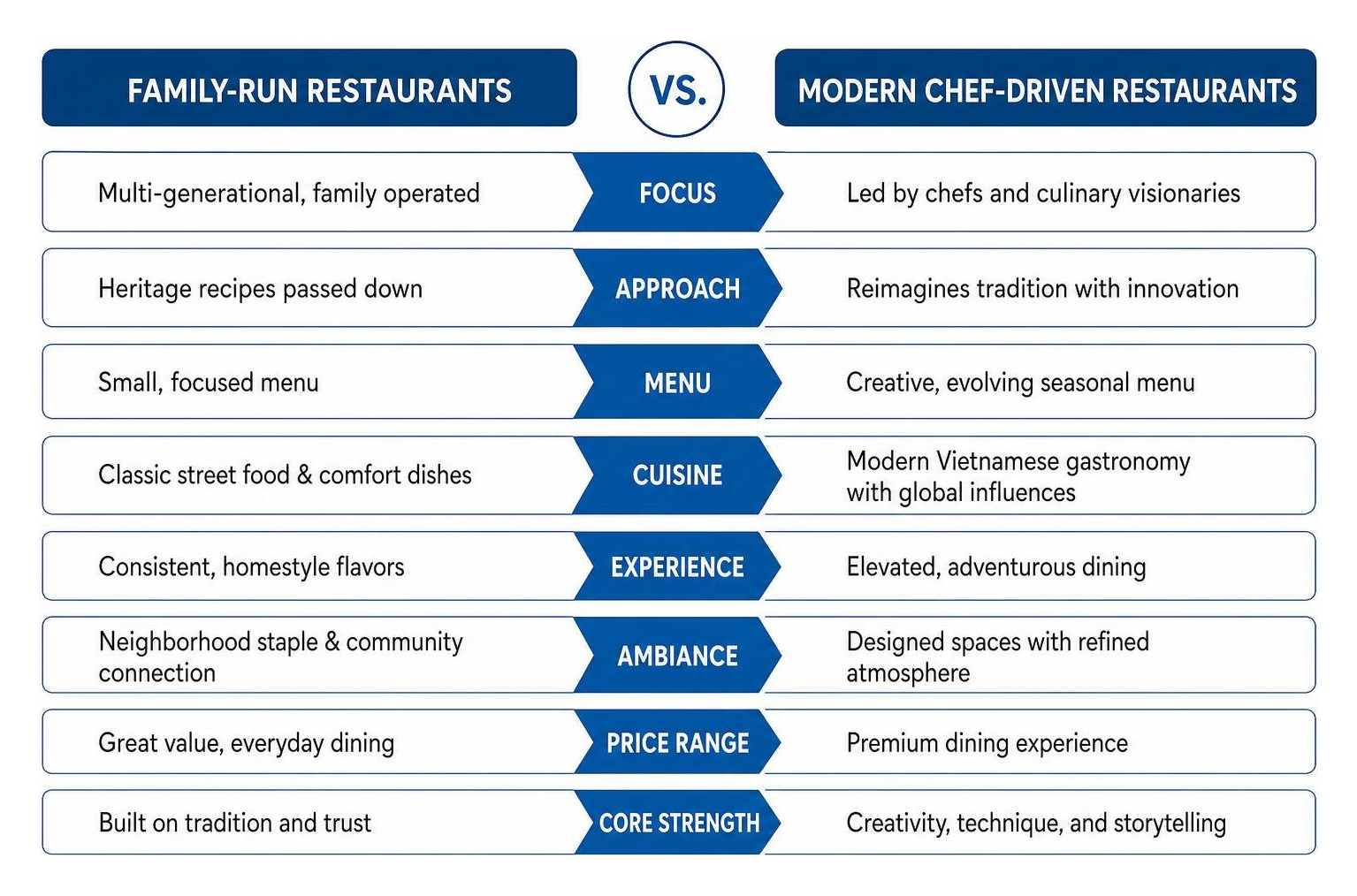
How do family-run Vietnamese eateries compare to modern chef-driven restaurants?
Family-run eateries focus primarily on comforting, traditional family recipes served in casual, counter-service, or low-key dining settings. Their strength lies in authentic, time-tested preparation techniques and generous home-style portions.
Modern chef-driven establishments blend authentic Vietnamese flavor foundations with contemporary culinary school techniques, refined presentations, elevated cocktail pairings, and stylish interior designs. Both offer fantastic dining experiences depending on whether you want quick casual comfort or a sophisticated night out.
What key garnishes and ingredients signify authentic Vietnamese cooking?
Authentic kitchens always feature essential fresh ingredients, including:
- Fresh Herbs: Thai basil, mint, cilantro, and saw-tooth coriander.
- Aromatic Spices: Whole star anise, cinnamon bark, green cardamom, charred ginger, and lemongrass.
- Condiments: Quality fermented fish sauce (Nước Mắm), chili garlic paste, pickled carrots and daikon radish, and fresh lime wedges.
- Noodle Styles: Silky flat rice noodles for pho, round rice vermicelli (Bún) for noodle bowls, and thin rice vermicelli sheets (Bánh Hỏi).
Conclusion
Finding unforgettable vietnamese restaurants comes down to exploring local cultural enclaves, seeking out single-dish specialty kitchens, and keeping an eye on neighborhood food guides. Whether you are craving a warm, aromatic bowl of beef pho, a crispy banh mi packed with pickled vegetables, or delicate hand-rolled summer rolls, incredible dining experiences are waiting to be found right around the corner.
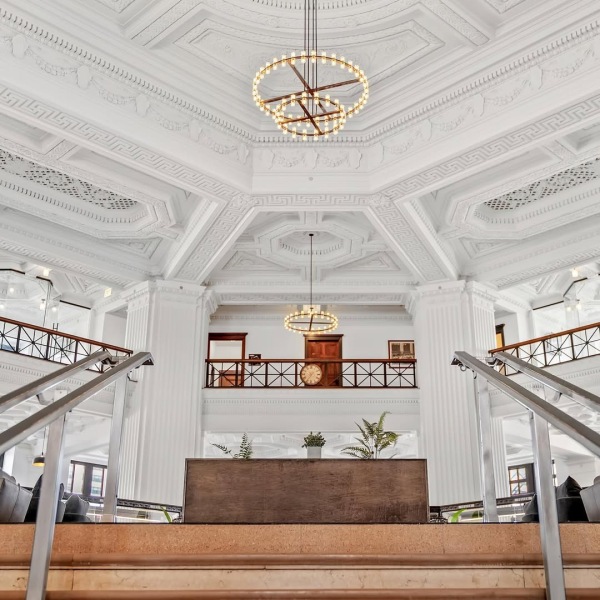
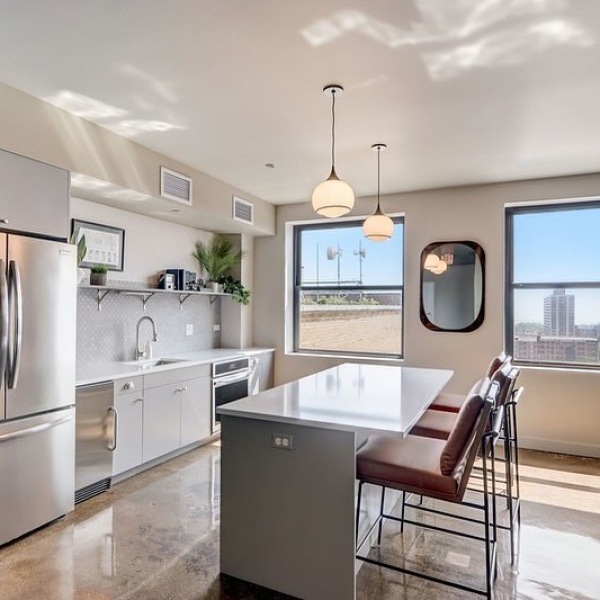
At The Teller House Apartments by Flats®, we love celebrating the rich cultural tapestry and exceptional dining culture surrounding our community. Offering luxury apartments in Uptown Chicago, our beautifully transformed historic bank building places residents steps away from iconic theatres, lively music venues, and one of the finest Southeast Asian culinary corridors in the country.
Ready to explore the delicious dining options waiting near your front door? Take a look at our complete best vietnamese uptown chicago guide to plan your next local food adventure!