

What is a Loft?
The loft meaning has transformed dramatically over the centuries, evolving from simple storage spaces to some of the most sought-after living environments in urban centers today.
Quick Definition:
- Noun (Storage): A space under a roof, typically used for storing items (like an attic)
- Noun (Residential): A large, open apartment in a converted industrial building with high ceilings and minimal interior walls
- Noun (Architecture): An upper floor or liftd area in a building, such as a hayloft or church gallery
- Verb: To hit or throw something high into the air (especially in sports)
When most people search for "loft meaning" today, they're usually thinking about those stunning open-plan apartments with soaring ceilings, exposed brick walls, and massive windows flooding the space with natural light. These modern lofts bear little resemblance to their humble origins as storage spaces tucked beneath farmhouse roofs or upper floors of warehouses.
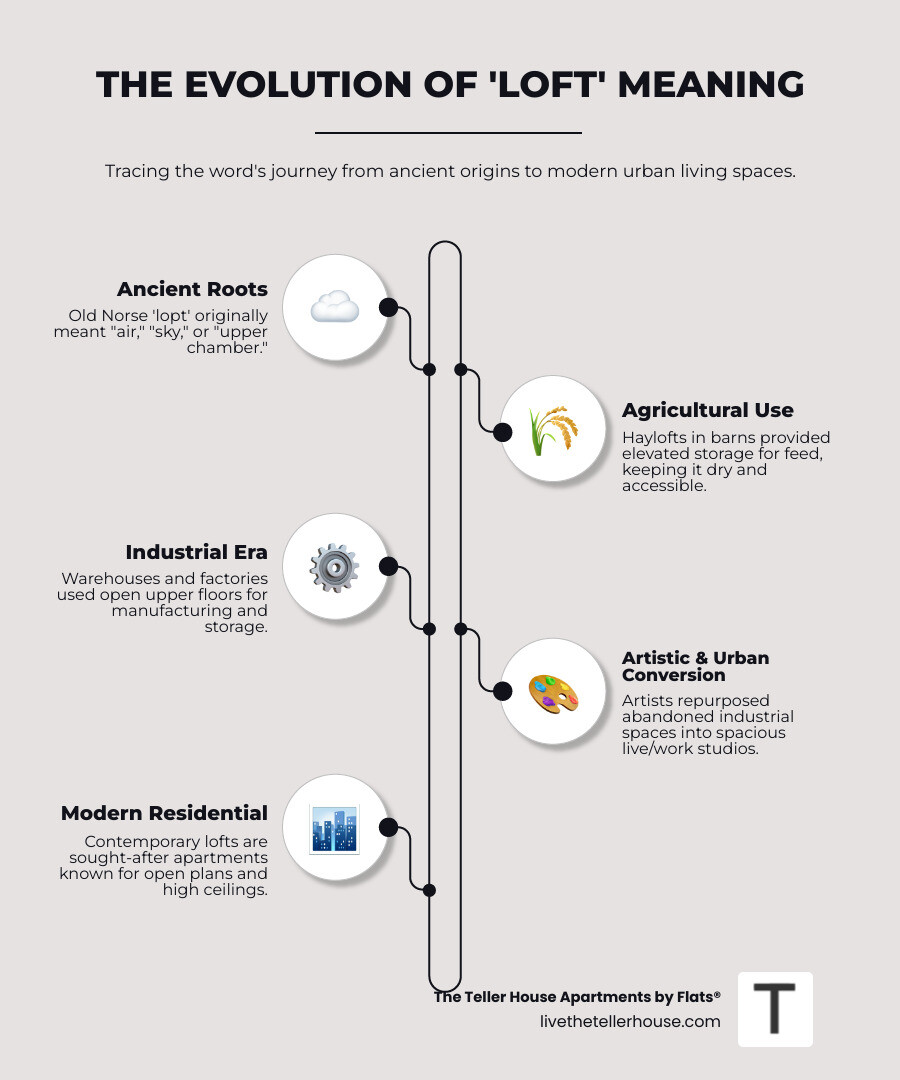
The word itself comes from Old Norse lopt, meaning "air," "sky," or "upper chamber." This etymology hints at the liftd nature of lofts—spaces that literally reach toward the sky. Over time, the term has expanded to describe everything from the hay storage area in a barn to the choir balcony in a church, and eventually to the industrial-chic apartments that define contemporary urban living.
Understanding what makes a space a true loft—versus just an apartment with high ceilings—requires looking at both architectural features and historical context. The distinction matters not just for real estate purposes, but for anyone seeking a particular lifestyle and aesthetic in their living space.
The Evolving Loft Meaning: From Hay Bales to High Ceilings
The journey of the word "loft" is a fascinating one, reflecting shifts in architecture, industry, and urban living. Its loft meaning has expanded far beyond its initial agricultural roots to encompass a sophisticated residential style.
Etymology
The linguistic origins of "loft" trace back to the Old Norse word lopt, which conveyed concepts of "air," "sky," or an "upper chamber." This ancient root immediately conjures images of liftd spaces, often open to the elements or situated high within a structure. This connection to height and openness has remained a core characteristic of the word's various interpretations throughout history.
Historical Uses
Before becoming trendy apartments, lofts served practical purposes. For centuries, a common loft meaning referred to a hayloft—an elevated area in a barn for storing hay, essential for agricultural communities. Lofts also appeared in religious architecture as choir or organ lofts, elevated platforms for musicians. Other historical uses included pigeon lofts for housing domestic pigeons. These early examples demonstrate the versatility of the "loft" concept as a functional, elevated space.

Industrial Revolution
The Industrial Revolution dramatically reshaped urban landscapes and, consequently, the loft meaning. As cities like Chicago grew into manufacturing powerhouses, vast multi-story warehouses and factories sprang up. These buildings featured large, open upper floors designed to accommodate heavy machinery, raw materials, and assembly lines. With soaring ceilings, expansive floor plans, and large windows to maximize natural light for workers, these industrial spaces were purely functional.
As manufacturing methods evolved and industries shifted, many of these grand, utilitarian buildings in urban centers became vacant. They were often located in prime downtown or near-downtown areas, presenting a unique opportunity for adaptive reuse.
Urban Change
The mid-20th century saw a significant urban change, particularly in cities with rich industrial histories. Artists, seeking large, affordable spaces for their studios and living quarters, began to find the potential of these abandoned industrial buildings. The expansive, open floors, high ceilings, and abundant natural light were perfect for creative work. What started as informal, often illegal, live/work spaces eventually grew into a recognized and desirable housing trend.
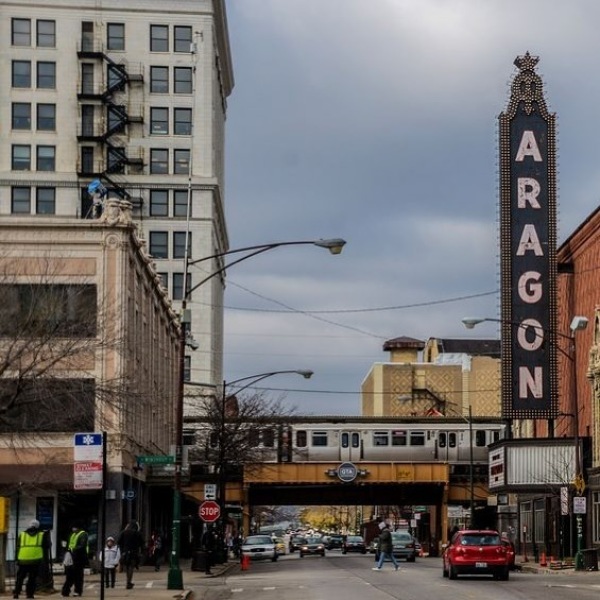
This movement, often associated with areas like SoHo in New York, paved the way for the modern loft apartment. Developers soon recognized the appeal of converting these industrial giants into residential buildings, leading to the "gentrification" of former manufacturing sectors. This conversion process, particularly prevalent in areas like Chicago with its robust industrial past, transformed the loft meaning from a purely functional space to a symbol of urban chic and modern living. We've seen this play out in Chicago, where old brick warehouse buildings are being developed into loft-style offices and apartments, breathing new life into historic structures.
Decoding the Modern Loft: Key Architectural Features
When we talk about a modern loft apartment today, we're referring to a distinct architectural style characterized by several key features that set it apart. These characteristics are often a nod to the building's industrial past, even in newly constructed loft-style properties.
Open-Concept Living
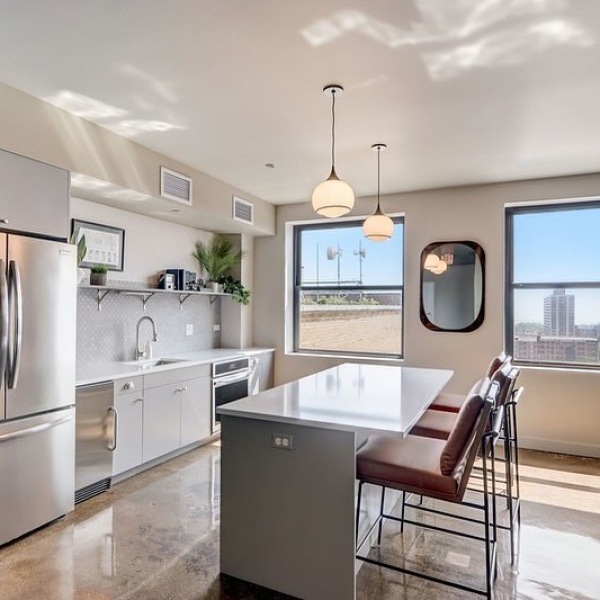
One of the most defining aspects of the modern loft is its open-concept layout. This means minimal interior walls, particularly on the main living level. Kitchens often flow seamlessly into living and dining areas, creating a vast, uninterrupted space. This design promotes a sense of spaciousness and flexibility, allowing residents to configure their living areas to suit their individual needs and preferences. Our own Apartment Floor Plans exemplify how open layouts can maximize living potential.
High Ceilings and Large Windows
Lofts are renowned for their impressive ceiling heights, often ranging from 12 to 20 feet. These towering ceilings contribute significantly to the feeling of openness and grandeur. Complementing this vertical expanse are large, often oversized windows that flood the space with abundant natural light. This combination not only improves the aesthetic appeal but also creates a bright and airy atmosphere, a stark contrast to more traditional residential spaces.
Industrial Aesthetic
Many modern lofts, especially those converted from historic industrial buildings, accept an industrial aesthetic. This includes showcasing elements that were once purely functional but are now celebrated for their raw, urban charm. We often find:
- Exposed Brick: The original brickwork of warehouse walls is left uncovered, adding texture, character, and a sense of history.
- Exposed Ductwork and Piping: Heating, ventilation, and air conditioning (HVAC) ducts, as well as plumbing pipes, are left visible overhead, contributing to the industrial feel.
- Timber Beams and Columns: Heavy timber beams and structural columns, once vital supports for factory floors, are celebrated architectural features.
- Concrete Floors: Polished concrete floors are common, offering durability and a sleek, minimalist look.

Mezzanines and Sleeping Lofts
To make the most of the impressive vertical space, many lofts incorporate mezzanines or sleeping lofts. These are liftd platforms or partial upper floors that overlook the main living area. They can serve various purposes, from an additional bedroom (often called a sleeping loft) to an office, library, or lounge space. A ladder or a compact staircase typically provides access, creating a cozy, semi-private retreat within the larger open space.
Loft vs. Attic: What's the Difference?
While both terms refer to elevated spaces, the loft meaning differs significantly from an attic in modern residential contexts. An attic is typically an enclosed, unfinished storage space under the roof, accessed by a ladder. In contrast, a residential loft is an open, finished living area integrated into the home, often overlooking the floor below and accessed by a proper staircase. Regional usage varies; in the UK, "loft" is often synonymous with the American "attic."
Here's a quick comparison:
| Feature | Loft | Attic |
|---|---|---|
| Primary Use | Living, working, recreational | Storage |
| Access | Stairs | Pull-down ladder or small staircase |
| Structure | Open to below, railings, minimal walls | Fully enclosed, standard walls |
| Design Aesthetic | Modern, industrial, open-concept | Often rustic, unfinished |
| Integration | Part of main living area | Separate, secondary space |
Hard Lofts vs. Soft Lofts: A Guide to the Modern Loft Meaning
The modern residential loft meaning has branched into two categories: hard lofts and soft lofts.
Hard Lofts
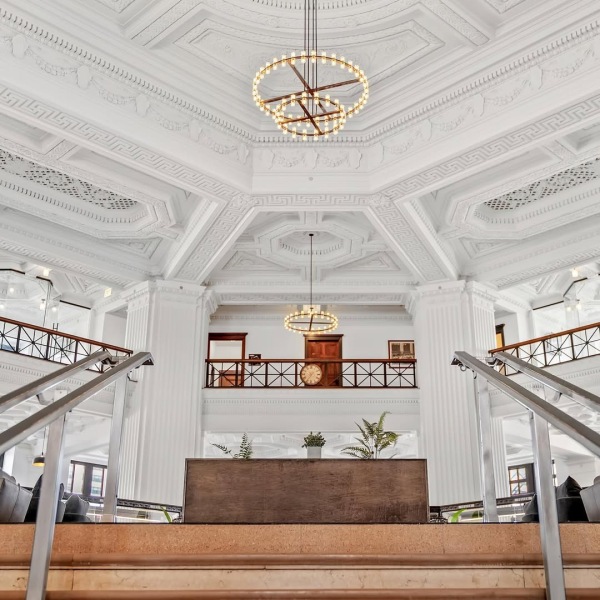
Hard lofts are "true" lofts created by converting historic industrial or commercial buildings into residential units. They are prized for their authentic character, retaining original features like exposed brick, timber beams, exceptionally high ceilings, and large windows. Each hard loft is unique, carrying the history of its former life as a factory or warehouse, a common practice in the urban revitalization of cities like Chicago.
Soft Lofts
Soft lofts are newly constructed buildings designed to mimic the loft aesthetic. They offer the same open-concept living, high ceilings, and large windows but are built from the ground up as residential properties. While they may include industrial-style elements like exposed concrete or ductwork, they also provide modern amenities, finishes, and energy efficiency standards that can be harder to integrate into older conversions. Soft lofts provide the loft look with contemporary convenience.
Both styles appeal to those seeking a distinctive urban living experience, with hard lofts offering authentic history and soft lofts providing modern comfort.
More Than Just a Noun: The Other Meanings of 'Loft'
While the residential apartment is the most common modern loft meaning, the word is surprisingly versatile, extending its reach into various other contexts, both as a verb and in specialized technical definitions.
The Verb 'To Loft': An Action-Packed Definition
Beyond describing a physical space, "loft" also functions as a verb, meaning to propel something high into the air. This action-packed loft meaning is most frequently encountered in sports and general usage.
Sports Context
In sports, particularly those involving a ball, "to loft" describes hitting or throwing an object with an upward trajectory.
- Golf: In golf, "loft" refers to the angle of the club face that causes the ball to rise when struck. To "loft" a ball means to hit it high into the air, often over an obstacle or onto a green with a soft landing. The actual loft of a club's face changes along its surface, helping to negate the effects of hitting the ball too early or late.
- Baseball/Cricket: A batter might "loft" a ball into the outfield, sending it soaring high. For instance, a cleanup hitter might "loft a fly into shallow left field."
- Other Sports: The term can apply to any sport where an object is sent skyward, emphasizing height rather than speed or distance along the ground.
General Usage
The verb "to loft" also appears in more general contexts, describing the act of sending something high up. For example, "electric forces can loft dust into Earth’s atmosphere," or, in a more dramatic sense, "activists might plan to loft them over the Demilitarized Zone in balloons." This usage retains the core idea of elevating an object into the air.
Understanding the Technical Loft Meaning
The versatility of "loft" extends to several niche, technical definitions, primarily in manufacturing and materials science.
- Golf Club Angle: As mentioned, in golf, "loft" is a precise measurement—the angle of the club's face relative to the ground, which dictates the ball's trajectory.
- Fabric Thickness and Resiliency: In textiles, "loft" refers to the thickness, fluffiness, or resiliency of a fabric or insulating material, particularly wool, down, or feathers. This characteristic is crucial for warmth and comfort, especially in items like pillows or jackets. When looking for a pillow, you might consider one with a "low loft" for closer proximity to the mattress, or "medium firmness and loft" to slightly lift the neck.
These technical uses underscore how the core concept of elevation or volume in an upward direction has been adapted across diverse fields.
Frequently Asked Questions about Lofts
We often encounter questions about the nuances of the loft meaning and how these unique spaces fit into the broader residential landscape. Here, we address some of the most common inquiries.
What truly defines a loft apartment?
A true loft apartment, especially a "hard loft," is primarily defined by its origins and its architectural characteristics. It's a large, open-concept living space created from the conversion of a former industrial or commercial building. Key features include:
- Open Floor Plan: Minimal interior walls, creating expansive, adaptable living areas.
- High Ceilings: Often 12 to 20 feet or more, contributing to a sense of grandeur and airiness.
- Large Windows: Typically oversized, allowing for abundant natural light.
- Industrial Elements: Exposed brick, visible ductwork, timber beams, and concrete floors are common, celebrating the building's original character.
- Historical Context: A connection to the building's past life as a factory, warehouse, or similar structure.
Soft lofts replicate these aesthetics in new constructions, offering the loft lifestyle with modern design and amenities.
Can any attic be turned into a loft?
While appealing, converting an attic into a habitable living space (a "loft conversion") is a major renovation, not a simple swap. It requires significant planning and adherence to building codes, including:
- Structural Reinforcement: Ensuring floor joists can support a living space.
- Sufficient Headroom: Meeting local code requirements (e.g., at least 7'6" in Chicago).
- Proper Access: Installing a permanent, safe staircase.
- Systems Installation: Adding insulation, HVAC, and ventilation for comfort.
- Safety Features: Installing windows for light, ventilation, and emergency egress.
Due to these complexities, it's a project that requires professional assessment and construction.
Are lofts and studio apartments the same?
No, lofts and studio apartments are distinct types of living spaces, though both often feature open layouts. The loft meaning implies a specific set of characteristics that differentiate it from a typical studio.
- Scale and Ceiling Height: Lofts are generally much larger than studio apartments, boasting significantly higher ceilings (often 12-20 feet) compared to a standard studio's 8-10 feet. This vertical volume is a hallmark of loft design.
- Industrial Character: Lofts, especially hard lofts, carry an inherent industrial aesthetic with exposed structural elements, large windows, and a history as a former commercial or industrial building. Studio apartments, while they can be modern, typically lack this industrial heritage or architectural character.
- Mezzanines/Sleeping Lofts: Many lofts use their height to incorporate liftd sleeping areas or mezzanines, effectively creating a separate zone without full walls. Studios, being smaller and with lower ceilings, rarely have this feature.
- History: The origin story of a loft (converted industrial space) is a key part of its identity, whereas a studio apartment is simply a compact, self-contained living unit, often purpose-built as such.
While a studio apartment might be a single open room, a loft offers a grander, more expansive, and often historically rich open-concept living experience. This is a common point of discussion in the Chicago rental market, where the distinction is clearly recognized.
Conclusion: The Enduring Appeal of Loft Living
The loft meaning has undergone a remarkable journey, changing from simple agricultural storage to a celebrated symbol of modern urban living. What began as an liftd space for hay or a perch for pigeons evolved through the industrial age into vast factory floors, eventually captivating artists and urban dwellers with its raw potential. Today, the appeal of lofts lies in their unique blend of history, expansive space, and distinctive character.
Modern lofts, whether they are authentic hard loft conversions or newly built soft lofts, offer a lifestyle that champions openness, light, and a connection to the urban environment. Residents are drawn to the soaring ceilings, the abundant natural light streaming through oversized windows, and the industrial aesthetic—the exposed brick, the visible ductwork, the robust timber beams. These features create living spaces that are not just homes, but expressions of individuality and appreciation for architectural heritage.
In cities like Chicago, where historic industrial buildings are reimagined for contemporary living, lofts represent a dynamic intersection of past and present. They offer a unique charm that traditional apartments simply cannot replicate. For those who seek a living space that tells a story, accepts open design, and stands apart from the conventional, the enduring appeal of the loft is undeniable.
If you're captivated by the allure of loft living, we invite you to experience it firsthand. Explore our luxury lofts in Chicago and find how we've blended historic charm with sophisticated modern design in Uptown Chicago.