

Why Apartment Floor Plans Matter in Your Search
Apartment floor plans are your roadmap to understanding how a space will work for your daily life. These detailed diagrams show the layout, dimensions, and features of each unit, helping you visualize everything from furniture placement to natural light flow.
Renters consistently prioritize specific features when reviewing floor plans: storage space (walk-in closets, pantries), kitchen layout (islands, cabinet space), and natural light (window placement). Modern apartment designs increasingly include flexible spaces like home office nooks and open-concept living areas.
A well-designed floor plan can transform your daily routine by ensuring the layout supports your morning commute from bedroom to kitchen, provides space for a work-from-home setup, or allows for entertaining guests. These practical considerations often matter more than square footage alone. Understanding floor plans helps you compare options objectively, evaluating actual room dimensions and traffic patterns instead of relying on potentially misleading photos.
1. Decode the Basics: Types and Symbols
Think of apartment floor plans as a visual language. Once you master the common layouts and symbols, every diagram becomes a clear story about how you'll live in a space.
Understanding Common Apartment Layouts
Each layout type serves different lifestyles, and understanding these differences helps you find your perfect match.
- Studio apartments (450-728 sq ft) combine the living room, bedroom, and kitchen into one shared area, with a separate bathroom. Some feature an alcove design for a partially separated sleeping nook.
- One-bedroom apartments (450-790 sq ft) offer a separate bedroom with a door, providing more privacy. Many designs include walk-in closets, in-unit laundry, and private balconies. For a taste of luxury living, check out our Luxury One Bedroom Apartments Uptown Chicago.
- Two-bedroom layouts (878-1,610 sq ft) provide a flexible second room for a home office, guest room, or creative studio. These plans often include two bathrooms.
- Three-bedroom apartments (1,194-1,914 sq ft) are spacious options that often include bonus features like kitchen islands, butler's pantries, and primary suites with double sinks.
A well-planned 800-square-foot space can feel more comfortable than a poorly designed 1,200-square-foot apartment, proving that smart design is more important than just square footage.
Reading the Symbols
Learning to read the symbols on a floor plan transforms a flat drawing into a preview of your daily life.
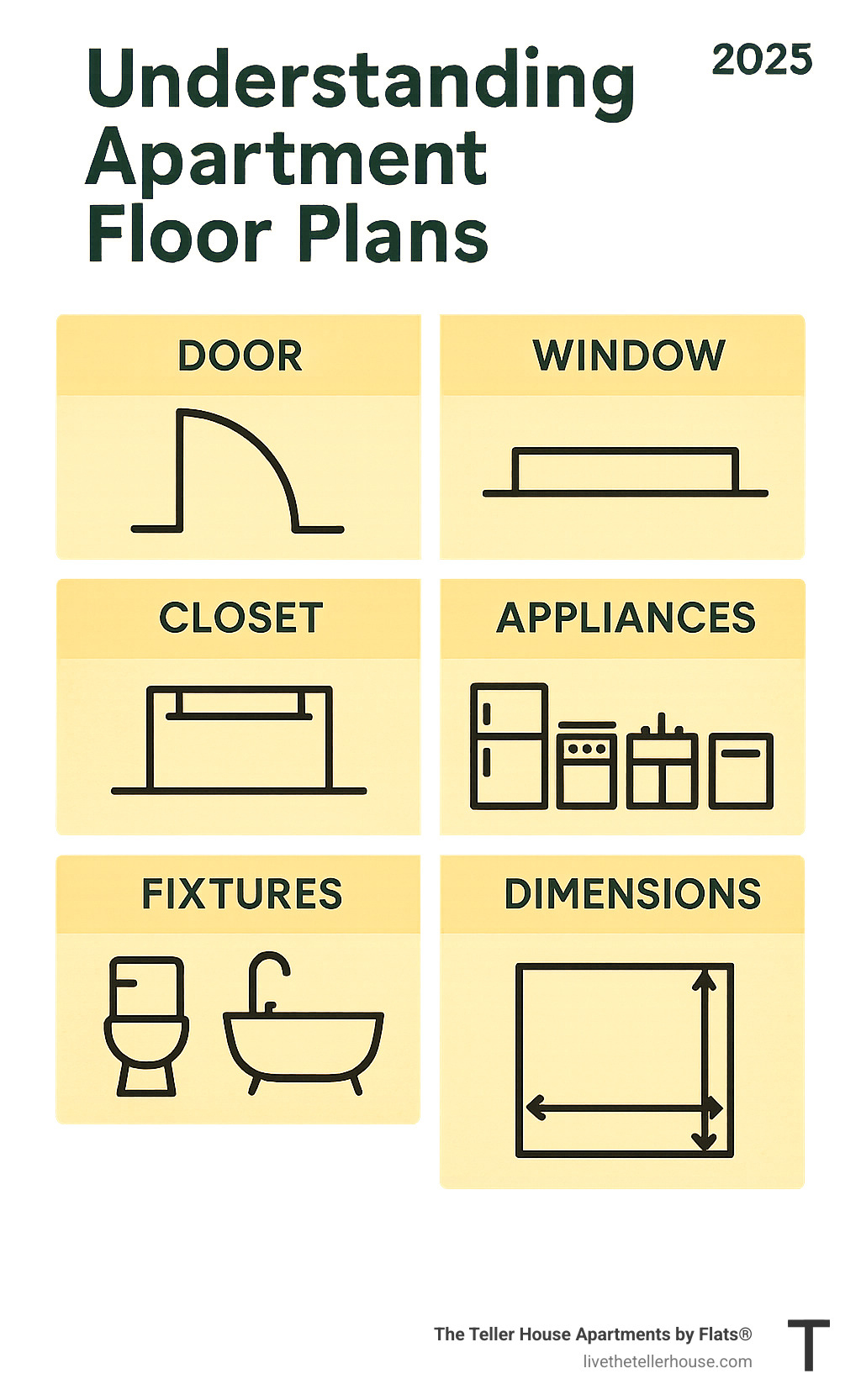
- Door swings (curved lines) show how a door opens and the clearance it needs.
- Windows (rectangles on walls) indicate sources of natural light and potential views.
- Closets are rectangles, often with a line representing the clothing rod. Walk-in closets appear as small, accessible rooms.
- Kitchen and bathroom symbols show the placement of appliances (refrigerators, ranges) and fixtures (toilets, tubs).
- Scale indicators (e.g., "1/4" = 1'") help you measure rooms to ensure your furniture will fit.

Once you can read these symbols, you can spot potential problems and opportunities you might have missed during a quick walkthrough.
2. Visualize the Flow and Layout Efficiency
A floor plan isn't just about room count; it's about how the space flows and supports your daily life. A well-designed apartment floor plan makes your routine effortless, while a poor one can feel like an obstacle course.
Analyzing Traffic Patterns
- Open-concept layouts blend the kitchen, living, and dining areas, creating a sense of spaciousness ideal for entertaining. They require thoughtful furniture placement to create distinct zones.
- Traditional layouts use walls to define rooms, offering more privacy and noise control, which is beneficial for remote work.
- The path from entry to kitchen should be direct for convenience, especially when carrying groceries.
- Bedroom-to-bathroom access is best when it doesn't require crossing main living spaces, ensuring privacy.
- Avoid layouts with wasted space, like long, functionless hallways that reduce usable square footage. Our Modern Apartments Chicago are designed to maximize every square foot.
Matching the Layout to Your Lifestyle
Your apartment floor plan should work with your lifestyle, not against it.
- For remote work, look for alcoves, built-in desks, or dedicated home office spaces that provide a quiet, productive environment.
- For entertaining, consider how the living and dining areas connect. An open kitchen allows you to interact with guests while preparing food.
- For furniture placement, use the scale markers on the floor plan to mentally arrange your furniture and ensure everything fits comfortably.
- For privacy, especially in multi-bedroom units, consider how sound might travel and whether bedroom locations offer enough separation.
3. Go Beyond the Lines with 3D and Virtual Tours
Technology offers an immersive way to experience a layout before you step inside. While a 2D apartment floor plan provides an essential roadmap, 3D plans and virtual tours reveal the true character and feel of a space.
A flat diagram shows wall locations, but it can't always convey if a room will feel spacious or cramped. This is where modern visualization tools become invaluable.
- 3D floor plans transform flat lines into a realistic representation, helping you visualize details like ceiling heights and how different areas flow together.
- Virtual tours put you in the middle of the action, allowing you to "walk" through the apartment and gain a genuine sense of spatial awareness. You can better judge if your furniture will fit or if a room feels cozy.
These tools are especially useful for understanding natural light patterns and scale. A virtual tour can show how sunlight fills a room throughout the day, while experiencing the space from a first-person perspective provides insights that measurements alone can't capture.

Our Virtual Tours bring apartment floor plans to life, bridging the gap between a drawing and a physical walkthrough. This approach saves time and helps ensure a better match between your needs and your new home.
4. Scrutinize the Details: Storage, Light, and Features
The magic of an apartment floor plan often lies in the details. Small elements can make the difference between feeling cluttered and feeling organized.
Evaluating Storage and Windows
Smart storage solutions are game-changers in apartment living. Look for walk-in closets in the primary bedroom, a linen closet for bathroom organization, and ample pantry space in the kitchen. The cabinet layout is also important; ensure there is enough counter space for food preparation and that cabinets are easily accessible.
Window placement dramatically affects a space's feel. The number and position of windows determine natural light, ventilation, and views. Apartments with expansive windows, like our Chicago Apartments with Skyline View, create an indoor-outdoor connection that makes city living feel more open and airy.
Identifying Key Features
Specific features can lift your daily experience.
- A kitchen island can serve as a gathering spot, extra counter space, and a casual dining area.
- In-unit laundry offers significant convenience, but check its placement to consider noise and accessibility.
- Balconies and patios extend your living space outdoors, providing a place for fresh air and relaxation.
- The bathroom layout can include features like walk-in showers, double vanities, or oversized tubs that create a personal retreat.
We understand that these details create the difference between an apartment that simply houses you and one that supports your lifestyle. Explore more on our Amenities page.
5. Spot Modern Trends in Apartment Floor Plans

Today's apartment floor plans reflect how we live now, with designs that accommodate remote work, entertaining, and a desire for adaptable spaces.
- Flexible spaces and home office nooks are now essential. Modern layouts incorporate dining nooks that double as workspaces or built-in desks tucked into alcoves, recognizing that our homes must serve multiple functions.
- Open-concept living has evolved to create distinct zones within a shared space. A kitchen island or thoughtful furniture placement can define areas without closing them off.
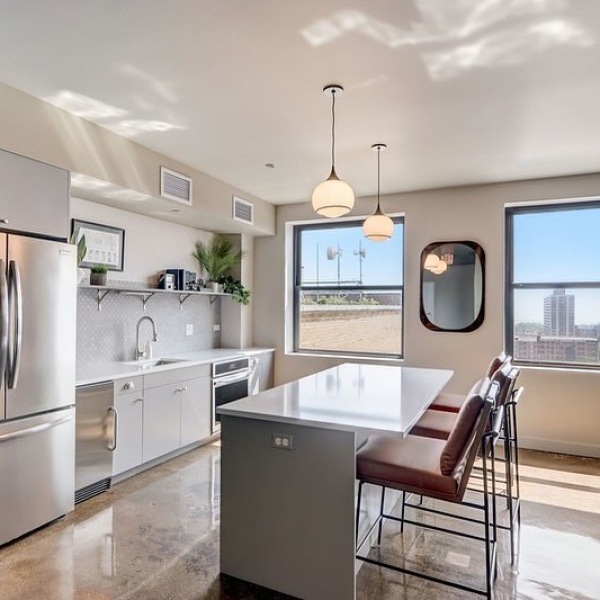
- Improved kitchen designs are a priority. Look for features like large islands, 42-inch cabinets, gas ranges, and premium counters. Some luxury units even include a butler's pantry for extra prep and storage space.
- The indoor-outdoor connection is emphasized with balconies, patios, and large windows that bring in natural light and create a sense of spaciousness.
These trends aren't just about fashion; they're about creating homes that are more comfortable, functional, and valuable for modern lifestyles.
6. Compare Different Options Like a Pro
When you're considering multiple apartments, apartment floor plans are your tool for making smart, objective decisions beyond glossy photos.
Using Apartment Floor Plans for Effective Comparison
Approach your search systematically. First, create a checklist of your must-haves (like in-unit laundry) and nice-to-haves (like a separate dining area). As you review each apartment floor plan, you can quickly see which units meet your criteria and visualize any trade-offs.
Square footage can be misleading. A 700-square-foot apartment with a long hallway might feel smaller than a 650-square-foot unit with an efficient, open design. Compare the usable space in each room, not just the total numbers. Note how layouts with the same bedroom count can vary, such as with open vs. contained kitchens or split-bedroom designs for added privacy.
Understanding Multi-Unit and Duplex Plans
In multi-unit buildings, the layout can influence how much you hear from neighbors. Some apartment floor plans strategically place bedrooms away from shared walls. Also, consider that while your apartment is private, you will have less personal outdoor space and more interaction in shared areas. The floor plan helps you understand how your unit fits into the larger building and the lifestyle it offers.
7. Ask the Right Questions During Your Tour
The physical tour is your chance to verify the apartment floor plans and find details a drawing can't capture. Bring the floor plan with you to confirm that reality matches your expectations.
Verifying the Plan in Person
- Confirm dimensions and get a real feel for the space. Bring a measuring tape to double-check if your furniture will fit.
- Check feature placement to ensure it's practical. Does the refrigerator door block a walkway? Is there enough clearance for the washing machine door?
- Note outlet locations. Make sure there are enough conveniently placed outlets for your electronics and lamps.
Ready to see our spaces firsthand? Schedule a Tour with us to see how our apartment floor plans translate into functional living spaces.
Inquiring About Orientation and Views
A floor plan shows window locations, but not the quality of light or the view.
- Ask about the unit's orientation. East-facing units get morning sun, while west-facing ones get afternoon sun. North-facing units have consistent, soft light, and south-facing units typically get the most light overall.
- Check the views from the windows. A view of a busy street offers a different experience than one of a quiet courtyard.
- Listen for noise. Note the unit's proximity to elevators, stairwells, or busy streets, as this can affect your daily comfort.
Frequently Asked Questions about Apartment Layouts
What is a good size for a one-bedroom apartment?
A typical one-bedroom apartment ranges from 450 to 750 square feet, providing enough space for a living room, kitchen, and a separate bedroom. Luxury developments may offer layouts over 1,000 square feet with additional features. The ideal size depends on your lifestyle and how much space you need to feel comfortable.
How do I know if a floor plan is efficient?
An efficient apartment floor plan minimizes wasted space, such as long, narrow hallways. The layout should feel intuitive and support your daily routine, with logical paths between rooms (e.g., from the bedroom to the bathroom). Efficient layouts maximize usable living space, making even smaller apartments feel roomy.
What are the most important things to look for in an apartment floor plan?
Focus on three key elements: layout flow, storage, and natural light. Ensure the layout fits your daily routines, check for ample closet and cabinet space, and note the number and placement of windows. Also, consider features that match your lifestyle, like kitchen islands, balconies, or dedicated workspaces.
Find Your Ideal Layout
Understanding apartment floor plans is the key to a confident, informed apartment search. It allows you to move beyond photos and choose a home that truly fits how you live, from furniture placement to daily routines.
A well-designed layout maximizes not just square footage, but your comfort. Details like a dedicated workspace or a kitchen island are the elements that make a space feel like home.
At The Teller House, we've created apartment floor plans that blend timeless character with modern convenience. Our historic apartments in Chicago feature thoughtful touches like practical in-unit laundry placement, central kitchen islands, and smart storage solutions.
Ready to find the layout that's right for you? Explore our Floor Plans and see how our designs translate into your future home.