

What to Know About 1 Bedroom Apartment Floor Plans with Dimensions
Searching for 1 bedroom apartment floor plans with dimensions can feel overwhelming — there are dozens of layouts, size ranges, and features to sort through. Here's a quick snapshot of what to expect:
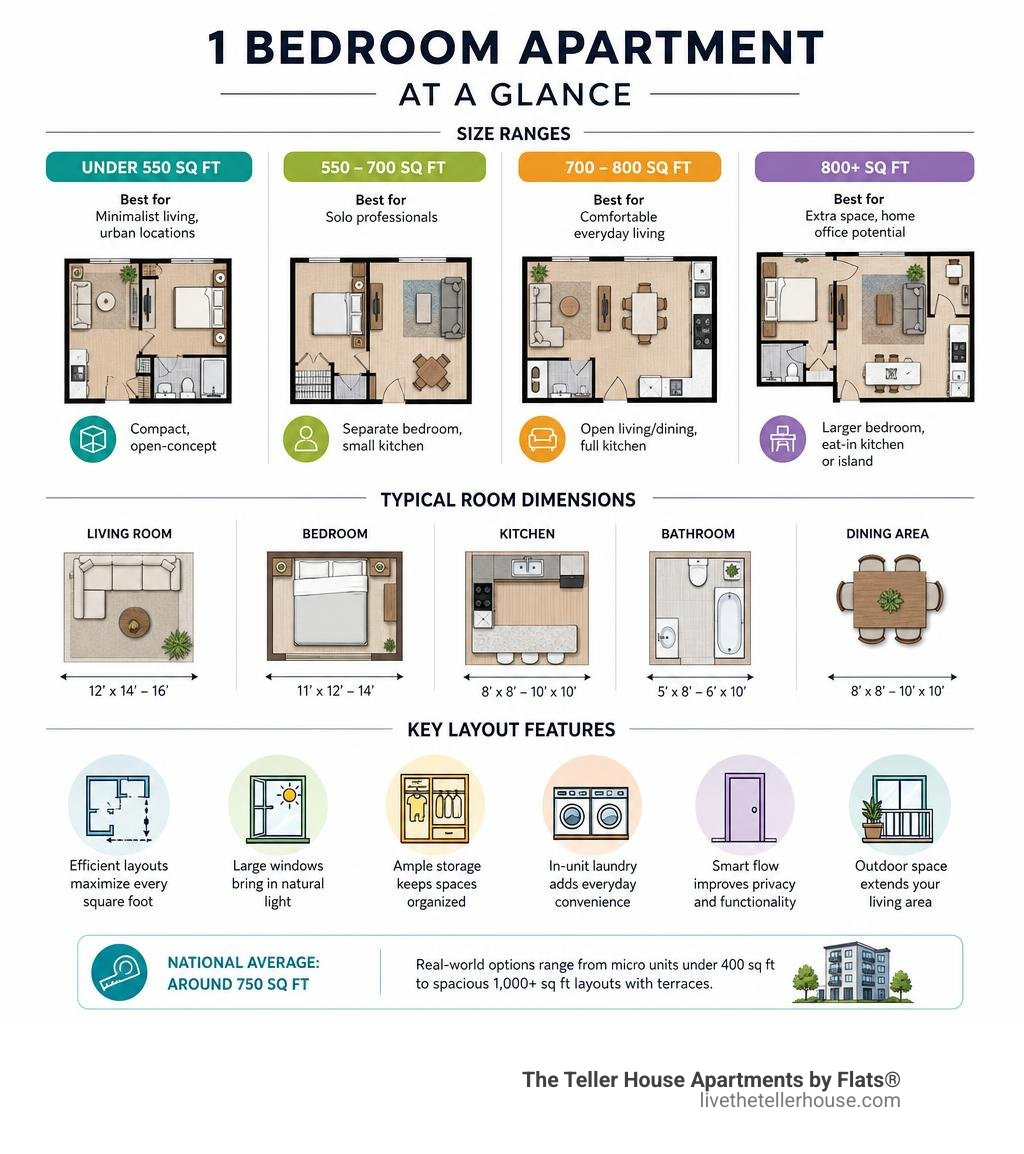
Common 1-Bedroom Floor Plan Sizes at a Glance
| Size Range | Best For | Typical Layout |
|---|---|---|
| Under 550 sq ft | Minimalist living, urban locations | Compact, open-concept |
| 550-700 sq ft | Solo professionals | Separate bedroom, small kitchen |
| 700-800 sq ft | Comfortable everyday living | Open living/dining, full kitchen |
| 800+ sq ft | Extra space, home office potential | Larger bedroom, eat-in kitchen or island |
The national average for a one-bedroom apartment sits at around 750 square feet — but real-world options range from micro units under 400 sq ft all the way to spacious 1,000+ sq ft layouts with terraces.
Whether you want an open-concept design with a kitchen island, a cozy compact unit, or an ADA-accessible layout, the floor plan you choose shapes everything — from how your furniture fits to how natural light moves through your space.
This guide walks through the most common layouts, real dimensions by room, and what trade-offs to expect as you compare your options.
Understanding 1 Bedroom Apartment Floor Plans with Dimensions
When you begin your search for the perfect living space, understanding how square footage translates into real-world livability is key. Studio and one-bedroom apartments account for about 36% of all rental units in major U.S. metropolitan areas. Furthermore, more than 60% of new multifamily construction in recent years has focused on these smaller, highly efficient footprints.
As we look at modern housing trends in June 2026, developers continue to prioritize smart design over raw square footage. To get a sense of what is available across the market, you can explore various options like this STUDIO / 1 BATH 617 SF or view high-end architectural layouts via this 1 BEDROOM, 1 BATHROOM blueprint.
When analyzing 1 bedroom apartment floor plans with dimensions, it helps to understand the baseline. Most standard one-bedroom units range from 550 to 850 square feet. Within this range, how the space is divided dictates how comfortable you will feel. A poorly planned 800-square-foot apartment can feel cramped if it has long, useless hallways, while a well-designed 550-square-foot home can feel incredibly breezy and open. For a deeper dive into layout varieties, check out our guide on 1 Bedroom Apartment Floor Plans and our comprehensive 1 Bedroom Apartments Chicago Guide.
Comparing 1 Bedroom Apartment Floor Plans with Dimensions Side-by-Side
To truly understand how square footage impacts your daily life, it helps to look at two common configurations side-by-side.
| Feature | Compact Layout (Approx. 550 sq ft) | Spacious Layout (Approx. 800 sq ft) |
|---|---|---|
| Primary Living Area | 11' x 13' (Cozy, fits a love seat and TV wall) | 14' x 16' (Fits full sectional and media console) |
| Kitchen Style | Galley or single-wall kitchen | L-shape with kitchen island or eat-in space |
| Bedroom Size | 10' x 10' (Fits a queen bed and one nightstand) | 11' x 14' (Fits a king bed, nightstands, and dresser) |
| Closet Space | Standard reach-in closet | Walk-in closet |
| Bonus Features | Often stackable laundry closet | Dedicated laundry room or utility closet |
In dense urban environments, you might even encounter micro-apartments. Some ultra-efficient homes utilize 20x20 layouts that pack a kitchen, bathroom, and living/sleeping area into just 400 square feet. While micro-units require creative, multi-functional furniture, standard Apartment Floor Plans in the 600 to 800 square foot range offer much more breathing room without requiring you to fold your bed into the wall every morning.
Key Features of 1 Bedroom Apartment Floor Plans with Dimensions
Not all floor plans are created equal. The presence of specific architectural features can completely change how you use your home:
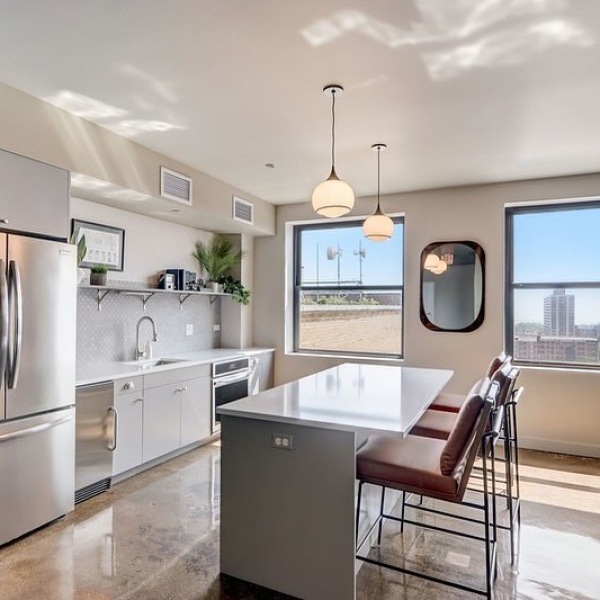
- Kitchen Islands vs. Eat-In Kitchens: An L-shaped kitchen with a central island provides excellent food prep space and doubles as a dining bar with stool seating. On the other hand, an eat-in kitchen leaves dedicated floor space for a small dining table.
- In-Unit Washer and Dryer: Having a stackable or side-by-side laundry set tucked into a hallway closet is a major convenience that saves trips to a communal laundry room.
- Balconies and Outdoor Space: A private balcony extending off the living room adds valuable breathing room and allows you to enjoy your morning coffee outdoors.
- Sunrooms: For those who need a dedicated home office or a bright reading nook, looking for options like 1 Bedroom Apartments with Sunroom provides the perfect solution without upgrading to a full two-bedroom home.
Analyzing Layout Types and Furniture Placement
How you arrange your furniture depends entirely on the flow of your floor plan. The two most common kitchen and living configurations are open-concept layouts and traditional galley kitchens.

Open-concept designs merge the kitchen, dining, and living areas into one large, continuous space. This layout makes smaller apartments feel much larger and allows natural light from the living room windows to reach the kitchen. However, it requires you to be deliberate with your furniture placement to define separate "zones" for cooking, eating, and relaxing.
Conversely, a galley kitchen keeps the cooking area separate, which is great for keeping messy dishes out of sight when guests are over, but it can sometimes feel a bit narrow. To see how these configurations look on paper, you can view a One Bedroom Apartment First Floor Plan | Designs CAD or explore the A0 Floor Plan at Railyard Modern Living for a modern take on efficient layout design. To learn more about optimizing your flow, read about the One Bed Apartment Layout and check out the 1 BHK Blueprint for structural inspiration.
Kitchen and Living Area Configurations
In an open-concept layout, the kitchen often features an L-shaped counter or a straight single-wall design. If your layout includes a kitchen island, you can easily place barstools underneath it, eliminating the need for a bulky dining table.
For the living area, standard dimensions of 12' x 15' allow you to place a medium-sized sofa against one wall and a television console opposite it. To maximize flow:
- Use area rugs to visually anchor the living space away from the kitchen tile or wood plank flooring.
- Keep main walkways at least 3 feet wide so you aren't constantly dodging the coffee table.
- Choose low-profile furniture to keep sightlines clear and let natural light flood the entire room.
Bedroom and Bathroom Flow
The transition between your private sleeping quarters and the bathroom is another crucial layout consideration. Some floor plans feature an en-suite bathroom accessible only through the bedroom. This setup offers maximum privacy for you, but it means guests have to walk through your bedroom to use the restroom.
Other layouts position the bathroom entrance in a shared hallway, which is ideal for hosting. Additionally, look for walk-in closets situated off the bedroom or bathroom. A well-placed closet not only keeps your wardrobe organized but also acts as an extra sound barrier between your bedroom and the main living area.
Standard Room Dimensions and Square Footage Trade-offs
When reading a blueprint, it is helpful to know what standard dimensions actually look like in practice.
Here are the typical dimensions you can expect in a standard 750-square-foot one-bedroom apartment:
- Bedroom: 11' x 12' (Plenty of room for a queen bed, two nightstands, and a dresser)
- Living/Dining Area: 12' x 18' (Spacious enough for a sofa, armchair, and media setup)
- Kitchen: 8' x 10' (Standard U-shape or galley configuration)
- Bathroom: 5' x 9' (Standard full bath with a tub/shower combo and vanity)
It is important to note how developers calculate these numbers. Stated dimensions are typically measured from the exterior boundaries of the building and the centerline of shared demising walls. Because of this, the actual interior airspace may be slightly smaller. Additionally, room measurements are often taken at the widest points of each room, meaning structural pillars, heating units, or wall cutouts can reduce the usable floor space slightly.
ADA-Accessible Layouts vs Standard Units
ADA-accessible one-bedroom apartments are designed with universal accessibility in mind, which alters their dimensions and flow compared to standard units. An ADA-compliant floor plan (often around 690 to 750 square feet) prioritizes clearance and ease of movement:
- Turning Clearance: Bathrooms and kitchens must feature a clear, circular turning space of at least 60 inches (5 feet) to allow a wheelchair to make a complete 180-degree turn.
- Wider Doorways: Doorways must provide a minimum clear width of 32 inches, which often requires wider hallways and larger overall door frames.
- Roll-In Showers and Lowered Counters: Bathrooms typically feature roll-in showers with grab bars, while kitchens offer lowered countertops and open knee space under the sink for easy access.
These structural requirements mean that while an ADA unit might have the same overall square footage as a standard unit, the layout is distributed differently to ensure comfortable, unobstructed movement throughout the home.
Location-Specific Considerations
In historic urban areas like Cook County and Chicago, IL, floor plans are deeply influenced by the local architectural heritage. Many luxury developments in these areas are adaptive reuse projects — historic bank buildings, warehouses, or mid-century towers transformed into modern residences.
Living in a converted historic building means your floor plan might feature unique elements like soaring ceilings, exposed concrete or brick walls, and oversized industrial windows. However, because these buildings have fixed structural footprints, floor plans can vary wildly from unit to unit. You might find one-of-a-kind layouts with interesting angles, deep window sills, or original structural columns that add immense character to your home.
To explore what is currently available on the market in Cook County, you can browse local listings on Zillow, view options on Apartments.com, or check out Homes.com. For luxury-specific design inspiration, take a look at the floor plans at One Chicago, explore the layout options at Optima Signature, or view the high-rise designs at 1000M Chicago.
Frequently Asked Questions
What is the average size of a 1-bedroom apartment?
The average size of a one-bedroom apartment in the United States is approximately 750 square feet. However, in dense urban markets like downtown Chicago, sizes can range from compact 500-square-foot units to luxury layouts exceeding 900 square feet.
How do ADA-compliant 1-bedroom floor plans differ from standard layouts?
ADA-compliant layouts feature wider doorways (at least 32 inches of clear width), a 5-foot turning radius in the kitchen and bathroom, roll-in showers, and lowered countertops. These modifications ensure the space is fully navigable and comfortable for everyone.
What is the difference between a compact 1-bedroom and a studio?
A compact one-bedroom apartment has a fully enclosed bedroom with permanent, floor-to-ceiling walls and a door separating the sleeping area from the living space. A studio apartment consists of a single, open room that combines the living, dining, and sleeping areas without structural walls separating them.
Conclusion
Finding the right floor plan is all about aligning your daily routines with the flow of the space. Whether you prefer a modern open-concept layout with a sleek kitchen island or a unique floor plan filled with historic character, understanding dimensions and layout trade-offs will help you make an informed decision.
At The Teller House Apartments by Flats®, we have meticulously transformed a historic bank building into sophisticated, modern residences in the heart of Uptown Chicago. Our luxury apartments combine stunning architectural character with thoughtful, high-end designs. Located just steps from prominent historic theatres and vibrant cultural attractions, our community offers an unparalleled living experience.
Ready to find your perfect layout? Explore our available options and view our Floor Plans Overview today!