

Why 1 Bedroom Layout Plans Matter More Than Most Renters Realize
Choosing the right 1 bedroom layout plans can make the difference between a home that feels spacious and one that feels cramped — even at the exact same square footage.
Here's a quick look at the most common one-bedroom layout types and what makes each one work:
| Layout Type | Best For | Key Trait |
|---|---|---|
| Open-concept | Maximizing visual space | Kitchen, dining, and living share one zone |
| Galley/Linear | Efficient small footprints | Rooms arranged along a single corridor |
| L-shaped | Corner units with more light | Two walls of windows, flexible living area |
| One-bed + flex | Work-from-home needs | Extra nook for desk, guests, or storage |
One-bedroom homes and apartments span a wide range — from ultra-compact 400 sq ft units to more generous 1,000+ sq ft layouts. According to plan collections featuring hundreds of one-bedroom designs, floor plans commonly range from around 400 sq ft all the way up to nearly 2,000 sq ft, depending on the structure type and intended use.
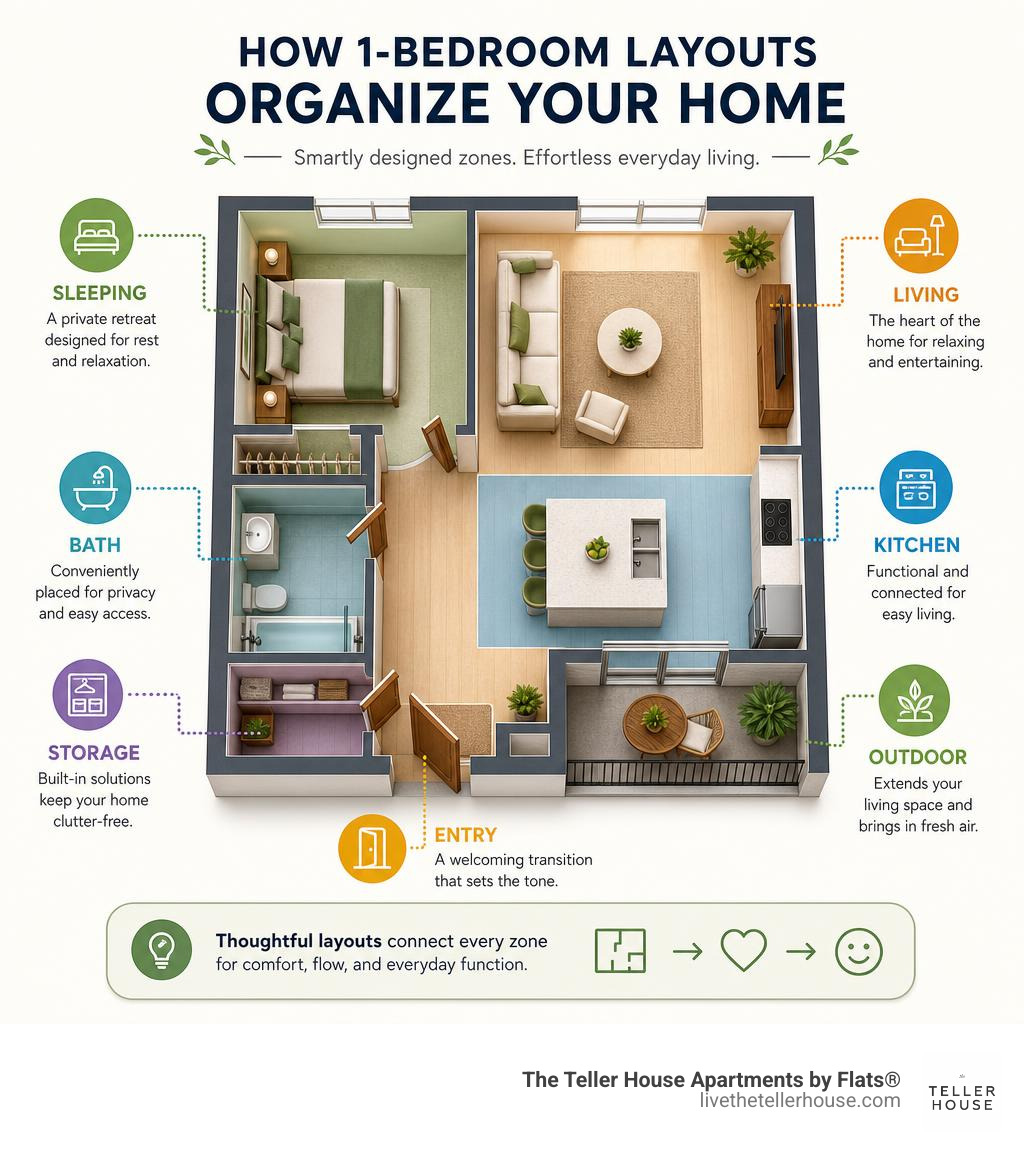
But square footage alone doesn't tell the whole story. How a plan organizes the bedroom, living area, kitchen, bathroom, storage, and entry — and how those zones connect — determines how comfortable daily life actually feels.
This guide walks through every major aspect of one-bedroom layout planning, from room dimensions and furniture placement to storage, natural light, and how architectural style shapes the final design.
1 Bedroom Layout Plans: The Most Popular Apartment Configurations
When searching for the perfect Apartment Floor Plans, you will quickly notice that layout configurations fall into a few primary design categories. The way these spaces are arranged determines everything from how easy it is to host dinner parties to where you can hide your laundry pile.
In Chicago's historic buildings, layouts are often influenced by the original structural architecture, blending classic charm with modern apartment design. Whether you are browsing contemporary high-rises or beautifully converted historic properties, the layout type dictates your daily flow.
Open-Concept 1 Bedroom Layout Plans
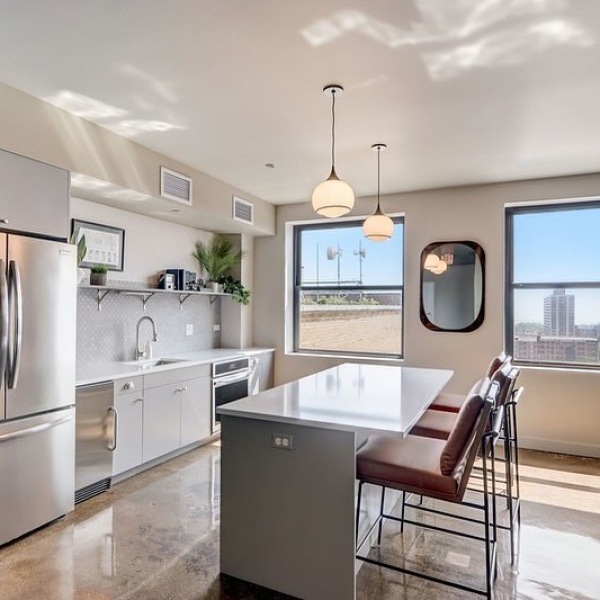
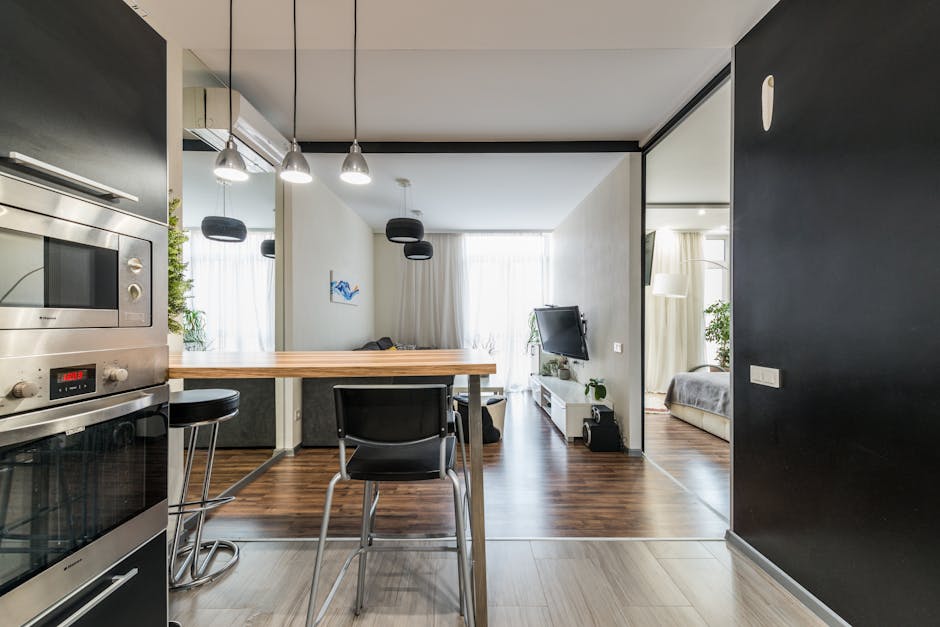
The open-concept layout is the darling of modern design, and for good reason. By combining the kitchen, dining, and living areas into a single, cohesive room, this configuration eliminates unnecessary hallways and walls. This creates long sightlines and allows natural light to reach every corner.
In an open-concept layout, you can easily chat with guests while prepping dinner at the kitchen island. Flexible furniture arrangements are key here; a well-placed rug or a floating sofa can easily define separate zones without closing off the space.
Galley and Linear One-Bedroom Layouts
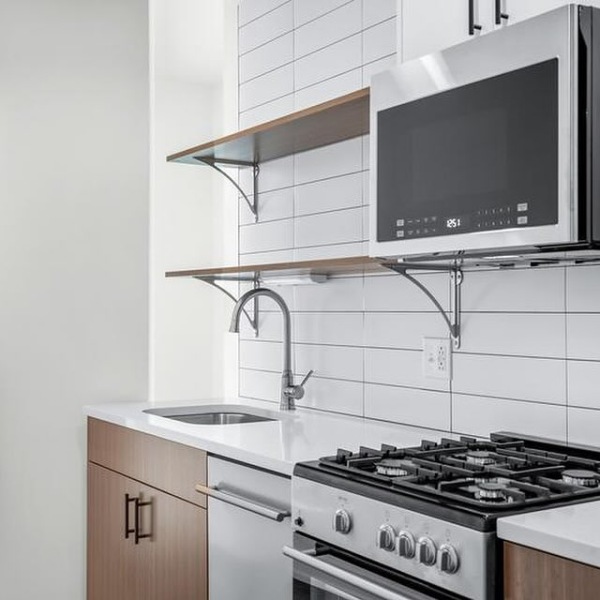
If you prefer a clear separation of functions but still want an efficient footprint, galley or linear layouts are excellent choices. A linear plan often aligns the kitchen along a single wall of the living area, keeping plumbing concentrated and leaving the rest of the room entirely open for furniture.
Galley layouts, on the other hand, utilize a corridor-style kitchen that acts as a transition zone between the entry of the apartment and the main living space. This layout is highly efficient for cooking and naturally keeps kitchen clutter tucked away from your primary lounging area.
L-Shaped, Corner, and One-Bedroom-Plus-Flex Plans
For those who want premium livability, corner apartments with L-shaped footprints or added flex spaces are the gold standard. Corner units take advantage of dual-aspect windows, flooding the living space with light from two directions.
A "plus-flex" layout provides a designated nook or den that can serve as a dedicated work-from-home office, a reading library, or a creative hobby space. This added architectural separation makes the apartment feel significantly larger, as it gives you a whole extra zone to customize without sacrificing your bedroom or living room space.
Room-by-Room Planning Rules for Better Functionality
Designing a functional home is all about the details. Let's look at how to organize each individual zone for optimal flow and comfort.

For a deeper dive into arranging these spaces, check out our guide on the ideal One Bed Apartment Layout.
Living Room, Dining, and Kitchen Dimensions
To keep your main living area from feeling like an obstacle course, pay close attention to furniture scale and clearances:
- Sofa Scale: Opt for a apartment-sized sofa or a low-profile sectional rather than oversized, bulky seating.
- Kitchen Work Zones: Ensure there is at least 36 to 42 inches of clearance around kitchen islands and appliance doors so you can open the oven or dishwasher fully without blocking the walkway.
- Multipurpose Furniture: Consider a dining table that can double as a workspace, or bar seating along the kitchen island to eliminate the need for a separate dining set.
- Continuous Flooring: Using the same flooring material throughout the kitchen, dining, and living zones creates a seamless visual flow that tricks the eye into seeing a much larger space.
Bedroom, Bathroom, and Closet Placement
The bedroom should be a private sanctuary, acoustically and visually buffered from the main living area.
- Bed Fit: Ensure the bedroom layout can comfortably accommodate a queen-sized bed with at least 24 inches of walking space on either side.
- Bathroom Adjacency: A well-designed floor plan places the bathroom in a neutral zone—either accessible from both the bedroom and the main hallway, or with an adjacent powder room—so guests do not have to walk through your private sleeping area.
- Closet Access: Whether your plan features a spacious walk-in closet or a wall of reach-in wardrobes, position the doors so they do not conflict with bedroom door swings or nightstands.
Storage, Laundry, and Utility Needs
A common pitfall of compact living is a lack of storage. Smart 1 bedroom layout plans solve this by integrating utility spaces seamlessly:
- In-Unit Laundry: Look for plans that feature stacked washer and dryer units tucked into a hallway closet or bathroom niche to save valuable floor space.
- Pantry and Entry Closets: A dedicated coat closet near the entry and a pantry cabinet in the kitchen are essential for keeping daily clutter out of sight.
- Built-Ins and Under-Bed Storage: Utilize vertical space with floor-to-ceiling shelving, and choose bed frames with built-in drawers to maximize every square inch.
Studio vs 1 Bedroom: Key Differences Before Choosing a Plan
Many renters wonder whether they should opt for a spacious studio or a dedicated one-bedroom apartment. While both offer efficient living, the architectural differences significantly impact your daily routine.
Privacy, Walls, and Daily Routines
The primary differentiator is, of course, the walls. A one-bedroom apartment features a fully enclosed bedroom with a solid door, providing complete visual and acoustic separation.
This is incredibly beneficial if you share your home with a partner who has a different sleep schedule, or if you frequently host guests and want to keep your sleeping area private. In a studio, your bed is always part of the living and entertaining zone, requiring more diligent daily tidying.
Pros and Cons Compared with Larger Apartment Layouts
Living in a one-bedroom apartment strikes a perfect middle ground between a studio and a multi-bedroom home.
- The Pros: You have less area to clean and furnish, a smaller environmental footprint, and fewer unused corners. It encourages a curated, organized lifestyle.
- The Cons: You have less space for hosting large dinner parties or overnight guests compared to a 3 Bed Apartment Layout Guide or multi-unit configurations like 4 Plex Apartment Plans.
Square Footage Ranges and Livability
- 300–500 sq ft: Highly efficient, cozy layouts where multi-functional furniture and smart storage are non-negotiable.
- 500–700 sq ft: The sweet spot for most one-bedroom apartments. This range easily accommodates full-sized furniture, a complete kitchen, and a separate dining nook.
- 700–900 sq ft: A more generous footprint that often includes luxury additions like walk-in closets, larger bathrooms, or a dedicated flex space.
- 900+ sq ft: Often found in luxury high-rises or historic conversions, offering expansive living rooms and premium finishes.
Outdoor Space, Views, and Apartment Use-Case Customization
Your home extends beyond your interior walls. The way your layout interacts with the outdoors and your specific lifestyle needs can elevate your entire living experience.
Balconies, Patios, and Shared Outdoor Connections
Having access to a private balcony or patio instantly expands your usable living area. It provides a perfect spot for a morning coffee, a small container garden, or simply a place to step outside and enjoy the fresh air. In urban environments, large windows that frame city views help connect your indoor sanctuary with the vibrant neighborhood below.
Historic Character and Modern Apartment Design Influences
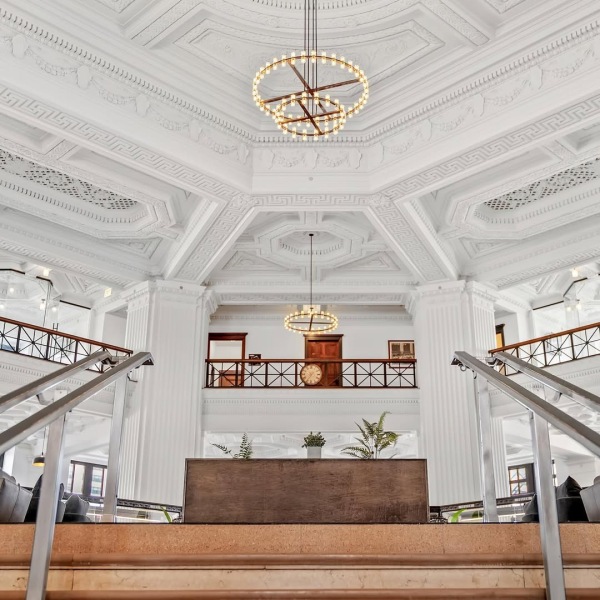
In Cook County, the architectural landscape is rich with history. Historic buildings converted into modern apartments bring a unique character that you cannot find in standard new construction. Think soaring ceiling heights, oversized arched windows, and original structural columns. Modern layouts within these historic shells utilize open floor plans and clean, contemporary fixtures to highlight these beautiful vintage details.
Customizing 1 Bedroom Layout Plans for Different Routines
Your layout should adapt to your lifestyle, not the other way around:
- The Remote Worker: Set up a dedicated desk nook in a well-lit corner of the living room or within a flex space to separate "work time" from "relax time."
- The Pet Owner: Keep pet-friendly organization in mind. Dedicate a specific spot for food bowls and a stylish basket for toys. Note: Community guidelines typically allow up to two pets.
- The Reader: Create a cozy reading corner with a comfortable armchair, a floor lamp, and floating bookshelves to maximize vertical wall space.
Apartment Details That Shape the Final Layout
Before you sign a lease, it is important to understand the hidden structural details that dictate how a space actually functions.
Footprints, Entries, and Interior Flow
The overall shape of the apartment footprint plays a massive role in furniture placement. A wide, rectangular living area is often easier to arrange than a narrow, deep layout. Pay attention to the entry sequence: does the front door open directly into the living room, or is there a welcoming foyer hallway that provides a buffer from the building's corridor? Ensure that main traffic paths are clear of door swings and furniture corners.
Ceiling Height, Windows, and Natural Light
Never underestimate the power of tall ceilings and large windows. High ceilings draw the eye upward, making even a compact footprint feel grand and airy.
The direction your windows face determines the quality of daylight you will receive. South- and west-facing windows offer bright, warm afternoon sun, while north- and east-facing windows provide soft, consistent daylight.
What to Check Before Touring or Applying
Before you schedule a tour, make a quick checklist of your must-haves:
- Measure your existing furniture (especially your bed and sofa) to ensure they will fit the layout.
- Check the number of closets and overall storage capacity.
- Look at the window placement and imagine your daily routine in the space.
- Review local building guidelines, such as those governed by Building and Zoning - Cook County, which ensure historic properties meet modern safety and accessibility standards.
Ready to see these layouts in person? Explore current floorplans to find your next home.
Frequently Asked Questions About 1 Bedroom Layout Plans
What is the most efficient layout for 1 bedroom layout plans?
The most efficient layout is an open-concept design that combines the kitchen, dining, and living areas into one central zone. By minimizing hallways and using a single linear or galley kitchen wall, you maximize usable floor space and keep natural light flowing through the entire apartment.
How can open-concept designs make a one-bedroom apartment feel larger?
Open-concept designs eliminate visual barriers. By removing walls, your eyes can travel across the entire depth of the home, creating an immediate sense of spaciousness. Continuous flooring, shared natural light, and multifunctional furniture further enhance this open, airy feel.
What size is best for 1 bedroom layout plans?
For most renters, a footprint between 500 and 700 square feet offers the perfect balance of efficiency and comfort. This size easily accommodates standard-sized furniture and daily routines without feeling cramped, while still being incredibly easy to maintain.
Conclusion
Finding the perfect one-bedroom apartment is all about balancing historic architectural charm with modern, functional layout design. By understanding how different configurations organize space, light, and storage, you can choose a home that perfectly complements your daily routine.
At The Teller House Apartments by Flats®, we have meticulously transformed a historic bank building in Uptown Chicago into sophisticated, modern living spaces. Located in the heart of a vibrant cultural district near iconic theatres, our apartments combine unique vintage character with thoughtfully designed layouts.
Ready to find your perfect layout? Explore current floorplans at The Teller House and take the first step toward your new Chicago home.