

Why Vintage Apartments in Chicago Capture Something New Construction Never Will
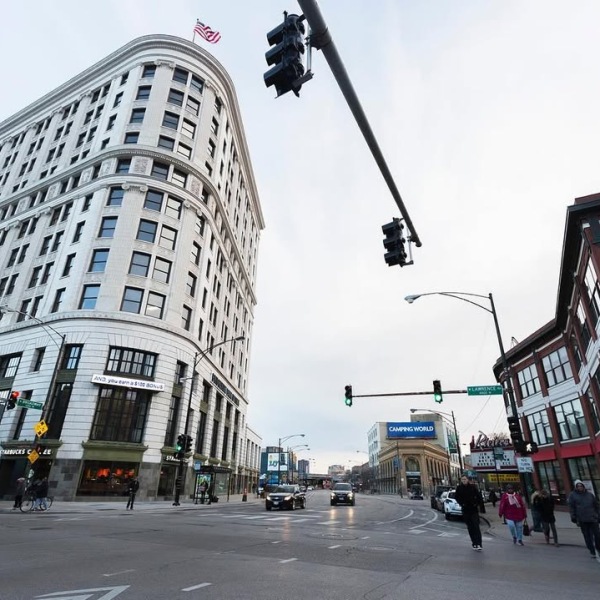
Vintage apartments in Chicago are pre-war residential buildings — typically constructed between 1880 and 1940 — known for their distinctive architectural details, thick plaster walls, hardwood floors, high ceilings, and craftsmanship that simply isn't replicated in modern construction. These structures represent a specific moment in American history when the city was defining its identity through stone, brick, and mortar.
Here's a quick look at what makes them stand out:
- Era: Most built between 1880 and 1940, with the peak period from 1911 to 1929
- Defining features: Crown molding, bay windows, radiator heat, hardwood floors, ornate lobbies
- Common styles: Beaux Arts, Art Deco, Neo-Gothic, Victorian, Greystone
- Best neighborhoods: Gold Coast, Lincoln Park, Uptown, Lakeview, Edgewater, Bryn Mawr Historic District
- Ownership types: Rentals, condos, and co-ops (co-ops were Chicago's first form of apartment ownership)
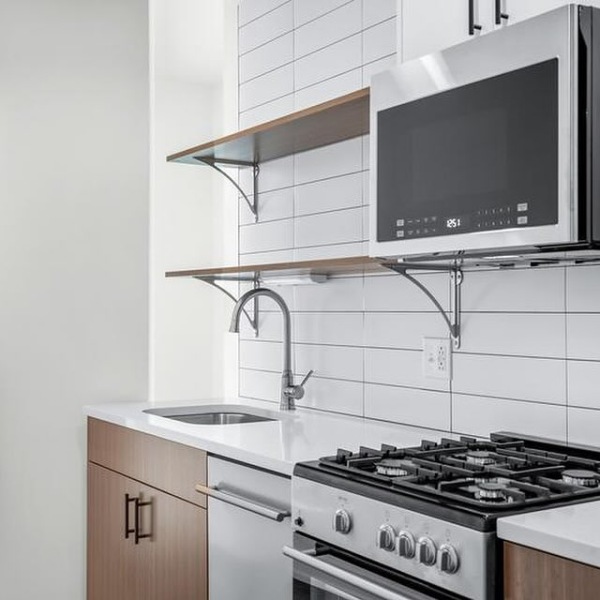
- Modern upgrades: Many renovated units now include in-unit laundry, central air, granite countertops, and smart home features
Chicago is one of the few American cities where historic residential architecture survived at scale. The Great Chicago Fire of 1871 triggered a massive building boom that lasted for decades, as the city transitioned from wood-frame structures to fireproof masonry. By the early 1900s, the city's lakefront corridors were lined with grand apartment buildings designed by some of the most prominent architects of the era, influenced by the City Beautiful movement and the burgeoning Chicago School of architecture).
These weren't just places to live. They were statements — of craft, of permanence, and of civic pride. The architects of this era prioritized aesthetic harmony and structural longevity, using materials like limestone, terra cotta, and solid oak that have stood the test of time for over a century.
That legacy is still very much alive today. Whether you're drawn to a restored 1928 luxury hotel in Uptown or a Greystone two-flat in Lakeview, vintage Chicago apartments offer something increasingly rare: a home with a story. Living in one of these spaces allows residents to connect with the city's rich cultural heritage while enjoying the unique character that only age and history can provide.
Defining the Vintage Apartments in Chicago Experience
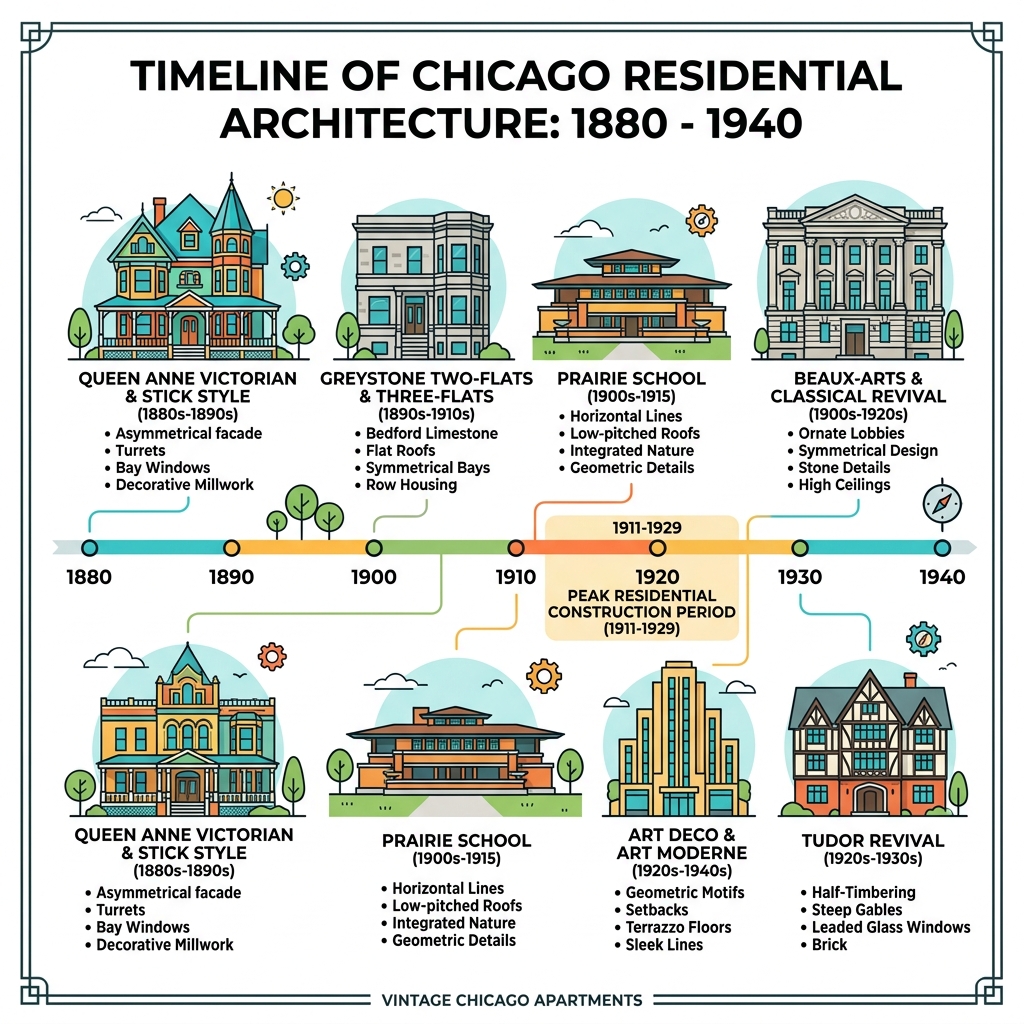
When we talk about vintage apartments in Chicago, we are referring to a specific era of excellence. While the "50-year rule" is a general guideline for historic consideration, the most treasured residential buildings in our city were constructed between 1880 and 1940. This period represents a golden age of masonry and artistry, with a massive concentration of construction occurring between 1911 and 1929, just before the Great Depression halted the building boom.
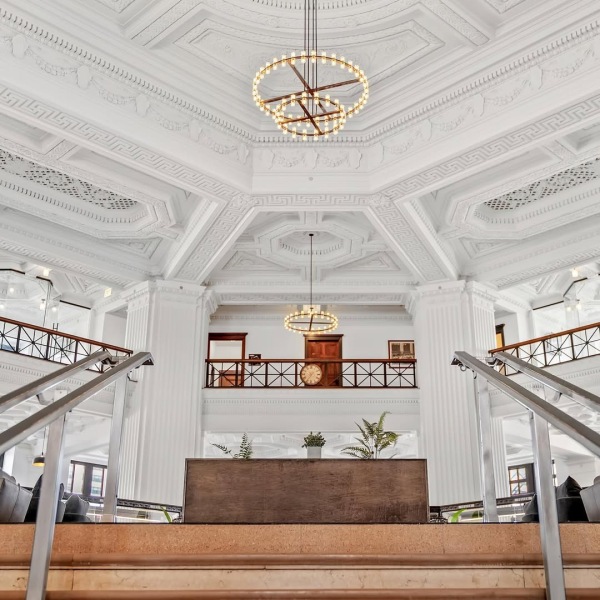
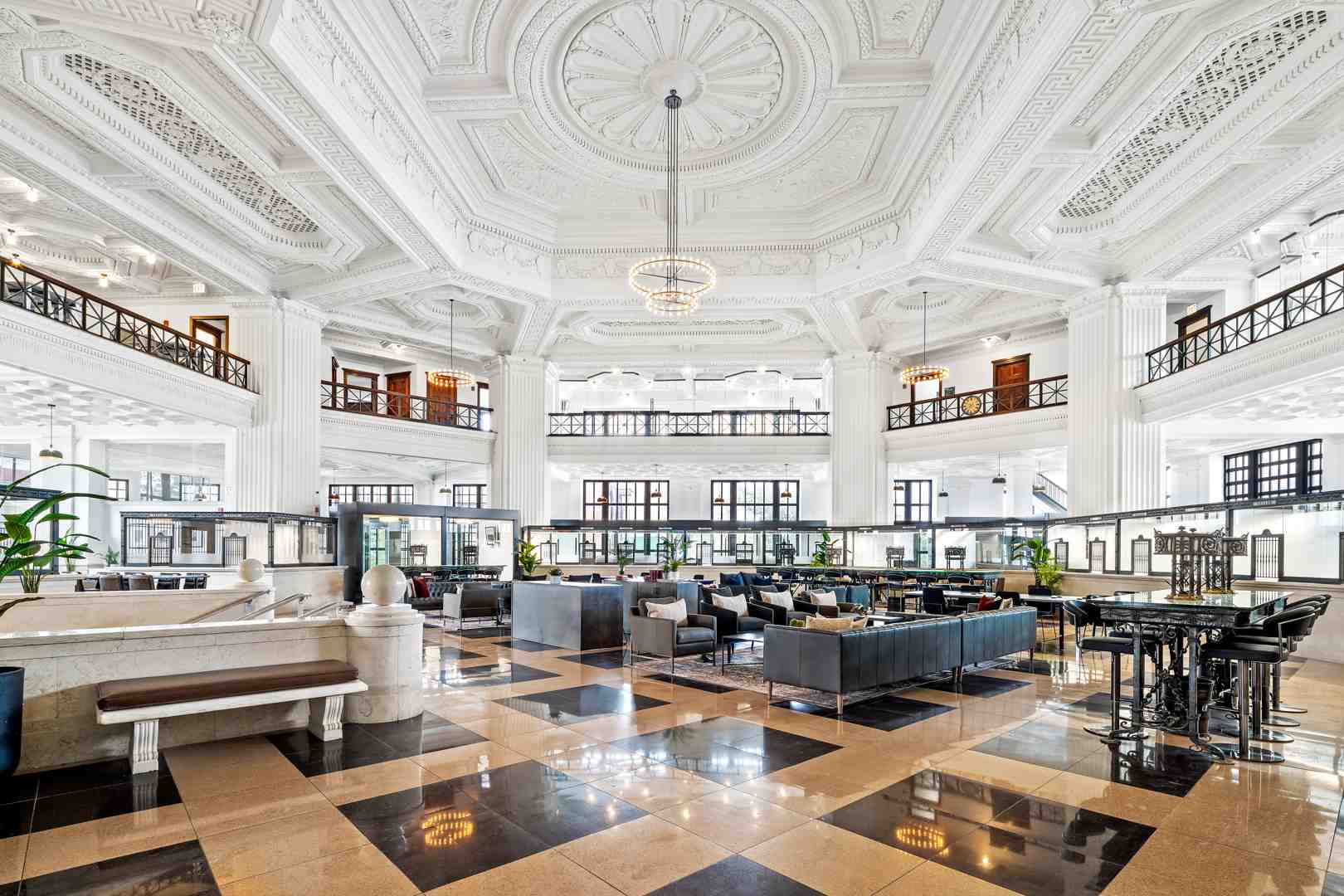
Living in these spaces offers a sensory experience that modern glass towers often lack. It begins the moment you step into a lobby. Many of these buildings feature original terrazzo flooring, polished concrete, or intricate mosaic tiling that was hand-laid by artisans. You might find grand two-story lobbies that hark back to the building's origins as a luxury hotel or an elite social club, complete with ornate plasterwork on the ceilings and original brass mail chutes.
The structural integrity of these buildings is a significant perk. Because they were built before the era of mass-produced drywall, most vintage units feature thick plaster walls. This provides superior soundproofing, allowing for a level of quiet enjoyment that is hard to find in newer builds where sound often travels through thin partitions. Furthermore, the heating systems—often central boilers providing radiator heat—offer a consistent, humid warmth that doesn't create the dry drafts associated with modern forced-air systems. The thermal mass of the thick masonry also helps regulate temperatures naturally, keeping the interiors cooler in the summer and warmer in the winter.
Iconic Neighborhoods and Architectural Styles
Chicago’s "vintage landscape" is spread across several distinct neighborhoods, each offering a different flavor of history. In the Bryn Mawr Historic District, located within the Edgewater neighborhood, you’ll find a stunning collection of buildings near the lakefront that once served as the playground for the city's upper class during the 1920s. These buildings often feature Mediterranean Revival and Art Deco influences, reflecting the era's fascination with travel and exoticism.
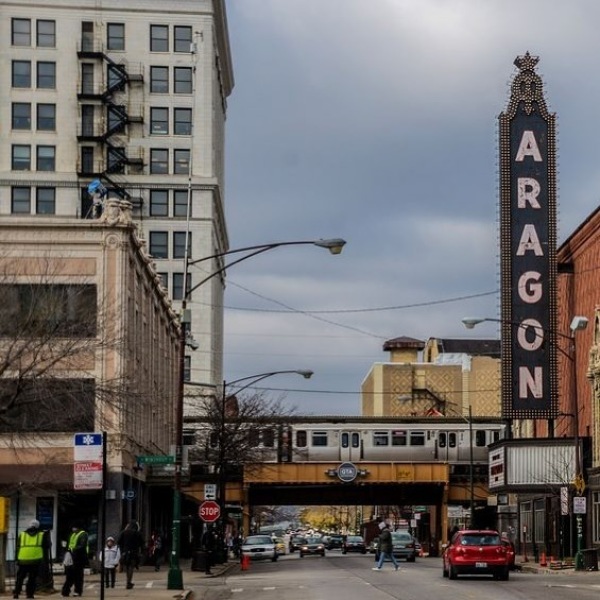
Further south, the Gold Coast and Lincoln Park are home to some of the most prestigious pre-war high-rises and Greystones. Uptown, a neighborhood known for its vibrant entertainment history and legendary jazz clubs, features grand apartment hotels from the 1920s that have been meticulously restored to their former glory. These neighborhoods provide a walkable urban environment where the architecture tells the story of the city's expansion.
The architectural styles found in vintage apartments in Chicago are as diverse as the city itself:
- Beaux Arts: Known for its classical grandiosity, symmetry, and ornate decorative elements like columns and statuary.
- Art Deco: Characterized by geometric shapes, bold lines, and stylized flourishes popular in the 1920s and 30s, often seen in the setbacks of taller buildings.
- Neo-Gothic: Featuring pointed arches and dramatic verticality, often seen in landmark buildings like the Fisher Building, which utilize intricate terra cotta detailing.
- Victorian: Famous for intricate woodwork, vibrant colors, and asymmetrical shapes, primarily found in the city's older two- and three-flat buildings.
- Greystones: A uniquely Chicago style, these limestone-fronted buildings are the backbone of many residential streets, symbolizing the city's resilience and stability.
Common Layouts in Vintage Apartments in Chicago
The floorplans of the early 20th century were designed with a sense of ceremony and flow. Unlike the "open concept" layouts of today, vintage apartments often feature clearly defined rooms that provide a sense of privacy and purpose. This separation of space allows for distinct living, dining, and sleeping areas, which many modern residents find helpful for creating a work-life balance within the home.
High ceilings—often ranging from 9 to 12 feet—create an airy, expansive feel even in smaller units. Large bay windows are a staple, designed to flood the home with natural light and provide views of the tree-lined streets or Lake Michigan. Many units still retain their original built-in hutches, crown molding, and formal dining rooms, which are perfect for entertaining. Hardwood floors are almost a guarantee, often laid in intricate patterns like herringbone or with decorative borders that reflect the hand-laid craftsmanship of the time.
Modern Upgrades and Living Considerations
While these buildings are celebrated for their history, many also incorporate modern conveniences. The most successful vintage properties in Chicago utilize "adaptive reuse"—the process of taking a building designed for one purpose and transforming it into something new. This includes former elementary schools, factories, and luxury hotels being converted into sophisticated apartment communities. This practice is not only a way to preserve history but is also a sustainable approach to urban development, as it breathes new life into existing structures.
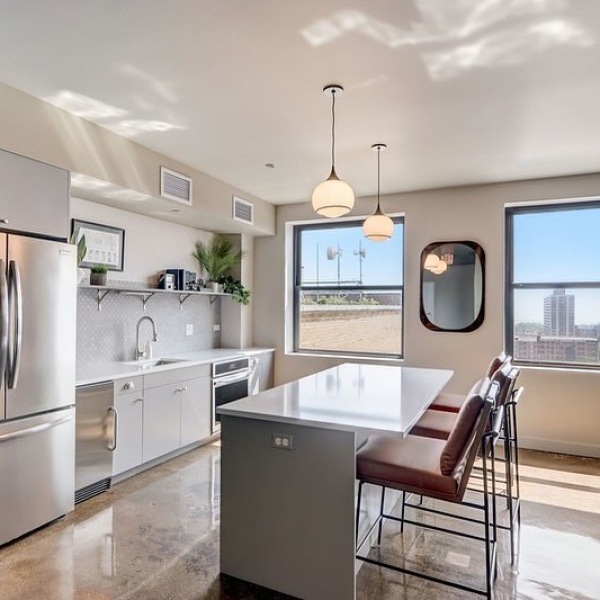
In these renovated spaces, residents can enjoy the "best of both worlds." You get the high ceilings and exposed brick of the past alongside granite countertops, stainless steel appliances, and smart home technology. Many developers have gone to great lengths to preserve unique features, such as original chalkboards in school conversions, heavy timber beams in factory lofts, or mosaic tiling in former hotel pools. These details serve as a constant reminder of the building's previous life while providing a contemporary living experience.
Many vintage apartments in Chicago are also pet-friendly, though policies vary by building. Some communities welcome both cats and dogs. Easy access to city parks and lakefront trails can also be a benefit for pet owners.
Finding Renovated Vintage Apartments in Chicago
Searching for the right vintage home requires a bit of strategy. Many renters use online platforms to filter for "vintage" or "historic" properties. You can also look for specialized property managers who focus on neighborhoods with a high density of well-maintained historic stock, such as Lincoln Park and Lakeview.
When touring, it helps to know what has been updated and what remains original. Here is a quick comparison:
| Vintage Feature | Modern Update Equivalent |
|---|---|
| Radiator Heat | Zoned Central Air Conditioning |
| Original Windows | Energy-Efficient Insulated Glass |
| Communal Laundry | In-Unit Washer/Dryer |
| Decorative Fireplace | Functional Wood-Burning or Electric Fireplace |
| Ornate Lobby | Co-working Space & Fitness Center |
Frequently Asked Questions about Chicago Historic Living
What defines a vintage apartment in Chicago?
In the Chicago real estate market, "vintage" typically refers to buildings constructed before World War II, specifically between 1880 and 1940. These buildings are defined by their masonry construction, architectural significance (such as Art Deco or Neo-Gothic styles), and the presence of original interior details like plaster crown molding, solid wood doors, and hardwood flooring. They are often located in established historic districts that protect the exterior character of the neighborhood.
Are vintage apartments pet-friendly?
Yes, many are! While older buildings used to have stricter rules, modern property management has embraced pet owners. Breed restrictions and pet policies may apply. Proximity to the lakefront trails and parks like Lincoln Park makes these apartments appealing for pet owners who enjoy walking their dogs in scenic, historic environments.
How does radiator heat work in older buildings?
Radiator heat is a hallmark of the Chicago vintage experience. A central boiler in the basement creates steam or hot water that travels through pipes to the radiators in each unit. This system provides a very consistent warmth and helps maintain natural humidity during the dry Chicago winters, unlike forced-air systems that can feel parched. Many residents find the gentle "hiss and clank" of a radiator to be a charming, rhythmic part of the building's character, signaling the change of seasons.
What are the benefits of thick plaster walls?
One of the most appreciated features of vintage construction is the use of lath and plaster instead of modern drywall. Plaster is much denser, which provides exceptional soundproofing between units and rooms. It also has better fire resistance and thermal properties, helping to keep the apartment quiet and comfortable throughout the year.
Conclusion
The allure of vintage apartments in Chicago lies in their ability to bridge the gap between the past and the present. They offer a level of architectural legacy and urban character that simply cannot be manufactured today. By choosing to live in a restored landmark, residents become part of Chicago's ongoing architectural story while enjoying the distinctive character of a historic home.
At The Teller House Apartments by Flats®, a historic bank building has been transformed into luxury residences in Uptown. Located near prominent theatres and the lakefront, the community offers a distinctive way to experience Chicago history alongside modern amenities.
To learn more, Explore available floorplans and see how 1920s grandeur has been paired with modern luxury.