

What Are Loft Apartments in Chicago?
If you're exploring loft apartments in Chicago, here's a quick overview of what to expect:
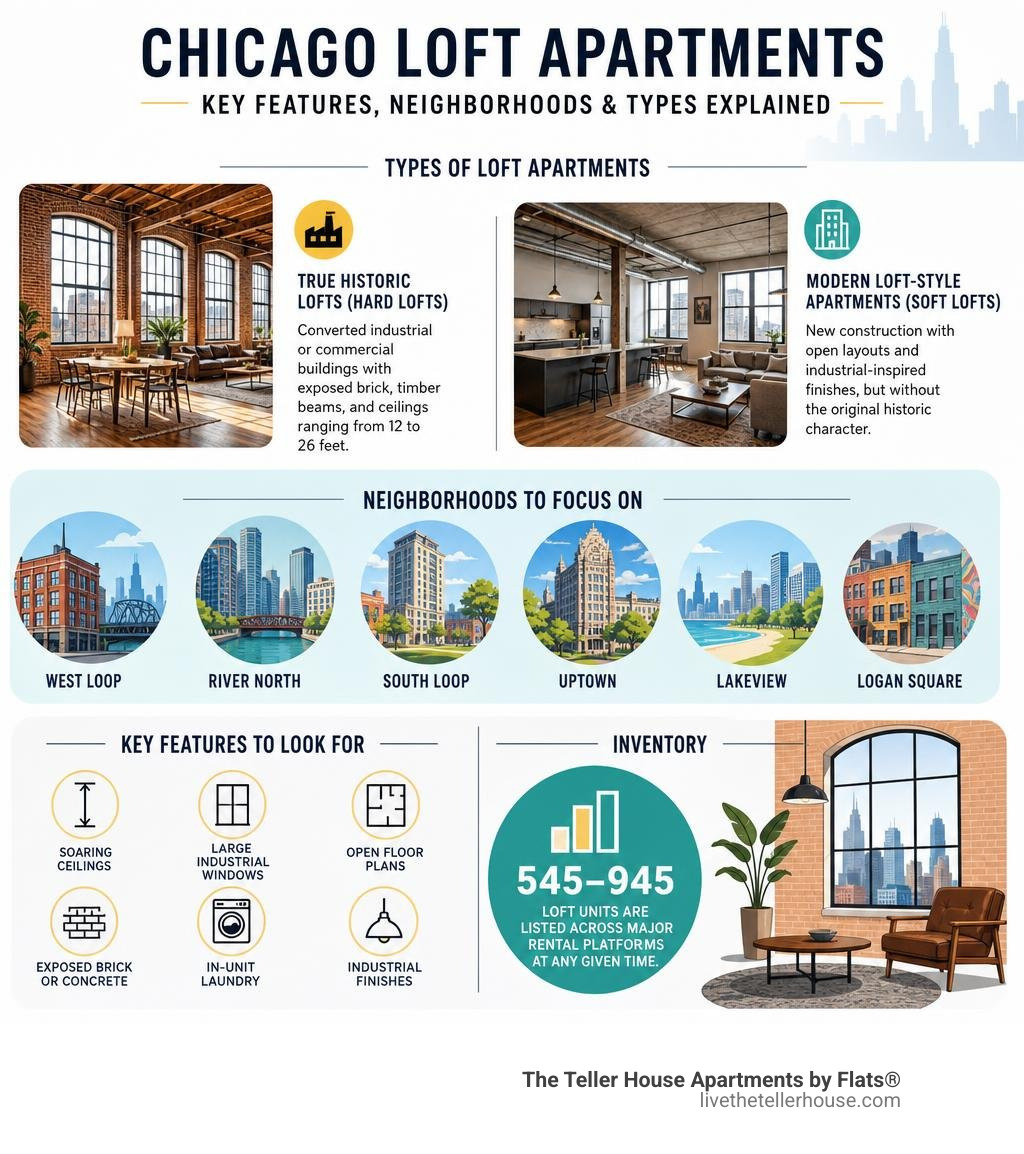
- True historic lofts (hard lofts): Converted industrial or commercial buildings with exposed brick, timber beams, and ceilings ranging from 12 to 26 feet
- Modern loft-style apartments (soft lofts): New construction with open layouts and industrial-inspired finishes, but without the original historic character
- Neighborhoods to focus on: West Loop, River North, South Loop, Uptown, Lakeview, and Logan Square
- Inventory: Roughly 545–945 loft units are listed across major rental platforms at any given time
- Key features to look for: Soaring ceilings, large industrial windows, open floor plans, exposed brick or concrete, and in-unit laundry
Chicago's loft market is genuinely one of the most diverse in the country. The city's industrial past — factories, warehouses, printing houses, banks, even schools — left behind a remarkable inventory of buildings that have been converted into residential spaces over the past few decades.
What makes these spaces stand out isn't just the aesthetics. It's the volume. Walking into a space with 14-foot ceilings and factory windows is a fundamentally different experience from a standard apartment. As one resident put it, it's easy to spend an entire afternoon gazing out the massive windows, wondering about all the people and stories that once filled the space.
This guide walks through everything you need to know — from architectural styles and neighborhoods to the rental process and practical trade-offs — to help you find the right loft in Chicago.
The Unique Appeal of Loft Apartments Chicago
What is it about loft apartments chicago that captures the imagination of so many renters? For many, it is the tangible connection to the city's rich industrial heritage. Unlike standard apartments that can sometimes feel like uniform white boxes in the sky, a historic loft tells a story.
To understand the core appeal, it helps to look at the fundamental Loft Meaning. Historically, a loft referred to the upper story of a warehouse or factory. When artists began moving into these abandoned commercial spaces in the mid-20th century, they adapted the wide-open layouts into live-work studios. Today, that aesthetic has evolved into a highly coveted residential style.
An authentic Industrial Apartment is defined by its raw, unpolished architectural features. Instead of hiding the building's structural bones behind drywall, lofts celebrate them. You will find:
- Exposed Brick: Weathered, multi-toned brick walls that have stood for over a century, offering natural warmth and texture.
- Timber Beams: Massive, heavy-duty wooden pillars and ceiling joists, sometimes still bearing original manufacturer stamps from Chicago's manufacturing heyday.
- High Ceilings: Dramatic vertical clearance, often ranging from 12 to 17 feet, and up to 26 feet in multi-level layouts.
- Concrete Floors: Polished or rustic concrete underfoot, which acts as a sleek, modern canvas for area rugs and furniture.
- Open Floor Plans: A lack of rigid interior walls, allowing you to customize your living, working, and dining spaces exactly how you see fit.
Living in a loft means trading conventional room divisions for spatial freedom. The sheer volume of air and light creates an inspiring environment that adapts to your lifestyle, whether you are setting up a dedicated home office, an art corner, or an expansive space for entertaining.
Architectural Styles of Chicago Lofts
When searching for loft apartments chicago, you will quickly discover that not all lofts are created equal. The market is broadly categorized into distinct architectural styles, each offering a different balance of historic character and modern convenience. Understanding these differences will help you narrow down your search to the style that best fits your aesthetic.
To explore this further, you can check out our Modern Loft Apartments Guide 2026 as well as the Modern Loft Apartments Chicago Guide 2026 for an in-depth look at how these spaces continue to evolve.
Historic Conversions vs. Modern Loft Apartments Chicago
The primary dividing line in the loft world is between historic conversions (often called "hard lofts") and modern loft apartments (often called "soft lofts").
Historic conversions are true adaptive reuse projects. These are buildings that originally served as warehouses, factories, schools, or financial institutions. When developers convert these structures, they preserve the original shell, resulting in unique layouts, thick masonry, and irreplaceable historic character. For those who want to live inside a piece of Chicago history, these buildings are the gold standard.
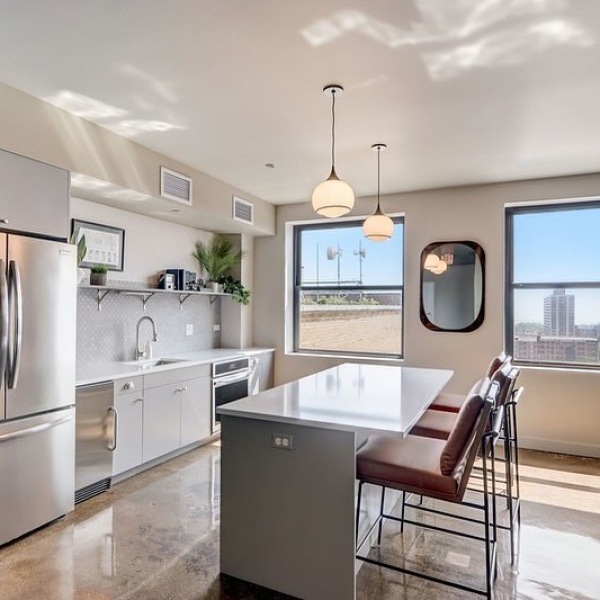
On the other side of the spectrum are modern loft apartments, or soft lofts. These are new-construction buildings designed to mimic the loft aesthetic. They typically feature open floor plans, high ceilings (often around 10 feet), and industrial touches like exposed concrete or spiral ductwork. While they may lack the centuries-old soul of a historic conversion, they offer excellent energy efficiency, modern soundproofing, and standard luxury amenities. You can explore some of these contemporary options in our guide to Modern Lofts for Rent.
Here is a closer look at how structural materials impact your daily living experience:
- Timber-Framed Conversions: These feature gorgeous wood pillars, wood ceilings, and exposed brick. They offer unmatched warmth and rustic charm. However, timber structures can sometimes transmit more sound between floors compared to concrete.
- Concrete Conversions: Often found in former industrial warehouses or shipping hubs, these feature massive concrete columns and ceilings. While slightly more minimalist and cool in vibe, concrete construction offers superior natural soundproofing between units.
High-Ceiling and Open-Concept Layouts
The defining luxury of any loft is its vertical volume. High ceilings do more than just look impressive; they change how you experience your square footage. A 1,000-square-foot loft with 15-foot ceilings feels significantly larger and more breathable than a traditional apartment of the exact same size.
This vertical space allows for incredible spatial drama, but it also requires some planning. For example, two-story or mezzanine lofts utilize this height to build a raised platform, creating a private bedroom retreat while keeping the lower level entirely open.
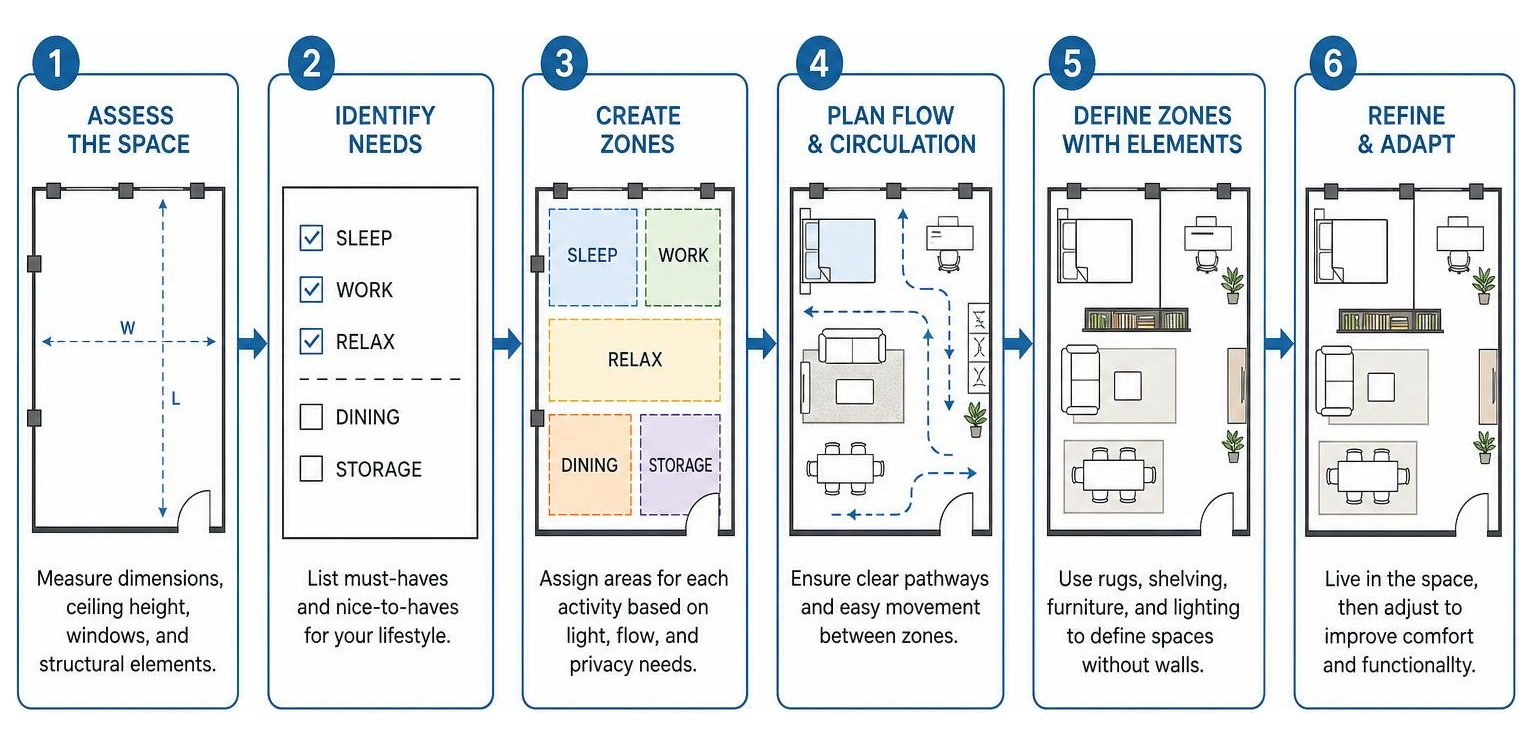
When configuring an open-concept layout, you have complete flexibility. Instead of walls, you can use large area rugs, double-sided bookshelves, or strategic furniture groupings to define distinct "zones" for sleeping, working, and relaxing. To find active listings featuring these soaring layouts, browse Loft Apartments for Rent in Cook County, IL.
Top Neighborhoods for Loft Living in Chicago
Chicago is a city of neighborhoods, and the character of your loft will be heavily influenced by where it is located. Historically, industrial buildings were clustered near transit lines, waterways, and commercial hubs. Today, these areas have transformed into some of the city's most vibrant residential neighborhoods.
If you are looking for a creative, culturally rich area to call home, we highly recommend exploring Lofts in Uptown and discovering the unique Artistic Loft Spaces Chicago scattered throughout the North Side.
Here is a breakdown of the top neighborhoods for finding loft apartments in Chicago:
West Loop & Fulton Market
Once the city's meatpacking and wholesale manufacturing district, the West Loop is now a premier culinary and tech hub. The lofts here are primarily converted warehouses and factories, featuring heavy timber and brick. It is highly walkable, energetic, and home to some of the city's finest dining.
River North
Just north of the Loop, River North boasts one of the highest concentrations of historic timber lofts. Originally an industrial shipping area, it evolved into an art gallery district before becoming a bustling neighborhood packed with nightlife, design showrooms, and high-end residential conversions.
South Loop
Home to Printer's Row, the South Loop is famous for its historic printing house conversions. These lofts often feature beautiful, large windows designed to let in natural light for 19th-century typesetters. The neighborhood offers excellent proximity to Grant Park, the Museum Campus, and the lakefront.
Uptown
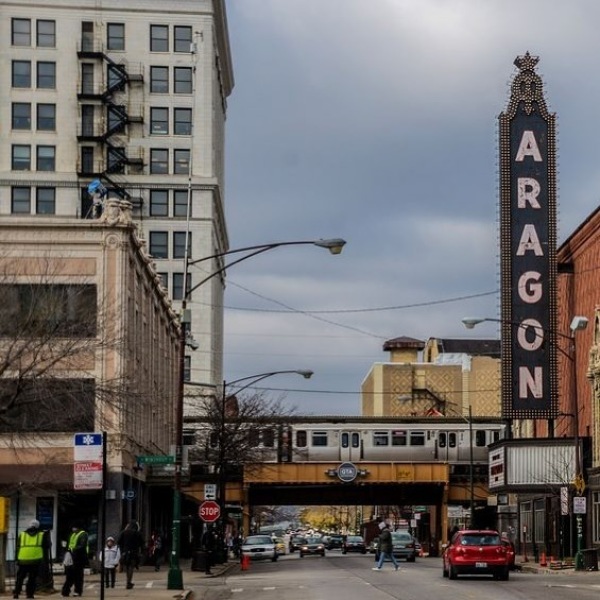
For those who appreciate historic preservation paired with a vibrant cultural scene, Uptown is a standout choice. This neighborhood is famous for its historic entertainment district, home to iconic venues like the Aragon Ballroom and the Green Mill. Uptown's loft inventory includes gorgeous adaptive reuse projects, such as converted landmark banks and schools, offering a distinct architectural elegance.
Lakeview
Located on the North Side, Lakeview offers a relaxed, community-oriented vibe with easy beach access and bustling commercial corridors. Loft options here often include unique conversions of early 20th-century commercial buildings, offering a perfect blend of neighborhood charm and vintage character.
| Neighborhood | Primary Loft Style | Vibe & Character | Transit Accessibility |
|---|---|---|---|
| West Loop | Warehouse & Factory (Timber) | Trendy, culinary-focused, energetic | Excellent (Green, Pink Lines) |
| River North | Industrial & Timber Conversions | Bustling, upscale, design-centric | Excellent (Red, Brown Lines) |
| South Loop | Printer's Row Conversions | Historic, quiet pockets, near parks | Great (Red, Green, Orange Lines) |
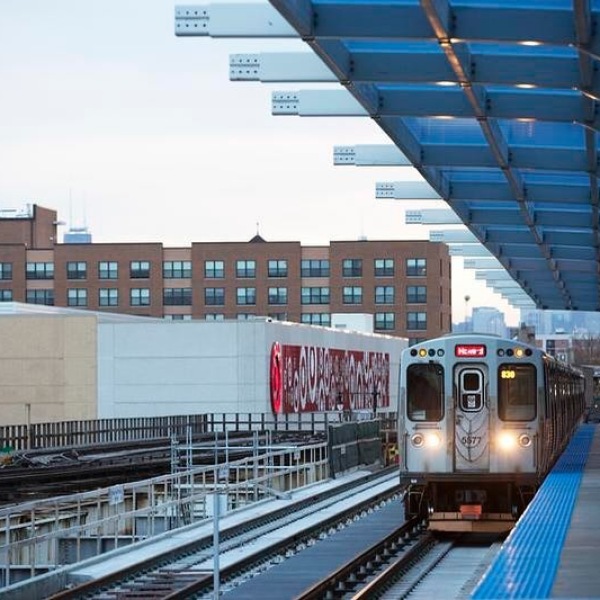
| Uptown | Landmark Banks & Schoolhouses | Cultural, historic, entertainment-rich | Excellent (Red, Purple Lines) |
| Lakeview | Commercial & Bank Conversions | Relaxed, lakefront access, active retail | Great (Red, Brown, Purple Lines) |
Living in a Chicago Loft: Pros, Cons, and Practical Considerations
While the aesthetic of loft living is undeniably attractive, it is important to weigh the practical realities of choosing a loft over a traditional apartment. The very features that make a loft unique can also introduce distinct lifestyle trade-offs.
To help you decide if this style matches your daily routine, you can browse a wide variety of active listings on Loft Apartments For Rent In Chicago and Loft Apartments For Rent in Chicago IL.
The Pros of Loft Living
- Abundant Natural Light: Massive, industrial-sized windows are a staple of historic conversions. They flood the open spaces with daylight, which is incredibly beneficial during Chicago's winter months.
- Design Versatility: Without fixed walls, your home can change as your needs change. You can easily expand your living room, create a massive dining area for hosting, or carve out a spacious home studio.
- Unmatched Character: Living with original brick, timber pillars, and soaring ceilings provides a built-in aesthetic that standard drywalled apartments simply cannot replicate.
The Cons and Practical Trade-offs
- Heating and Cooling Efficiency: Soaring ceilings and large windows create a beautiful sense of volume, but they also mean there is more physical space to heat and cool. Because heat naturally rises, the upper levels of a mezzanine loft may run warmer, while the lower level stays cooler.
- Noise Transfer: Open layouts mean sound travels freely. If you share a loft with a partner or roommate, you will have fewer acoustic barriers. Additionally, historic timber buildings can sometimes transmit footsteps or ambient noise from neighboring units more easily than modern concrete high-rises.
- Energy Efficiency: Because of the dramatic vertical space and older insulation standards in some historic brick buildings, heating and cooling systems may need to work harder than in highly insulated, low-ceilinged modern apartments.
Community Policies and Amenities
When renting a loft, you should also look closely at building-specific rules and structural setups.
- Pet Policies: Many loft buildings are highly pet-friendly, featuring polished concrete or hardwood floors that are easy to clean. However, most communities enforce a strict limit of up to two pets per apartment and may require monthly pet agreements.
- Parking: Because historic conversions were built long before cars dominated the city, on-site parking can sometimes be limited. Be sure to ask if the building offers dedicated garage spaces, exterior lots, or if you will need to rely on neighborhood street parking.
Navigating the Rental Process for Chicago Lofts
Renting a loft in Chicago involves a slightly different approach than renting a standard high-rise apartment. Because these buildings are unique architectural specimens, the layout, management style, and overall leasing experience can vary significantly.
When searching for your next home, it is often best to focus on professionally managed luxury apartment communities. Professional management ensures that historic structural elements — like century-old masonry or vintage window frames — are properly maintained by a responsive, on-site team. To start comparing your options, you can explore the extensive directory of Loft Apartments for Rent in Chicago IL - 876 Rentals.
Key Considerations When Renting Loft Apartments Chicago
Before you sign a lease on any loft, keep these practical tips in mind to ensure a smooth move-in and comfortable living experience:
- Inquire About Climate Control History: Ask the leasing team about typical heating and cooling performance during peak winter and summer months. This helps you plan your energy usage accurately.
- Measure Tight Stairwells and Elevators: Historic buildings often feature charming, but narrow, entryways, hallways, and stairwells. Before buying that massive, deep-seated sectional sofa, make sure it can actually fit through the door. In some historic buildings, residents have had to hoist large furniture through windows!
- Confirm Pet Limits: Ensure your household aligns with the building's pet policies. Most managed loft communities limit residents to a maximum of two pets and may have specific weight or breed guidelines.
- Evaluate Parking Availability: If you own a vehicle, check if the building offers secure, on-site parking or if there are nearby parking garages with monthly parking options.
Frequently Asked Questions about Chicago Lofts
What is the difference between a hard loft and a soft loft?
A hard loft is an authentic historic conversion of an older industrial or commercial building. It features original structural elements like exposed brick walls, heavy timber beams, concrete pillars, and soaring ceilings. A soft loft is a modern, new-construction apartment designed to mimic this aesthetic. Soft lofts offer open layouts and industrial finishes (like exposed ductwork) but feature modern drywall, standard ceiling heights, and superior modern energy efficiency.
Are utilities higher in loft apartments?
Generally, yes. Because loft apartments feature exceptionally high ceilings and large industrial windows, they require more energy to heat and cool. Heat naturally rises to the top of the room, leaving the living areas cooler in the winter. Choosing a loft with modern, energy-efficient HVAC systems or opting for a concrete-constructed conversion can help mitigate this energy demand.
What are the pet policies for Chicago lofts?
While pet policies vary by building, many loft communities are very welcoming to pets due to durable flooring like polished concrete. However, standard policies typically limit residents to a maximum of two pets per unit. Many buildings also require a modest monthly pet agreement and may offer pet-friendly amenities like on-site dog wash stations or private rooftop dog runs.
Conclusion
Finding the perfect loft apartment in Chicago is all about balancing historic soul with modern luxury. If you love the idea of living inside a piece of architectural history but don't want to sacrifice contemporary comforts, The Teller House Apartments by Flats® offers the ultimate urban living experience.
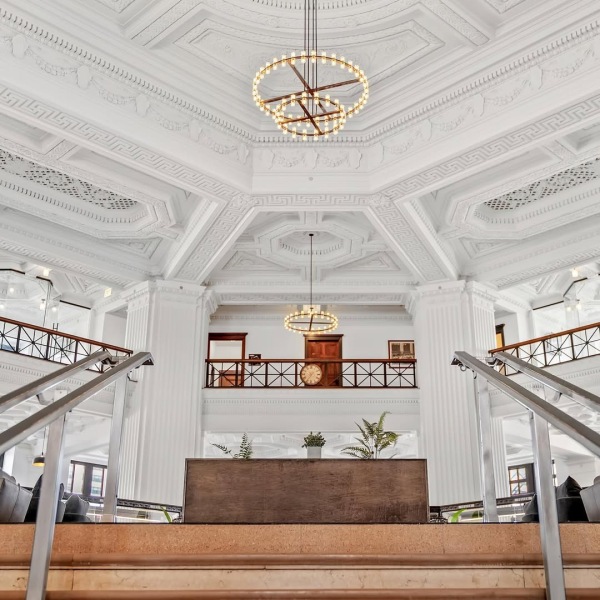
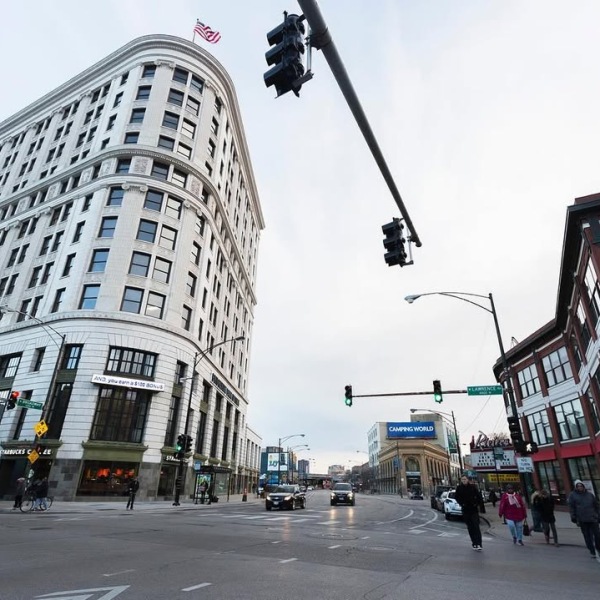
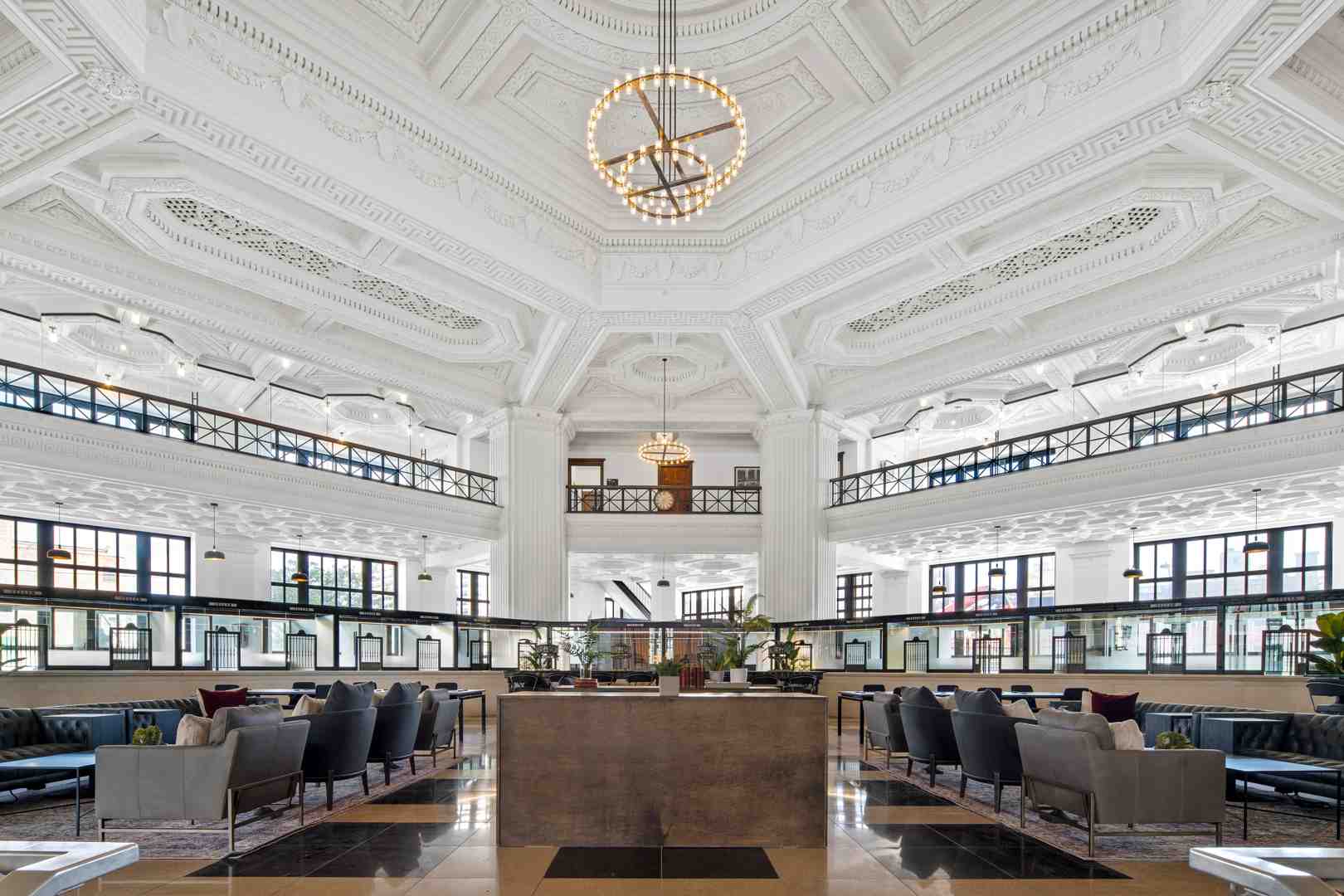
Located in the heart of historic Uptown Chicago, our community transforms a landmark 1920s bank building into sophisticated, modern residential spaces. We have preserved the grand architectural scale and heritage of the building while integrating high-end, designer finishes, soaring ceilings, and premium amenities.
Situated just steps from Uptown's legendary theatres, music venues, and cultural attractions, our apartments provide a home with a true legacy. Ready to experience the unique character of our historic bank conversion for yourself? Explore our available floor plans and find your next home by visiting the Chicago Loft Apartments for Rent Ultimate guide today.