

What Is an Italian Bar — and Where Can You Find One Near You?
An Italian bar is one of the most misunderstood spots in food and drink. It's not a bar in the American sense, and it's not quite a coffee shop either. It's something uniquely its own.
Quick answer for local searchers:
- An Italian bar (also called a caffè or bar) serves espresso, cappuccino, pastries, gelato, aperitivo cocktails, and light food — all under one roof
- They are open from early morning through late evening
- You order and often stand at the counter (the banco) to drink your espresso
- They serve as neighborhood social hubs, not just drink stops
- In the US, Italian-style bars are found in most major cities, including Chicago, Washington DC, Boston, Dallas, and beyond
Think of it this way: in Italy, over 70% of people visit a bar at least once every single day. There are roughly 150,000 Italian bars across the country — about one for every 400 residents. This isn't a niche dining trend. It's a way of life.
Imagine walking into a lively Roman bar at 11:30 in the morning. Two women are gossiping over espresso. An older man is sipping grappa. Someone else is grabbing a cornetto before heading to work. That's the Italian bar experience — fast, social, warm, and deeply rooted in daily ritual.
This article breaks down exactly what makes an Italian bar different from a regular bar, what to expect when you visit one, and how to find the best ones near you.
The Unique Appeal of the Italian Bar
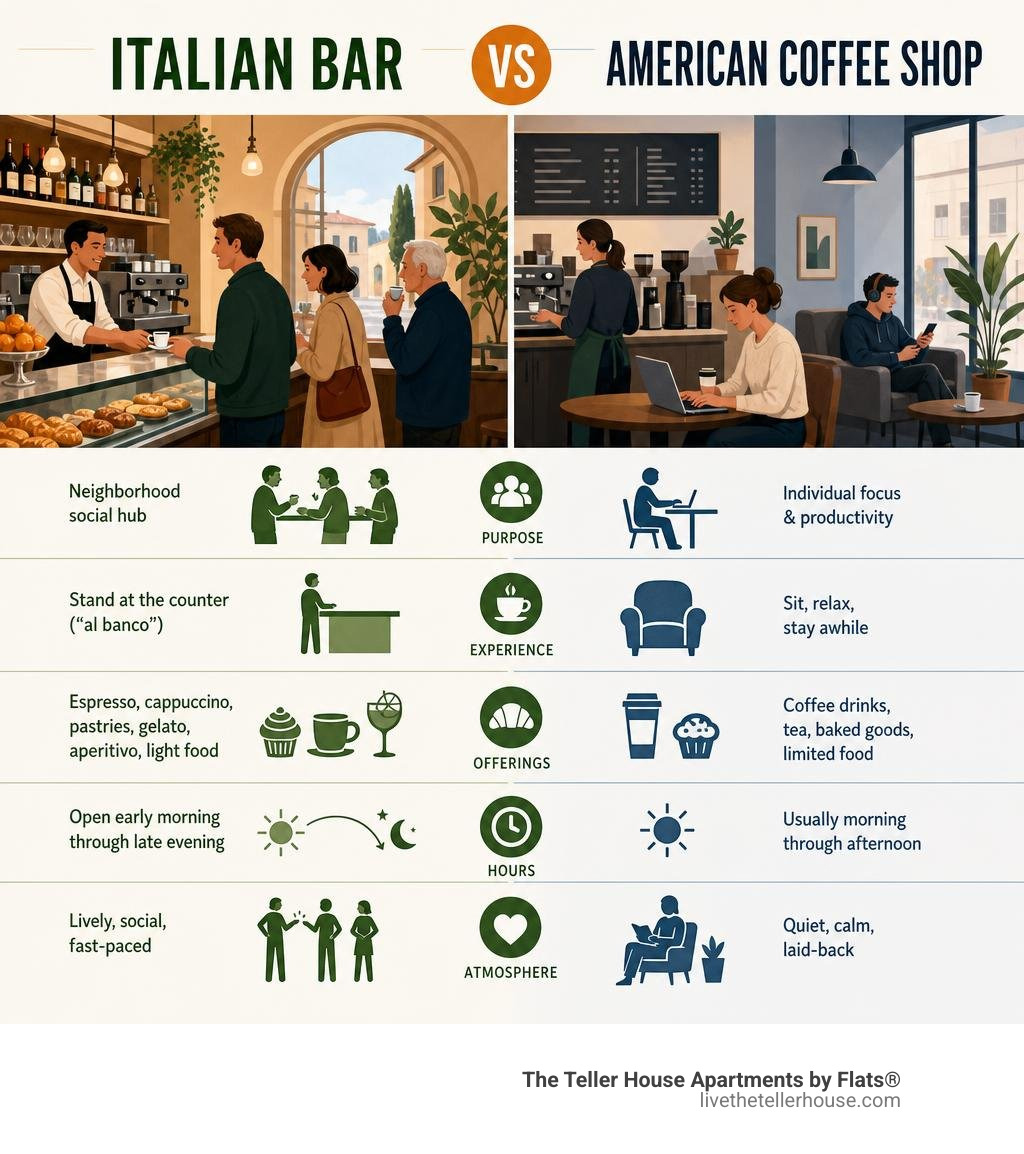
To understand the magic of an italian bar, we have to look past the beverages themselves. In many parts of the world, a coffee shop is a place where people sit in isolation, hidden behind laptop screens with headphones firmly in place. A traditional American bar is often a dark, evening-only venue centered entirely on alcohol consumption.
The traditional Italiaanse Bar completely upends both of these concepts. It is a bright, multi-generational community hub that adapts to the needs of the neighborhood as the sun moves across the sky.
In the morning, it is a high-energy launchpad fueled by freshly ground espresso and sweet pastries. By midday, it transforms into a casual lunch spot serving simple panini, salads, and light hot dishes. As twilight approaches, the espresso cups are cleared away to make room for glowing orange spritzes, sparkling wines, and plates of accompanying savory bites.
It is this fluid transition—paired with an unwavering focus on human connection—that gives the Italian-style bar its unmatched charm.
The Historical Evolution of the Italian Bar
This incredible cultural institution did not appear overnight. The roots of the modern Italian caffè date back to 16th-century Venice, where coffee first entered Europe through bustling trade routes, heavily influenced by Ottoman and Austrian beverage traditions. These early coffee houses were intellectual salons where artists, politicians, and writers gathered to debate ideas over dark, slow-brewed coffee.
The true revolution, however, occurred in the early to mid-20th century. Following World War II, during Italy's famous Economic Miracle, the commercial espresso machine became mechanized. This technological leap allowed baristas to brew pressurized coffee in a matter of seconds, creating the signature crema-topped espresso we know today.
As coffee brewing became faster, the social rituals around it evolved. Establishments like the historic Chi siamo - Bar Moka began to flourish, preserving generational craftsmanship while updating their spaces to accommodate the daily routines of working-class Italians. The modern era of the quick, standing counter espresso was born.
Modern Trends and Specialty Coffee
While tradition remains the bedrock of Italian coffee culture, contemporary influences are shaping the modern landscape. Today's bars are masterfully balancing historic customs with modern culinary desires.
One of the most notable shifts is the rise of the specialty coffee movement. Over the last five years, specialty coffee shops in Italy have grown by 25%. This movement emphasizes single-origin beans, sustainable sourcing, and precise brewing techniques, challenging the traditional dark-roast espresso model without losing the beloved social atmosphere.
Furthermore, modern menus are expanding to embrace eco-green sustainability and sensory-driven dining. Contemporary venues, such as Baobar | Cocktail Bar & Bistrot | Taste and Good Time , show how today's establishments are evolving. They pair high-quality, homemade mixology with organic ingredients, craft beers, and creative food menus, proving that the classic Italian hospitality model can easily adapt to the tastes of the modern, eco-conscious diner.
Key Differences: Italian Bars vs Regular Bars
If you have never stepped inside an authentic italian bar, the operational differences can be surprising. Here is a quick side-by-side comparison to help you understand how they stack up against standard American coffee shops and neighborhood bars:
| Feature | Traditional Italian Bar | Typical American Coffee Shop | Standard American Bar |
|---|---|---|---|
| Primary Focus | Coffee, community, social transition | Coffee, remote work, grab-and-go | Alcohol, evening entertainment |
| Hours of Operation | Early morning to late night | Early morning to mid-afternoon | Late afternoon to late night |
| Drinking Style | Standing at the counter (banco) | Sitting at tables with laptops | Sitting at the bar or booths |
| Food Offerings | Pastries, panini, gelato, aperitivo bites | Muffins, pre-packaged wraps | Pub grub, burgers, heavy appetizers |
| Vibe | Lively, conversational, intergenerational | Quiet, studious, transactional | Loud, dark, party-focused |
Morning Coffee to Evening Aperitivo
The most beautiful aspect of the italian bar is its ability to change its identity throughout the day.
At 6:30 AM, the doors swing open to welcome the early risers. The air fills with the aroma of freshly baked croissants, brioches, and dark-roasted coffee beans. Locals pop in for a quick shot of espresso and a pastry before catching the train.
By midday, the display cases rotate. Out go the sweet treats, and in come fresh panini, seasonal salads, and simple hot pasta dishes.
As the afternoon turns to evening, the magic of the aperitivo begins. This beloved Italian ritual is the ultimate transition from the workday to dinner. When you order a glass of wine or a classic cocktail, the bartender serves it alongside a selection of traditional finger foods, high-quality cheeses, and cured meats.
Establishments like Bar Italia Milano capture this exact spirit, offering artisanal morning pastries, a curated lunch menu, and a vibrant evening happy hour complete with fine wines and traditional Milanese snacks. Similarly, multi-concept venues like Il Bar - Cocktail bar, lounge and café in Milan and Palermo showcase how high-end mixology and casual dining can coexist beautifully from sunrise to midnight.
The Social Role of the Banco
If the heart of an Italian home is the kitchen, the heart of an Italian neighborhood is the banco (the counter).
Standing at the counter is not just a fast way to get caffeine into your system; it is a deliberate social choice. At the banco, there are no physical barriers between you, the barista, and your fellow neighbors. It is a space designed for brief but meaningful human interactions.

You might stand next to a local business owner reading the morning newspaper, a parent dropping their kids off at school, or a group of retirees debating yesterday's football match.
This sense of shared community is exactly what makes historic neighborhood spots like BAR CENTRALE so successful. By prioritizing the counter experience, these bars foster a warm, welcoming environment where everyone feels like a regular, even on their very first visit.
Traditional Customs and Etiquette at the Counter
To truly enjoy your time at an italian bar, it helps to know a few of the unwritten rules of counter etiquette. These simple customs ensure that the lively morning rush moves smoothly and efficiently.
First, in many traditional bars in Italy, you do not walk straight to the counter to order. Instead, you head to the register (cassa) first. You tell the cashier what you would like, complete your order, and receive a paper receipt (scontrino).
Once you have your receipt, you walk over to the banco and present it to the barista. It is customary to leave a small token on top of the receipt as a polite gesture for the barista, though this is not strictly mandatory. Within moments, your fresh espresso or cappuccino will be placed directly in front of you.
Etiquette and Customs at an Italian Bar
Beyond the ordering process, there are a few cultural nuances that will help you drink like a local:
- The Midday Cappuccino Rule: In traditional Italian culture, milk-heavy coffees like cappuccinos and caffè lattes are strictly breakfast drinks. Because Italians believe that hot milk interferes with digestion, ordering a cappuccino after 11:00 AM or following a heavy lunch is traditionally viewed as unusual. While modern tourist-heavy spots won't bat an eye, sticking to simple espresso (caffè) or a macchiato in the afternoon is the authentic way to go.
- Caffè Sospeso (The Suspended Coffee): Originating in the working-class neighborhoods of Naples after World War II, this beautiful tradition of social solidarity involves ordering two coffees but only drinking one. The second, "suspended" coffee is left anonymously for anyone who might walk in later and need a warm drink. It is a heartwarming testament to the community-first philosophy of the Italian coffee house.
- Keep It Brief: Because space at the counter is highly valued, it is polite to drink your espresso quickly and move aside to let others step up to the banco. If you want to linger, read a book, or chat for an hour, it is best to choose a seat at an outdoor table.
Frequently Asked Questions about Italian Bars
What is the difference between an Italian bar and a standard cafe?
A standard American cafe is typically a single-purpose venue focused on coffee, tea, and quiet workspaces. They rarely serve alcohol and often close by late afternoon. An italian bar is a fully licensed, multi-purpose social venue. It transitions seamlessly from a morning coffee shop to a lunchtime bistro, and finally into an evening cocktail lounge and social club.
Why do patrons drink coffee standing at the counter?
Drinking standing at the banco is fast, social, and deeply traditional. It allows locals to enjoy a quick quality break during the morning rush, exchange friendly gossip with the barista, and continue with their day without the need for formal table service.
Is it acceptable to order a cappuccino after 11 AM?
Yes! While traditional culinary customs discourage heavy milk drinks after midday due to digestion preferences, modern bars—both in Italy and abroad—are incredibly accommodating. You can order a cappuccino at 3:00 PM without any issue, though ordering a simple espresso will always earn you a nod of appreciation from traditional baristas.
Conclusion: The Winner Revealed
When we compare the , isolated nature of regular modern coffee shops to the warm, community-driven spirit of the italian bar, the winner is clear. The Italian bar offers a richer, more connected, and highly versatile social experience that nourishes both the body and the soul from morning to night.
Fortunately, you do not have to buy a plane ticket to Milan to experience this incredible lifestyle. Right here in Cook County, IL, and the surrounding Chicago area, you can find fantastic local spots that bring this authentic European charm to life.
If you are looking to explore the local scene, you can check out THE BEST 10 ITALIAN RESTAURANTS IN COOK COUNTY, IL - Yelp to discover top-rated neighborhood gems. For a massive, interactive culinary experience, take a trip to Eataly Chicago: restaurants, private dining and catering in River North, where you can sip espresso at a traditional standing counter before browsing imported Italian goods.
If you prefer a classic, multi-level dining experience, head over to the historic The Village at Italian Village | Chicago, IL , which has been serving the community for generations. For cozy neighborhood spots that excel in both coffee and evening cocktails, check out Bar Roma in Andersonville, the warm and welcoming Italian Restaurant | River North - La Bella Trattoria , or the moody, European-inspired retro vibes of Chicago - Trivoli Tavern .
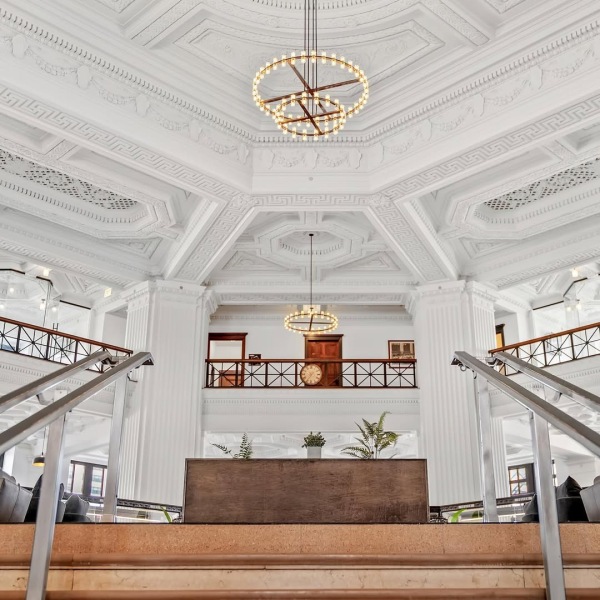
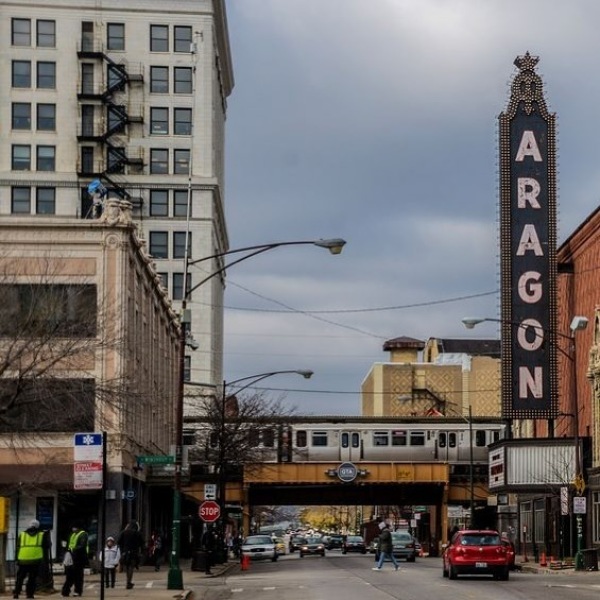
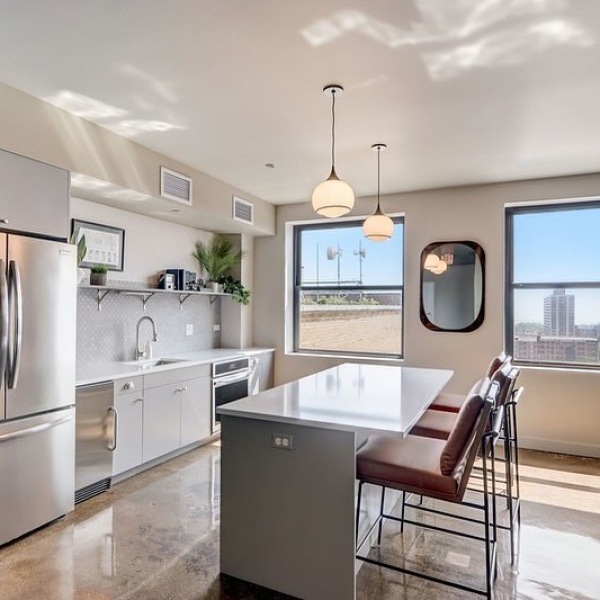
At The Teller House Apartments by Flats®, we believe that your home should be surrounded by this same sense of vibrant community and historic charm. Located in the heart of Uptown Chicago, our luxury apartments beautifully transform a historic bank building into sophisticated, modern living spaces. Just steps away from iconic theatres, cultural attractions, and incredible dining options, we offer the perfect launchpad for your daily adventures.
Ready to find your new favorite neighborhood hangout? Explore our guide to the best Uptown Chicago Restaurants and discover the unmatched lifestyle waiting for you at The Teller House.