

Why Finding Chicago Apartments with Parking Is Harder Than It Looks
Chicago apartments with parking are in high demand — and not always easy to find. Here's a quick overview of what to know before you start your search:
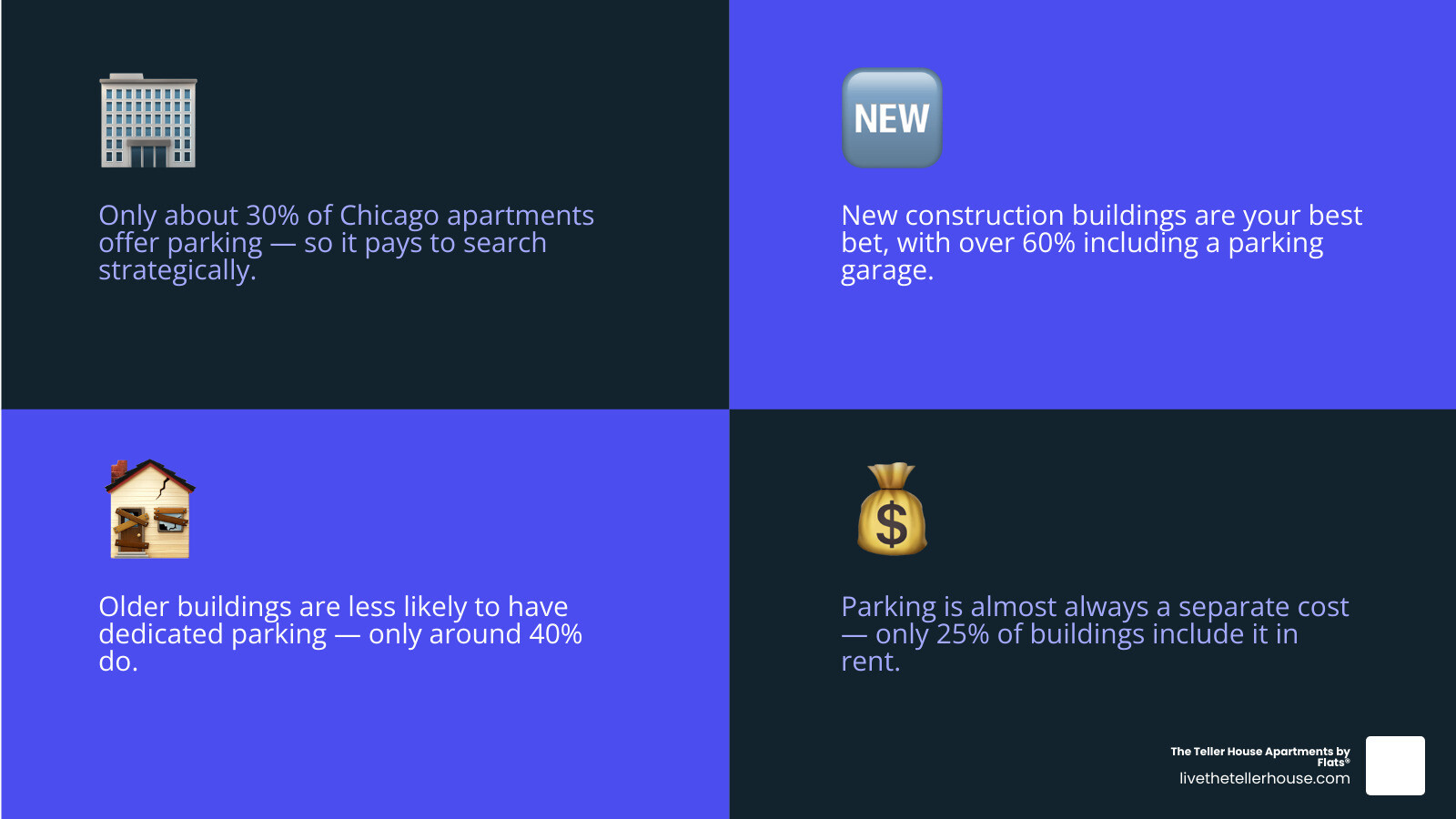
- Only about 30% of Chicago apartments offer parking — so it pays to search strategically
- New construction buildings are your best bet, with over 60% including a parking garage
- Older buildings are less likely to have dedicated parking (only around 40% do)
- Parking is almost always a separate arrangement — only 25% of buildings include it in the standard lease
- Downtown vs. neighborhoods — parking availability varies significantly depending on location
Owning a car in Chicago is genuinely useful. Whether you're driving to a client meeting, heading out of the city on weekends, or just avoiding the CTA late at night — having a reliable parking spot changes everything.
But here's the problem: most Chicago renters don't realize how limited parking actually is until they're already deep into their apartment search.
With roughly 70% of Chicago apartments offering no parking at all, finding a unit that fits your lifestyle and keeps your car safe takes more than a quick search. You need to know where to look, what to ask, and what to watch out for in the lease.
This guide covers 5 proven ways to find the right apartment — with parking included.
1. Target New Construction Chicago Apartments with Parking
If you want to secure a parking spot without the headache of endless waitlists, focusing your search on new construction developments is one of the most effective strategies available.

In recent years, developers have recognized that vehicle ownership remains a priority for many residents in Cook County, IL. As a result, over 60% of new apartment developments in Chicago are built with integrated, multi-level parking garages. These contemporary structures are designed from the ground up to accommodate modern vehicles, ensuring that residents do not have to compete for limited spaces on the street.
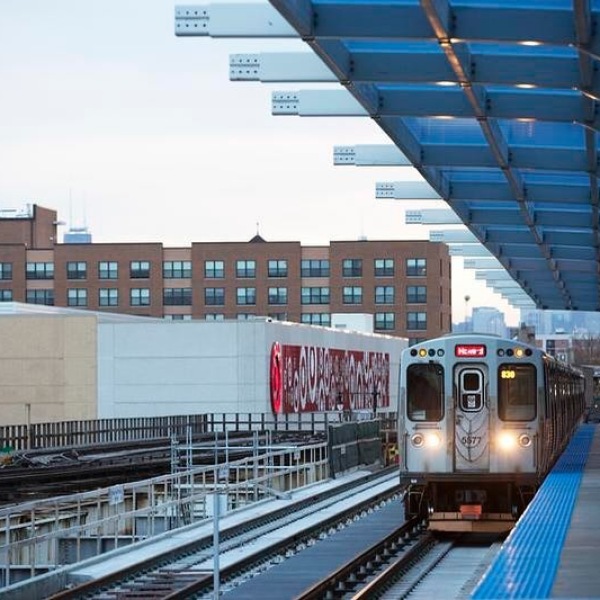
Many of these developments are designed with transit-oriented development (TOD) guidelines in mind. While TOD projects historically reduced the number of required parking spots to encourage public transit use, many modern luxury buildings still prioritize a balanced ratio of parking spaces to units to meet resident demand. This means you can enjoy the benefits of living near major transit lines while still maintaining a secure, dedicated space for your personal vehicle.
Modern Amenities in Chicago Apartments with Parking
When you target newer developments, you are not just securing a concrete slab to park your car. Modern apartment garages in Chicago come equipped with sophisticated features that make daily commuting and vehicle maintenance seamless:
- Electric Vehicle (EV) Charging Stations: With the rapid rise of electric vehicles, newer buildings frequently feature dedicated EV charging ports, allowing you to charge your vehicle overnight right where you live.
- Heated Garages: Anyone who has survived a winter in Cook County knows the pain of scraping ice off a windshield in sub-zero temperatures. Heated indoor garages protect your vehicle from the elements and keep your cabin warm before you start your morning commute.
- Reserved Spaces: Rather than hunting for an open spot every evening, many modern buildings offer assigned, reserved parking spaces so your spot is guaranteed.
- Smart Access Control: Advanced security features, such as license plate recognition, smartphone-enabled gate entry, and high-definition security cameras, provide peace of mind that your vehicle is well-protected.
2. Explore Neighborhoods with Dedicated Parking Infrastructure
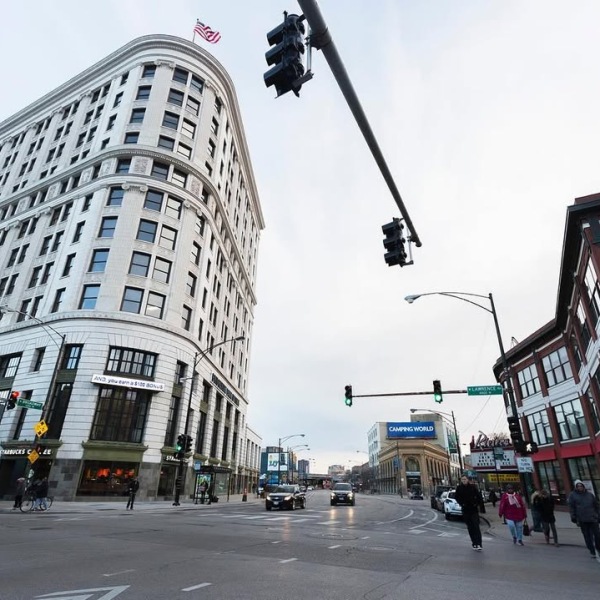
The ease of finding Chicago apartments with parking depends heavily on the specific neighborhood you choose to call home. Some areas of the city were built during eras when horse-drawn carriages were the norm, while others have been developed or revitalized with modern vehicle infrastructure in mind.
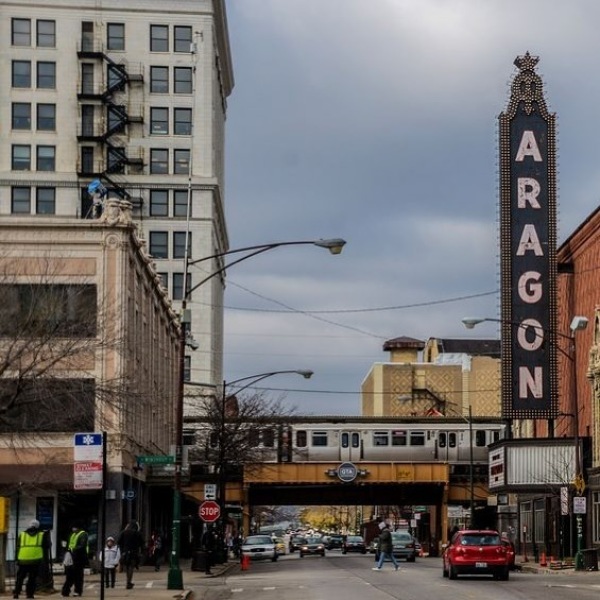
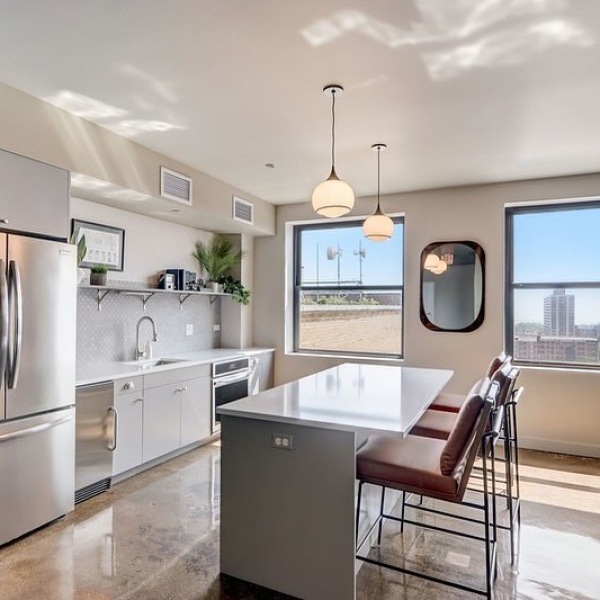
When we look at the layout of Chicago, neighborhoods like Uptown Chicago offer an exceptional balance. Uptown seamlessly blends historic charm with modern residential developments. For instance, at The Teller House, we have transformed a historic bank building into luxury apartments that offer sophisticated living spaces in the heart of Uptown. This prime location places residents near iconic theatres and vibrant cultural attractions, while still offering convenient access to local parking solutions.
Other neighborhoods, such as Logan Square and Hyde Park, also present unique parking landscapes. While these areas are highly desirable, the availability of dedicated parking can vary wildly from block to block.
Parking Availability in Older vs. Newer Neighborhoods
Understanding the architectural history of Chicago neighborhoods will help you set realistic expectations for your search:
- Historic Buildings: Many of Chicago's classic courtyard buildings and three-flats were constructed before personal automobiles were common. Consequently, only about 40% of these older buildings feature dedicated parking spaces, which are often limited to a few outdoor spaces in the alley.
- Street Parking Permits: In densely populated, older neighborhoods, the city relies heavily on residential street parking permits. While this limits parking to neighborhood residents, finding an open curb space after working hours can still be incredibly challenging.
- Neighborhood Zoning: Newer zoning laws often require newer residential developments to provide a specific ratio of parking spaces per residential unit, making newer construction areas much more accommodating for vehicle owners.
3. Understand the Types of Apartment Parking Agreements
Once you find a building that offers parking, the next step is to understand the legal and operational details of the parking agreement. Parking in Chicago is rarely a casual arrangement; it is typically governed by a formal lease addendum that outlines your rights, responsibilities, and the terms of use.
There are three primary types of parking arrangements you will encounter in Chicago apartment buildings:
| Parking Type | Accessibility | Weather Protection | Security Level |
|---|---|---|---|
| Indoor Heated Garage | High (Direct elevator access) | Excellent (Fully protected) | High (Gated, cameras, patrols) |
| Surface Lot | Medium (Walk to building) | None (Exposed to elements) | Medium (Fenced or open lot) |
| Valet Services | High (Vehicle retrieved for you) | Excellent (Usually indoor) | High (Attendant managed) |
Key Clauses in Parking Agreements
Before signing a lease addendum for a parking space, we highly recommend reviewing the following details with the leasing team:
- Lease Addendums: Ensure that your parking space is legally tied to your apartment lease. This prevents the building management from reassigning your spot or altering the terms unexpectedly during your residency.
- Parking Terms: Clarify how parking is administered. In most Chicago apartments, parking is treated as an additional monthly option separate from your base lease. Make sure you understand if this option is guaranteed for the duration of your lease.
- Snow Removal Policies: For outdoor surface lots, ask who is responsible for snow removal. A good management team will handle plowing the driving lanes, but you may still be responsible for clearing snow immediately around your vehicle.
- Liability Clauses: Read the fine print regarding theft or damage. Most parking agreements contain clauses stating that the building is not liable for damage to your vehicle or items stolen from it, emphasizing the importance of choosing a secure, well-lit garage.
4. Leverage Specialized Rental Platforms and Filters
Finding Chicago apartments with parking requires using the right tools. If you simply search for "apartments in Chicago," you will be overwhelmed by thousands of listings that do not meet your vehicle storage needs.
To save time, you should utilize specialized rental platforms and search filters designed to isolate properties with dedicated parking options. Most major rental search engines allow you to filter by specific amenities, but you must know how to interpret these filters to avoid misunderstandings.
How to Filter for Chicago Apartments with Parking
When navigating online rental platforms, keep these filtering strategies in mind:
- Select Specific Parking Filters: Instead of checking a generic "parking" box, look for platforms that allow you to specify "garage parking" or "off-street parking." This helps filter out properties that only offer street parking.
- Use Map-Based Searches: If you have a specific commute, use map-based search tools to find buildings with garages located near major expressways or transit hubs.
- Work with Local Leasing Agents: Professional leasing agents have access to internal databases and can quickly generate a curated list of properties in Cook County, IL, that feature secure, on-site parking garages.
- Confirm During Virtual or In-Person Tours: Always ask the leasing agent to show you the parking facilities during your tour. This allows you to verify the ceiling clearance, ease of maneuvering, and overall security of the space first-hand.
5. Evaluate Street Parking vs. Dedicated On-Site Spaces
For some renters, the prospect of relying on street parking seems like an acceptable alternative to securing a dedicated on-site space. However, before you commit to this strategy, it is essential to weigh the convenience and safety of a dedicated space against the daily realities of street parking in Chicago.
- Street Parking Permits: Many residential zones in Chicago require a city parking permit sticker displayed on your windshield. While this limits parking to local residents, it does not guarantee you a spot on your block, often forcing you to park several blocks away.
- The Winter Parking Ban: Chicago implements strict winter parking bans on major arterials from December 1st to April 1st, regardless of snow. If you park on a designated snow route overnight, your vehicle risks being towed and impounded.
- Street Sweeping: From spring through autumn, the city conducts regular street sweeping. Missing a temporary street sweeping sign can result in tickets or towing.
- The Convenience Factor: Carrying groceries, luggage, or heavy items through rain, sleet, or extreme heat because you had to park three blocks away can quickly erode the appeal of street parking.
- Vehicle Protection: On-site parking garages protect your vehicle from side-swipe accidents, vandalism, and extreme weather events, preserving the long-term value of your investment.
Frequently Asked Questions About Chicago Apartment Parking
Do any Chicago apartments include parking in the lease?
While the vast majority of Chicago apartments require a separate monthly agreement for parking, approximately 25% of buildings may include parking in the lease or offer it as part of a bundled utility and amenity package. This is more common in smaller, privately managed buildings or townhomes outside of the immediate downtown core. In larger luxury developments, parking is almost always treated as a separate, optional add-on to ensure that residents who do not own cars do not have it included in their lease.
What should I look for in a parking garage security system?
When touring a potential apartment building, take a close look at the garage security measures. A secure parking facility should feature:
- Fully gated or shuttered access control that requires a key fob, smartphone app, or programmed transponder to open.
- Comprehensive, 24/7 surveillance cameras covering all entry points, exits, and pedestrian walkways.
- Bright, consistent LED lighting throughout the structure to eliminate dark corners and blind spots.
- Regular security patrols or on-site management staff monitoring the premises.
How does the winter weather affect parking in Chicago?
Winter weather is one of the primary reasons renters seek out Chicago apartments with parking. Street parking during a Chicago winter involves digging your car out of snowbanks, dealing with the informal neighborhood custom of "dibs" (where residents block cleared street spots with household furniture), and navigating icy roads. Opting for a building with a heated indoor garage or a professional snow removal contract ensures that your vehicle remains accessible, safe, and ready to drive even during the heaviest blizzards.
Conclusion
Finding the perfect apartment in Chicago does not mean you have to sacrifice the convenience of vehicle ownership. By targeting modern developments, understanding your neighborhood's infrastructure, and carefully reviewing your parking agreement, you can secure a living space that accommodates both you and your vehicle.
At The Teller House, we offer luxury apartments in Uptown Chicago that combine sophisticated historic preservation with the modern comforts of upscale urban living. Located near the city's most iconic cultural destinations, our community provides an exceptional home base for exploring everything Chicago has to offer.
If you are ready to experience the perfect blend of historic charm and modern convenience, Explore Uptown Chicago neighborhoods and see what makes our community the ideal place to call home.